Function
Plays an essential role in protein N-glycosylation. Catalyzes the transfer of N-acetylglucosamine (GlcNAc) onto the free terminal mannose moiety in the core structure of the nascent N-linked glycan chain, giving rise to the second branch in complex glycans.
Biological Context
Subcellular Location: Golgi apparatus membrane (Single-pass type II membrane protein)
Disease Association: Congenital disorder of glycosylation 2A (CDG2A) : A multisystem disorder caused by a defect in glycoprotein biosynthesis and characterized by under-glycosylated serum glycoproteins. Congenital disorders of glycosylation result in a wide variety of clinical features, such as defects in the nervous system development, psychomotor retardation, dysmorphic features, hypotonia, coagulation disorders, and immunodeficiency. The broad spectrum of features reflects the critical role of N-glycoproteins during embryonic development, differentiation, and maintenance of cell functions. [The disease is caused by variants affecting the gene represented in this entry]
Pathway: Protein modification; protein glycosylation
Product Specifications
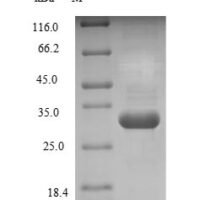
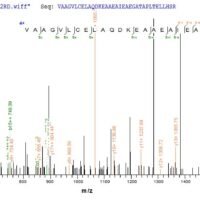
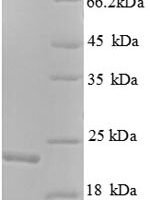
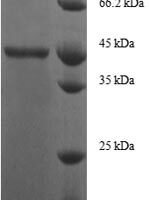
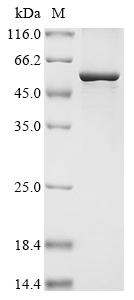
Recombinant Human Alpha-1,6-mannosyl-glycoprotein 2-beta-N-acetylglucosaminyltransferase (MGAT2), partial is a recombinant protein from Homo sapiens (Human), expressed in E.coli, covering amino acids 30-447aa, with N-terminal 10xHis-tagged and C-terminal Myc-tagged tag, molecular weight 55.7kDa, purity Greater than 90% as determined by SDS-PAGE.. Suitable for ELISA and Western Blot applications. Explore more Enzyme proteins →