, ,

Recombinant Human Alpha-protein kinase 1 (ALPK1), partial

Recombinant Human Alpha-protein kinase 1 (ALPK1), partial — Serine/threonine-protein kinase that detects bacterial pathogen-associated molecular pattern metabolites (PAMPs) and initiates an innate immune response, a critical step for pathogen elimination an… Purity >85%.

SKU: BCRECP-000068 Categories: , ,

Product Specifications

Product SkuBCRECP-000068
Product DescriptionRecombinant Human Alpha-protein kinase 1 (ALPK1) Protein is expressed from Baculovirus with N-terminal 10xHis-tagged and C-terminal Myc-tagged. It contains 1017-1237aa. [Accession | Q96QP1].
Uniprot No.Q96QP1
Gene NamesALPK1
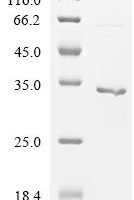
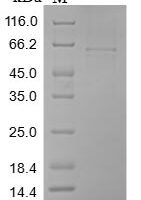
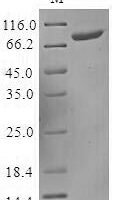
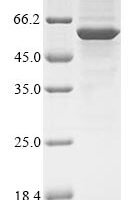
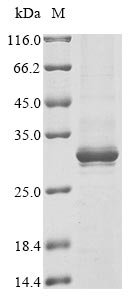
PurityGreater than 85% as determined by SDS-PAGE.
Expression SystemBaculovirus
Expression Region1017-1237aa
SpeciesHomo sapiens (Human)
Tag InfoN-terminal 10xHis-tagged and C-terminal Myc-tagged
Molecular weight29.9kDa
ActivityPlease contact us to obtain bioactivity data.
BufferIf the delivery form is liquid, the default storage buffer is Tris/PBS-based buffer, 5%-50% glycerol. If the delivery form is lyophilized powder, the buffer before lyophilization is Tris/PBS-based buffer, 6% Trehalose.
StorageStore at -20°C/-80°C upon receipt, aliquoting is necessary for mutiple use. Avoid repeated freeze-thaw cycles.
Research AreasSignal Transduction

Function

Serine/threonine-protein kinase that detects bacterial pathogen-associated molecular pattern metabolites (PAMPs) and initiates an innate immune response, a critical step for pathogen elimination and engagement of adaptive immunity. Specifically recognizes and binds ADP-D-glycero-beta-D-manno-heptose (ADP-Heptose), a potent PAMP present in all Gram-negative and some Gram-positive bacteria. ADP-Heptose-binding stimulates its kinase activity to phosphorylate and activate TIFA, triggering pro-inflammatory NF-kappa-B signaling.

Biological Context

Subcellular Location: Cytoplasm, cytosol; Cytoplasm, cytoskeleton, spindle pole; Cytoplasm, cytoskeleton, microtubule organizing center, centrosome; Cell projection, cilium
Tissue Specificity: Highly expressed in liver. Expressed in the optic nerve and retinal pigmented epithelium. Lower expression is observed in the macula and extramacular retina
Disease Association: Retinal dystrophy, optic nerve edema, splenomegaly, anhidrosis, and migraine headache syndrome (ROSAH) : An autosomal dominant disorder characterized by decreased vision associated with optic nerve edema, evident in childhood. Low-grade ocular inflammation is common in affected individuals. Later in childhood or the second decade of life, patients have increasing visual impairment, abnormal cone function and loss of rod function. By the third decade of life, visual acuity ranges from counting fingers to no light perception. Patients also show anhidrosis, splenomegaly, mild pancytopenia, and most experience headaches that may be migraine-like in nature. [The disease is caused by variants affecting the gene represented in this entry]

Product Specifications

Recombinant Human Alpha-protein kinase 1 (ALPK1), partial is a recombinant protein from Homo sapiens (Human), expressed in Baculovirus, covering amino acids 1017-1237aa, with N-terminal 10xHis-tagged and C-terminal Myc-tagged tag, molecular weight 29.9kDa, purity Greater than 85% as determined by SDS-PAGE.. Suitable for ELISA and Western Blot applications.

SDS-PAGE: Single band at expected molecular weight confirming purity.

ELISA: Suitable as coating antigen or detection standard.

Western Blot: Compatible with standard Western Blot protocols.

Protein Interaction: Validated for SPR (Surface Plasmon Resonance) and BLI (Bio-Layer Interferometry) studies.

Shipping: Shipped at ambient temperature. Lyophilized protein is stable during transit.

Storage: Store lyophilized protein at -20°C to -80°C. Reconstituted protein should be aliquoted and stored at -80°C. Avoid repeated freeze-thaw cycles.

Shelf Life: 12 months from date of receipt when stored as recommended.

Shipping Time: Orders placed before 2 PM EST ship same day. International orders typically deliver within 5-10 business days.

Protein Biology

Function

Serine/threonine-protein kinase that detects bacterial pathogen-associated molecular pattern metabolites (PAMPs) and initiates an innate immune response, a critical step for pathogen elimination and engagement of adaptive immunity (PubMed:28222186, PubMed:28877472, PubMed:30111836). Specifically recognizes and binds ADP-D-glycero-beta-D-manno-heptose (ADP-Heptose), a potent PAMP present in all Gram-negative and some Gram-positive bacteria (PubMed:30111836). ADP-Heptose-binding stimulates its kinase activity to phosphorylate and activate TIFA, triggering pro-inflammatory NF-kappa-B signaling (PubMed:30111836, PubMed:35868845, PubMed:38060563). May be involved in monosodium urate monohydrate (MSU)-induced inflammation by mediating phosphorylation of unconventional myosin MYO9A (PubMed:27169898). May also play a role in apical protein transport by mediating phosphorylation of unconventional myosin MYO1A (PubMed:15883161). May play a role in ciliogenesis (PubMed:30967659)

Subcellular Location

Cytoplasm, cytosol; Cytoplasm, cytoskeleton, spindle pole; Cytoplasm, cytoskeleton, microtubule organizing center, centrosome; Cell projection, cilium

Disease Association

Retinal dystrophy, optic nerve edema, splenomegaly, anhidrosis, and migraine headache syndrome (ROSAH) : An autosomal dominant disorder characterized by decreased vision associated with optic nerve edema, evident in childhood. Low-grade ocular inflammation is common in affected individuals. Later in childhood or the second decade of life, patients have increasing visual impairment, abnormal cone function and loss of rod function. By the third decade of life, visual acuity ranges from counting fingers to no light perception. Patients also show anhidrosis, splenomegaly, mild pancytopenia, and most experience headaches that may be migraine-like in nature. [The disease is caused by variants affecting the gene represented in this entry]

Tissue Specificity

Highly expressed in liver. Expressed in the optic nerve and retinal pigmented epithelium. Lower expression is observed in the macula and extramacular retina (PubMed:30967659)

Gene: ALPK1  |  Organism: Homo sapiens  |  Synonyms: Chromosome 4 kinase; Lymphocyte alpha-protein kinase
Key Publications

Frequently Asked Questions

How do I order or inquire about this product?

Fill out the Online Inquiry form with your required quantity and specifications. You can also email sales@biocrestsci.com. Our team typically responds within 4 business hours with a quote and availability confirmation.

What is the shipping and delivery time?

Orders placed before 2 PM EST ship the same day. Domestic (US) delivery typically takes 2-3 business days. International orders deliver within 5-10 business days. All products are shipped at ambient temperature with appropriate packaging to ensure stability.

How should I store this recombinant protein?

Lyophilized proteins should be stored at -20°C to -80°C upon receipt. After reconstitution, aliquot and store at -80°C. Avoid repeated freeze-thaw cycles. Shelf life is 12 months from date of receipt when stored as recommended.

What quality controls are performed on your products?

Each product undergoes SDS-PAGE purity analysis (typically >85-95%), endotoxin testing, and bioactivity validation. Products are validated for ELISA, Western Blot, and SPR/BLI applications as specified on this product page. A Certificate of Analysis (CoA) is available upon request.

Shopping Cart
Scroll to Top