Function
Hormone that acts as a blood lipid regulator by regulating serum triglyceride levels. May be involved in the metabolic transition between fasting and refeeding: required to direct fatty acids to adipose tissue for storage in the fed state.
Biological Context
Subcellular Location: Secreted
Tissue Specificity: Predominantly expressed in liver. Also expressed in adipose tissues
Disease Association: Type 1 diabetes mellitus (T1D) : A multifactorial disorder of glucose homeostasis that is characterized by susceptibility to ketoacidosis in the absence of insulin therapy. Clinical features are polydipsia, polyphagia and polyuria which result from hyperglycemia-induced osmotic diuresis and secondary thirst. These derangements result in long-term complications that affect the eyes, kidneys, nerves, and blood vessels. [The gene represented in this entry may be involved in disease pathogenesis. Increased protein levels are observed in the serum of patients. This result should however be reinvestigated in light of recent advances that suggest that this protein is not promoting pancreatic beta cell proliferation] | Type 2 diabetes mellitus (T2D) : A multifactorial disorder of glucose homeostasis caused by a lack of sensitivity to insulin. Affected individuals usually have an obese body habitus and manifestations of a metabolic syndrome characterized by diabetes, insulin resistance, hypertension and hypertriglyceridemia. The disease results in long-term complications that affect the eyes, kidneys, nerves, and blood vessels. [The gene represented in this entry may be involved in disease pathogenesis. Increased protein levels are observed in the serum of patients and are associated with insulin resistance. According to another report, protein levels are decreased in the serum of patients. Discrepancies between increased and decreased levels of proteins levels in T2D patients may be explained by the use of different kits developed on the market that either use antibodies recognizing the N-terminal or the C-terminal part of the protein. These results should however be reinvestigated in light of recent advances that suggest that this protein is not promoting pancreatic beta cell proliferation]
Product Specifications
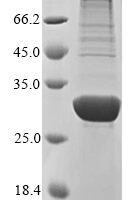
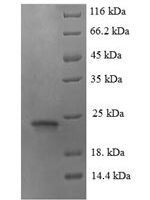
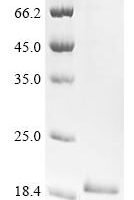
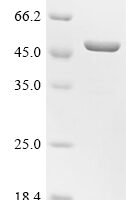
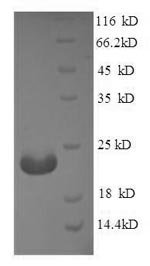
Recombinant Human Angiopoietin-like protein 8 (ANGPTL8) is a recombinant protein from Homo sapiens (Human), expressed in E.coli, covering amino acids 22-198aa, with N-terminal 6xHis-tagged tag, molecular weight 23.9kDa, purity Greater than 90% as determined by SDS-PAGE.. Suitable for ELISA and Western Blot applications.