Function
Calcium-activated chloride channel (CaCC). Shows increased sensitivity to intracellular Ca(2+).
Biological Context
Subcellular Location: Apical cell membrane (Multi-pass membrane protein); Presynapse
Tissue Specificity: Expressed in nasal epithelial cells (at protein level). In the kidney, expressed in the collecting duct (at protein level). Broadly expressed with higher levels in liver, skeletal muscle and gastrointestinal muscles. Expressed in eccrine sweat glands
Disease Association: Intestinal dysmotility syndrome (IDMTS) : An autosomal recessive disorder characterized by impaired intestinal peristalsis, recurrent episodes of haemorrhagic diarrhea, and distention of intestinal loops. Intestinal and hepatic portal venous gas, dysmorphic features, and developmental delay may also be present. [The disease may be caused by variants affecting the gene represented in this entry] | Moyamoya disease 7 (MYMY7) : A form of Moyamoya disease, a progressive cerebral angiopathy characterized by bilateral intracranial carotid artery stenosis and telangiectatic vessels in the region of the basal ganglia. The abnormal vessels resemble a 'puff of smoke' (moyamoya) on cerebral angiogram. Affected individuals can develop transient ischemic attacks and/or cerebral infarction, and rupture of the collateral vessels can cause intracranial hemorrhage. Hemiplegia of sudden onset and epileptic seizures constitute the prevailing presentation in childhood, while subarachnoid bleeding occurs more frequently in adults. MYMY7 inheritance can be autosomal dominant or autosomal recessive. [The disease may be caused by variants affecting the gene represented in this entry]
Product Specifications
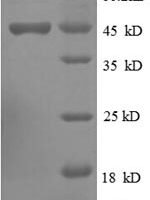
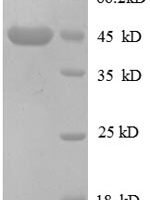
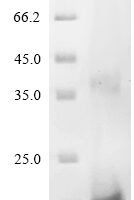
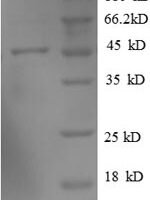
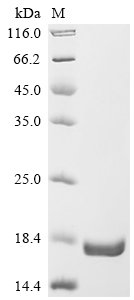
Recombinant Human Anoctamin-1 (ANO1), partial is a recombinant protein from Homo sapiens (Human), expressed in E.coli, covering amino acids 806-892aa, with N-terminal 10xHis-tagged and C-terminal Myc-tagged tag, molecular weight 17.6kDa, purity Greater than 90% as determined by SDS-PAGE.. Suitable for ELISA and Western Blot applications.