Recombinant Human Ataxin-7-like protein 3 (ATXN7L3)

Recombinant Human Ataxin-7-like protein 3 (ATXN7L3) — Component of the transcription regulatory histone acetylation (HAT) complex SAGA, a multiprotein complex that activates transcription by remodeling chromatin and mediating histone acetylation and d… Purity >85%.

SKU: BCRECP-000141 Category:

Product Specifications

Product SkuBCRECP-000141
Product DescriptionRecombinant Human Ataxin-7-like protein 3 (ATXN7L3) Protein is expressed from E.coli with C-terminal 6xHis-tagged. It contains 1-347aa. [Accession | Q14CW9].
Uniprot No.Q14CW9
Gene NamesATXN7L3
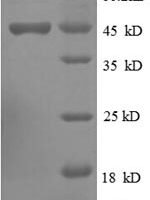
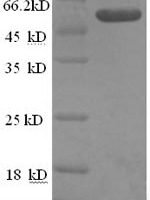
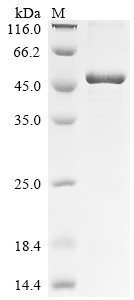
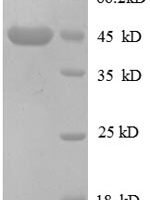
PurityGreater than 85% as determined by SDS-PAGE.
Expression SystemE.coli
Expression Region1-347aa
SpeciesHomo sapiens (Human)
Tag InfoC-terminal 6xHis-tagged
Molecular weight45.6kDa
ActivityPlease contact us to obtain bioactivity data.
BufferIf the delivery form is liquid, the default storage buffer is Tris/PBS-based buffer, 5%-50% glycerol. If the delivery form is lyophilized powder, the buffer before lyophilization is Tris/PBS-based buffer, 6% Trehalose.
StorageStore at -20°C/-80°C upon receipt, aliquoting is necessary for mutiple use. Avoid repeated freeze-thaw cycles.
Research AreasCell Biology

Function

Component of the transcription regulatory histone acetylation (HAT) complex SAGA, a multiprotein complex that activates transcription by remodeling chromatin and mediating histone acetylation and deubiquitination. Within the SAGA complex, participates in a subcomplex that specifically deubiquitinates both histones H2A and H2B. The SAGA complex is recruited to specific gene promoters by activators such as MYC, where it is required for transcription.

Biological Context

Subcellular Location: Nucleus
Disease Association: Harel-Tora neurodevelopmental syndrome (HATONS) : An autosomal dominant disorder characterized by global motor and language developmental delay, hypotonia, variably impaired intellectual development, and dysmorphic facial features, including hypertelorism, epicanthal folds, blepharoptosis, a small nose and mouth, and low-set, posteriorly rotated ears. [The disease is caused by variants affecting the gene represented in this entry]

Product Specifications

Recombinant Human Ataxin-7-like protein 3 (ATXN7L3) is a recombinant protein from Homo sapiens (Human), expressed in E.coli, covering amino acids 1-347aa, with C-terminal 6xHis-tagged tag, molecular weight 45.6kDa, purity Greater than 85% as determined by SDS-PAGE.. Suitable for ELISA and Western Blot applications.
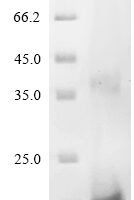
Recommended applications depend on the target, product format, and product-specific validation data. Refer to the product datasheet or Certificate of Analysis (CoA), or contact BioCrest Sci for application guidance.

Biological Activity: Please contact us to obtain bioactivity data.

Storage: Store at -20°C/-80°C upon receipt, aliquoting is necessary for mutiple use. Avoid repeated freeze-thaw cycles.

Shipping & Lead Time: Availability, shipping conditions, and estimated lead time are confirmed in the formal quotation or order confirmation based on the product format, destination, and order requirements.

Protein Biology

Function

Component of the transcription regulatory histone acetylation (HAT) complex SAGA, a multiprotein complex that activates transcription by remodeling chromatin and mediating histone acetylation and deubiquitination. Within the SAGA complex, participates in a subcomplex that specifically deubiquitinates both histones H2A and H2B (PubMed:18206972, PubMed:21746879). The SAGA complex is recruited to specific gene promoters by activators such as MYC, where it is required for transcription. Required for nuclear receptor-mediated transactivation. Within the complex, it is required to recruit USP22 and ENY2 into the SAGA complex (PubMed:18206972). Regulates H2B monoubiquitination (H2Bub1) levels. Affects subcellular distribution of ENY2, USP22 and ATXN7L3B (PubMed:27601583)

Subcellular Location

Nucleus

Disease Association

Harel-Tora neurodevelopmental syndrome (HATONS) : An autosomal dominant disorder characterized by global motor and language developmental delay, hypotonia, variably impaired intellectual development, and dysmorphic facial features, including hypertelorism, epicanthal folds, blepharoptosis, a small nose and mouth, and low-set, posteriorly rotated ears. [The disease is caused by variants affecting the gene represented in this entry]

Subunit

Component of some SAGA transcription coactivator-HAT complexes, at least composed of ATXN7, ATXN7L3, ENY2, GCN5L2, SUPT3H, TAF10, TRRAP and USP22. Within the SAGA complex, ENY2, ATXN7, ATXN7L3, and USP22 form an additional subcomplex of SAGA called the DUB module (deubiquitination module) (PubMed:18206972, PubMed:21746879, PubMed:27601583). Interacts directly with ENY2 and USP22 (PubMed:18206972)

Gene: ATXN7L3  |  Organism: Homo sapiens  |  Synonyms: SAGA-associated factor 11 homolog
Key Publications

Frequently Asked Questions

How do I order or inquire about this product?

Submit the Online Inquiry form with your required quantity and specifications, or email sales@biocrestsci.com. Available sizes, pricing, stock status, documentation, and estimated lead time are confirmed in the formal quotation.

What is the shipping and delivery time?

Availability, dispatch timing, shipping conditions, and delivery estimates depend on the product format, destination, and order requirements. These details are confirmed in the formal quotation or order confirmation.

How should this product be stored?

Follow the storage and handling instructions in the product-specific datasheet and Certificate of Analysis (CoA). Requirements may vary by product form and formulation; contact BioCrest Sci if product-specific guidance is needed.

What quality controls are performed on your products?

Quality-control data such as identity, purity, endotoxin level, or biological activity are provided only when specified on this product page, the datasheet, or Certificate of Analysis (CoA). Biological activity is not implied unless explicitly stated.

Shopping Cart
Scroll to Top