Function
May be responsible for potassium buffering action of glial cells in the brain. Inward rectifier potassium channels are characterized by a greater tendency to allow potassium to flow into the cell rather than out of it. Their voltage dependence is regulated by the concentration of extracellular potassium; as external potassium is raised, the voltage range of the channel opening shifts to more positive voltages.
Biological Context
Subcellular Location: Membrane (Multi-pass membrane protein); Basolateral cell membrane
Tissue Specificity: Expressed in kidney (at protein level). In the nephron, expressed in the distal convoluted tubule, the connecting tubule, the collecting duct and cortical thick ascending limbs
Disease Association: Seizures, sensorineural deafness, ataxia, impaired intellectual development, and electrolyte imbalance (SESAMES) : A complex disorder characterized by generalized seizures with onset in infancy, delayed psychomotor development, ataxia, sensorineural hearing loss, hypokalemia, metabolic alkalosis, and hypomagnesemia. [The disease is caused by variants affecting the gene represented in this entry]
Product Specifications
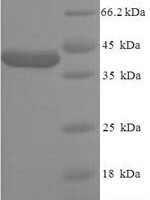
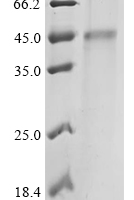
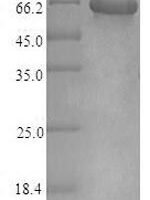
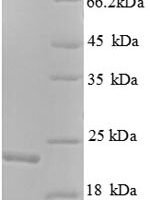
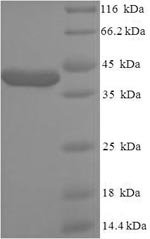
Recombinant Human ATP-sensitive inward rectifier potassium channel 10 (KCNJ10), partial is a recombinant protein from Homo sapiens (Human), expressed in E.coli, covering amino acids 165-379aa, with N-terminal 6xHis-SUMO-tagged tag, molecular weight 39.8kDa, purity Greater than 90% as determined by SDS-PAGE.. Suitable for ELISA and Western Blot applications.