Function
Subunit delta, of the mitochondrial membrane ATP synthase complex (F(1)F(0) ATP synthase or Complex V) that produces ATP from ADP in the presence of a proton gradient across the membrane which is generated by electron transport complexes of the respiratory chain (Probable). ATP synthase complex consist of a soluble F(1) head domain – the catalytic core – and a membrane F(1) domain – the membrane proton channel. These two domains are linked by a central stalk rotating inside the F(1) region and a stationary peripheral stalk.
Biological Context
Subcellular Location: Mitochondrion; Mitochondrion inner membrane
Disease Association: Mitochondrial complex V deficiency, nuclear type 5 (MC5DN5) : A mitochondrial disorder characterized by childhood onset of episodic metabolic decompensation featuring lactic acidosis and hyperammonemia accompanied by ketoacidosis or hypoglycemia. Chronic manifestations include developmental delay, easy fatiguability, and 3-methylglutaconic aciduria. The transmission pattern of MC5DN5 is consistent with autosomal recessive inheritance. [Disease susceptibility is associated with variants affecting the gene represented in this entry]
Product Specifications
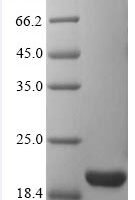
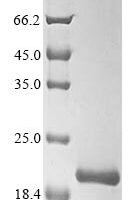
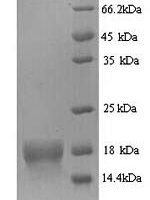
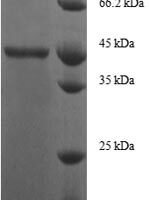
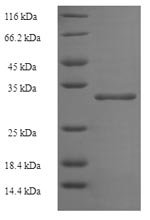
Recombinant Human ATP synthase subunit delta, mitochondrial (ATP5D) is a recombinant protein from Homo sapiens (Human), expressed in E.coli, covering amino acids 23-168aa, with N-terminal 6xHis-SUMO-tagged tag, molecular weight 31.0kDa, purity Greater than 90% as determined by SDS-PAGE.. Suitable for ELISA and Western Blot applications. Explore more Enzyme proteins →