,

Recombinant Human Atypical chemokine receptor 3 (ACKR3) Protein

Recombinant Human Atypical chemokine receptor 3 (ACKR3) Protein — recombinant protein from Homo sapiens (Human), expressed in in vitro E.coli expression system. Purity >90%.

SKU: BCRECP-00618TM Categories: ,

Product Specifications

Uniprot No.P25106
Gene NamesACKR3
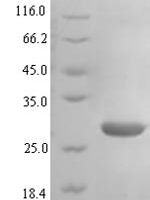
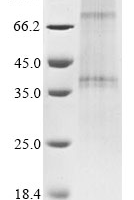
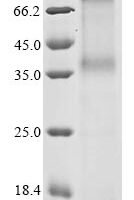
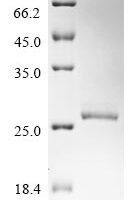
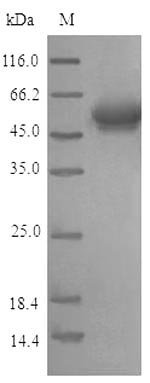
PurityGreater than 90% as determined by SDS-PAGE.
Expression Systemin vitro E.coli expression system
Expression Region1-362aa
SpeciesHomo sapiens (Human)
Tag InfoN-terminal 6xHis-SUMO-tagged
Molecular weight57.5kDa
BufferIf the delivery form is liquid, the default storage buffer is Tris/PBS-based buffer, 5%-50% glycerol.If the delivery form is lyophilized powder, the buffer before lyophilization is Tris/PBS-based buffer, 6% Trehalose.
StorageStore at -20°C/-80°C upon receipt, aliquoting is necessary for mutiple use. Avoid repeated freeze-thaw cycles.

Function

(Microbial infection) Acts as a coreceptor with CXCR4 for a restricted number of HIV isolates.

Biological Context

Subcellular Location: Cell membrane (Multi-pass membrane protein); Early endosome; Recycling endosome
Tissue Specificity: Expressed in monocytes, basophils, B-cells, umbilical vein endothelial cells (HUVEC) and B-lymphoblastoid cells. Lower expression detected in CD4+ T-lymphocytes and natural killer cells. In the brain, detected in endothelial cells and capillaries, and in mature neurons of the frontal cortex and hippocampus. Expressed in tubular formation in the kidney. Highly expressed in astroglial tumor endothelial, microglial and glioma cells. Expressed at low levels in normal CD34+ progenitor cells, but at very high levels in several myeloid malignant cell lines. Expressed in breast carcinomas but not in normal breast tissue (at protein level)
Disease Association: Oculomotor-abducens synkinesis (OCABSN) : An autosomal recessive disorder characterized by ptosis and elevation of the eyelid on ipsilateral abduction. OCABSN features are consistent with abnormal innervation of the levator palpebrae superioris muscle, which raises the eyelid, and the lateral rectus muscle, which controls lateral eye movement. [The disease is caused by variants affecting the gene represented in this entry]

Product Specifications

Recombinant Human Atypical chemokine receptor 3 (ACKR3) Protein is a recombinant protein from Homo sapiens (Human), expressed in in vitro E.coli expression system, covering amino acids 1-362aa, with N-terminal 6xHis-SUMO-tagged tag, molecular weight 57.5kDa, purity Greater than 90% as determined by SDS-PAGE.. Suitable for ELISA and Western Blot applications.

SDS-PAGE: Single band at expected molecular weight confirming purity.

ELISA: Suitable as coating antigen or detection standard.

Western Blot: Compatible with standard Western Blot protocols.

Protein Interaction: Validated for SPR (Surface Plasmon Resonance) and BLI (Bio-Layer Interferometry) studies.

Shipping: Shipped at ambient temperature. Lyophilized protein is stable during transit.

Storage: Store lyophilized protein at -20°C to -80°C. Reconstituted protein should be aliquoted and stored at -80°C. Avoid repeated freeze-thaw cycles.

Shelf Life: 12 months from date of receipt when stored as recommended.

Shipping Time: Orders placed before 2 PM EST ship same day. International orders typically deliver within 5-10 business days.

Protein Biology

Function

(Microbial infection) Acts as a coreceptor with CXCR4 for a restricted number of HIV isolates

Subcellular Location

Cell membrane (Multi-pass membrane protein); Early endosome; Recycling endosome

Disease Association

Oculomotor-abducens synkinesis (OCABSN) : An autosomal recessive disorder characterized by ptosis and elevation of the eyelid on ipsilateral abduction. OCABSN features are consistent with abnormal innervation of the levator palpebrae superioris muscle, which raises the eyelid, and the lateral rectus muscle, which controls lateral eye movement. [The disease is caused by variants affecting the gene represented in this entry]

Tissue Specificity

Expressed in monocytes, basophils, B-cells, umbilical vein endothelial cells (HUVEC) and B-lymphoblastoid cells. Lower expression detected in CD4+ T-lymphocytes and natural killer cells. In the brain, detected in endothelial cells and capillaries, and in mature neurons of the frontal cortex and hippocampus. Expressed in tubular formation in the kidney. Highly expressed in astroglial tumor endothelial, microglial and glioma cells. Expressed at low levels in normal CD34+ progenitor cells, but at very high levels in several myeloid malignant cell lines. Expressed in breast carcinomas but not in normal breast tissue (at protein level)

Subunit

(Microbial infection) Interacts with Kaposi virus protein vCCL2

Gene: ACKR3  |  Organism: Homo sapiens  |  Synonyms: C-X-C chemokine receptor type 7; Chemokine orphan receptor 1; G protein-coupled receptor 159; G protein-coupled receptor RDC1 homolog
Key Publications

Frequently Asked Questions

How do I order or inquire about this product?

Fill out the Online Inquiry form with your required quantity and specifications. You can also email sales@biocrestsci.com. Our team typically responds within 4 business hours with a quote and availability confirmation.

What is the shipping and delivery time?

Orders placed before 2 PM EST ship the same day. Domestic (US) delivery typically takes 2-3 business days. International orders deliver within 5-10 business days. All products are shipped at ambient temperature with appropriate packaging to ensure stability.

How should I store this recombinant protein?

Lyophilized proteins should be stored at -20°C to -80°C upon receipt. After reconstitution, aliquot and store at -80°C. Avoid repeated freeze-thaw cycles. Shelf life is 12 months from date of receipt when stored as recommended.

What quality controls are performed on your products?

Each product undergoes SDS-PAGE purity analysis (typically >85-95%), endotoxin testing, and bioactivity validation. Products are validated for ELISA, Western Blot, and SPR/BLI applications as specified on this product page. A Certificate of Analysis (CoA) is available upon request.

Shopping Cart
Scroll to Top