Function
Crystallins are the dominant structural components of the vertebrate eye lens.
Biological Context
Disease Association: Cataract 22, multiple types (CTRCT22) : An opacification of the crystalline lens of the eye that frequently results in visual impairment or blindness. Opacities vary in morphology, are often confined to a portion of the lens, and may be static or progressive. In general, the more posteriorly located and dense an opacity, the greater the impact on visual function. CTRCT22 includes nuclear cataract among others. Nuclear cataracts affect the central nucleus of the eye, and are often not highly visually significant. The density of the opacities varies greatly from fine dots to a dense, white and chalk-like, central cataract. The condition is usually bilateral. Nuclear cataracts are often combined with opacified cortical fibers encircling the nuclear opacity, which are referred to as cortical riders. [The disease is caused by variants affecting the gene represented in this entry]
Product Specifications
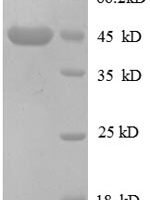
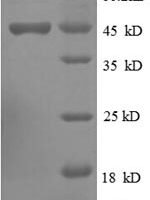
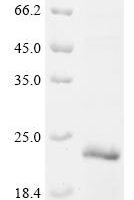
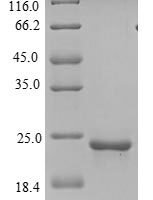
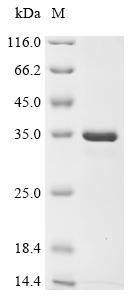
Recombinant Human Beta-crystallin B3 (CRYBB3) is a recombinant protein from Homo sapiens (Human), expressed in E.coli, covering amino acids 1-211aa, with C-terminal 6xHis-tagged tag, molecular weight 31.2kDa, purity Greater than 90% as determined by SDS-PAGE.. Suitable for ELISA and Western Blot applications.