Recombinant Human Bone morphogenetic protein 4 (BMP4)

Recombinant Human Bone morphogenetic protein 4 (BMP4) — Growth factor of the TGF-beta superfamily that plays essential roles in many developmental processes, including neurogenesis, vascular development, angiogenesis and osteogenesis. Purity >90%.

SKU: BCRECP-000166 Category:

Product Specifications

Product SkuBCRECP-000166
Product DescriptionRecombinant Human Bone morphogenetic protein 4 (BMP4) Protein is expressed from E.coli with N-terminal 6xHis-SUMO-tagged. It contains 293-408aa. [Accession | P12644].
Uniprot No.P12644
Gene NamesBMP4
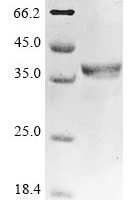
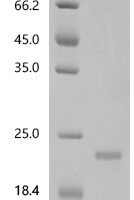
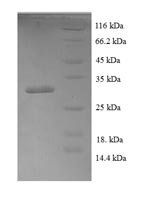
PurityGreater than 90% as determined by SDS-PAGE.
Expression SystemE.coli
Expression Region293-408aa
SpeciesHomo sapiens (Human)
Tag InfoN-terminal 6xHis-SUMO-tagged
Molecular weight29.1kDa
ActivityPlease contact us to obtain bioactivity data.
BufferIf the delivery form is liquid, the default storage buffer is Tris/PBS-based buffer, 5%-50% glycerol. If the delivery form is lyophilized powder, the buffer before lyophilization is Tris/PBS-based buffer, 6% Trehalose.
StorageStore at -20°C/-80°C upon receipt, aliquoting is necessary for mutiple use. Avoid repeated freeze-thaw cycles.
Research AreasDevelopmental Biology

Function

Growth factor of the TGF-beta superfamily that plays essential roles in many developmental processes, including neurogenesis, vascular development, angiogenesis and osteogenesis. Acts in concert with PTHLH/PTHRP to stimulate ductal outgrowth during embryonic mammary development and to inhibit hair follicle induction. Initiates the canonical BMP signaling cascade by associating with type I receptor BMPR1A and type II receptor BMPR2.

Biological Context

Subcellular Location: Secreted, extracellular space, extracellular matrix
Tissue Specificity: Expressed in the lung and lower levels seen in the kidney. Present also in normal and neoplastic prostate tissues, and prostate cancer cell lines
Disease Association: Microphthalmia, syndromic, 6 (MCOPS6) : A disease characterized by microphthalmia/anophthalmia associated with facial, genital, skeletal, neurologic and endocrine anomalies. Microphthalmia is a disorder of eye formation, ranging from small size of a single eye to complete bilateral absence of ocular tissues (anophthalmia). In many cases, microphthalmia/anophthalmia occurs in association with syndromes that include non-ocular abnormalities. [The disease is caused by variants affecting the gene represented in this entry] | Non-syndromic orofacial cleft 11 (OFC11) : A birth defect consisting of cleft lips with or without cleft palate. Cleft lips are associated with cleft palate in two-third of cases. A cleft lip can occur on one or both sides and range in severity from a simple notch in the upper lip to a complete opening in the lip extending into the floor of the nostril and involving the upper gum. [The disease is caused by variants affecting the gene represented in this entry]

Product Specifications

Recombinant Human Bone morphogenetic protein 4 (BMP4) is a recombinant protein from Homo sapiens (Human), expressed in E.coli, covering amino acids 293-408aa, with N-terminal 6xHis-SUMO-tagged tag, molecular weight 29.1kDa, purity Greater than 90% as determined by SDS-PAGE.. Suitable for ELISA and Western Blot applications.
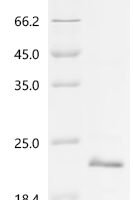
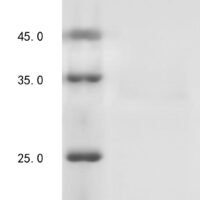
SDS-PAGE: Single band at expected molecular weight confirming purity.

ELISA: Suitable as coating antigen or detection standard.

Western Blot: Compatible with standard Western Blot protocols.

Protein Interaction: Validated for SPR (Surface Plasmon Resonance) and BLI (Bio-Layer Interferometry) studies.

Shipping: Shipped at ambient temperature. Lyophilized protein is stable during transit.

Storage: Store lyophilized protein at -20°C to -80°C. Reconstituted protein should be aliquoted and stored at -80°C. Avoid repeated freeze-thaw cycles.

Shelf Life: 12 months from date of receipt when stored as recommended.

Shipping Time: Orders placed before 2 PM EST ship same day. International orders typically deliver within 5-10 business days.

Protein Biology

Function

Growth factor of the TGF-beta superfamily that plays essential roles in many developmental processes, including neurogenesis, vascular development, angiogenesis and osteogenesis (PubMed:31363885). Acts in concert with PTHLH/PTHRP to stimulate ductal outgrowth during embryonic mammary development and to inhibit hair follicle induction (By similarity). Initiates the canonical BMP signaling cascade by associating with type I receptor BMPR1A and type II receptor BMPR2 (PubMed:25868050, PubMed:8006002). Once all three components are bound together in a complex at the cell surface, BMPR2 phosphorylates and activates BMPR1A. In turn, BMPR1A propagates signal by phosphorylating SMAD1/5/8 that travel to the nucleus and act as activators and repressors of transcription of target genes (PubMed:25868050, PubMed:29212066). Positively regulates the expression of odontogenic development regulator MSX1 via inducing the IPO7-mediated import of SMAD1 to the nucleus (By similarity). Required for MSX1-mediated mesenchymal molar tooth bud development beyond the bud stage, via promoting Wnt signaling (By similarity). Acts as a positive regulator of odontoblast differentiation during mesenchymal tooth germ formation, expression is repressed during the bell stage by MSX1-mediated inhibition of CTNNB1 signaling (By similarity). Able to induce its own expression in dental mesenchymal cells and also in the neighboring dental epithelial cells via an MSX1-mediated pathway (By similarity). Can also signal through non-canonical BMP pathways such as ERK/MAP kinase, PI3K/Akt, or SRC cascades (PubMed:31363885). For example, induces SRC phosphorylation which, in turn, activates VEGFR2, leading to an angiogenic response (PubMed:31363885)

Subcellular Location

Secreted, extracellular space, extracellular matrix

Disease Association

Microphthalmia, syndromic, 6 (MCOPS6) : A disease characterized by microphthalmia/anophthalmia associated with facial, genital, skeletal, neurologic and endocrine anomalies. Microphthalmia is a disorder of eye formation, ranging from small size of a single eye to complete bilateral absence of ocular tissues (anophthalmia). In many cases, microphthalmia/anophthalmia occurs in association with syndromes that include non-ocular abnormalities. [The disease is caused by variants affecting the gene represented in this entry] | Non-syndromic orofacial cleft 11 (OFC11) : A birth defect consisting of cleft lips with or without cleft palate. Cleft lips are associated with cleft palate in two-third of cases. A cleft lip can occur on one or both sides and range in severity from a simple notch in the upper lip to a complete opening in the lip extending into the floor of the nostril and involving the upper gum. [The disease is caused by variants affecting the gene represented in this entry]

Tissue Specificity

Expressed in the lung and lower levels seen in the kidney. Present also in normal and neoplastic prostate tissues, and prostate cancer cell lines

Subunit

Homodimer; disulfide-linked (By similarity). Interacts with GREM2. Part of a complex consisting of TWSG1 and CHRD. Interacts with the serine proteases, HTRA1 and HTRA3; the interaction with either inhibits BMP4-mediated signaling. The HTRA protease activity is required for this inhibition (By similarity). Interacts with SOSTDC1. Interacts with FBN1 (via N-terminal domain) and FBN2 (PubMed:18339631). Interacts with type I receptor BMPR1A (PubMed:8006002). Interacts with type II receptor BMPR2 (PubMed:29212066). Interacts with FSTL1; this interaction inhibits the activation of the BMP4/Smad1/5/8 signaling pathway (PubMed:29212066). Interacts with SCUBE3 (PubMed:33308444). Interacts with TGFBR3 (PubMed:18184661)

Gene: BMP4  |  Organism: Homo sapiens  |  Synonyms: Bone morphogenetic protein 2B
Key Publications

Frequently Asked Questions

How do I order or inquire about this product?

Fill out the Online Inquiry form with your required quantity and specifications. You can also email sales@biocrestsci.com. Our team typically responds within 4 business hours with a quote and availability confirmation.

What is the shipping and delivery time?

Orders placed before 2 PM EST ship the same day. Domestic (US) delivery typically takes 2-3 business days. International orders deliver within 5-10 business days. All products are shipped at ambient temperature with appropriate packaging to ensure stability.

How should I store this recombinant protein?

Lyophilized proteins should be stored at -20°C to -80°C upon receipt. After reconstitution, aliquot and store at -80°C. Avoid repeated freeze-thaw cycles. Shelf life is 12 months from date of receipt when stored as recommended.

What quality controls are performed on your products?

Each product undergoes SDS-PAGE purity analysis (typically >85-95%), endotoxin testing, and bioactivity validation. Products are validated for ELISA, Western Blot, and SPR/BLI applications as specified on this product page. A Certificate of Analysis (CoA) is available upon request.

Shopping Cart
Scroll to Top