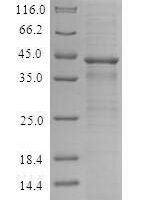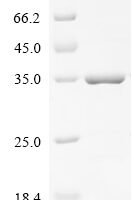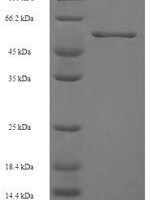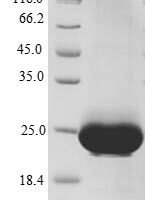
, ,

Recombinant Human C-X-C chemokine receptor type 4 (CXCR4)-VLPs (Active)

Recombinant Human C-X-C chemokine receptor type 4 (CXCR4)-VLPs (Active) — (Microbial infection) Acts as a coreceptor (CD4 being the primary receptor) for human immunodeficiency virus-1/HIV-1 X4 isolates and as a primary receptor for some HIV-2 isolates.

SKU: BCACP-000177 Categories: , ,
Product SKUBCACP-000177
Product DescriptionRecombinant Human C-X-C chemokine receptor type 4 (CXCR4)-VLPs protein is expressed from Mammalian cell with C-terminal 10xHis-tagged (This tag can be tested only under denaturing conditions). It contains 1-352aa. [Accession | P61073].
Uniprot No.P61073
Gene NamesCXCR4
Expression SystemMammalian cell
Expression Region1-352aa
SpeciesHomo sapiens (Human)
Tag InfoC-terminal 10xHis-tagged (This tag can be tested only under denaturing conditions)
Molecular weight41.5 kDa
ActivityMeasured by its binding ability in a functional ELISA. Immobilized Rhesus macaque SEMA4D at 2 μg/mL can bind Anti-SEMA4D recombinant antibody , the EC50 is 1.943-2.724 ng/mL.
BufferLyophilized from a 0.2 μm filtered 20 mM Tris-HCl, 0.5 M NaCl, 6% Trehalose, pH 8.0
StorageStore at -20°C/-80°C upon receipt, aliquoting is necessary for mutiple use. Avoid repeated freeze-thaw cycles.
Alternative Names(CXC-R4)(CXCR-4)(FB22)(Fusin)(HM89)(LCR1)(Leukocyte-derived seven transmembrane domain receptor)(LESTR)(Lipopolysaccharide-associated protein 3)(LAP-3)(LPS-associated protein 3)(NPYRL)(Stromal cell-derived factor 1 receptor)(SDF-1 receptor)(CD antigen CD184)

Function

(Microbial infection) Acts as a coreceptor (CD4 being the primary receptor) for human immunodeficiency virus-1/HIV-1 X4 isolates and as a primary receptor for some HIV-2 isolates. Promotes Env-mediated fusion of the virus.

Biological Context

Subcellular Location: Cell membrane (Multi-pass membrane protein); Cell junction; Early endosome; Late endosome; Lysosome
Tissue Specificity: Expressed in numerous tissues, such as peripheral blood leukocytes, spleen, thymus, spinal cord, heart, placenta, lung, liver, skeletal muscle, kidney, pancreas, cerebellum, cerebral cortex and medulla (in microglia as well as in astrocytes), brain microvascular, coronary artery and umbilical cord endothelial cells. Isoform 1 is predominant in all tissues tested
Disease Association: WHIM syndrome 1 (WHIMS1) : An autosomal dominant immunologic disease characterized by neutropenia, hypogammaglobulinemia and extensive human papillomavirus (HPV) infection. Despite the peripheral neutropenia, bone marrow aspirates from affected individuals contain abundant mature myeloid cells, a condition termed myelokathexis. [The disease is caused by variants affecting the gene represented in this entry] | [CXCR4 mutations play a role in the pathogenesis of Waldenstroem macroglobulinemia (WM) and influence disease presentation and outcome, as well as response to therapy. WM is a B-cell lymphoma characterized by accumulation of malignant lymphoplasmacytic cells in the bone marrow, lymph nodes and spleen, and hypersecretion of monoclonal immunoglobulin M (IgM). Excess IgM production results in serum hyperviscosity, tissue infiltration, and autoimmune-related pathology]

Product Specifications

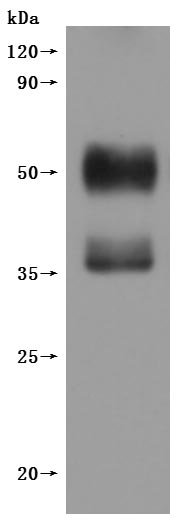
Recombinant Human C-X-C chemokine receptor type 4 (CXCR4)-VLPs (Active) is a recombinant protein from Homo sapiens (Human), expressed in Mammalian cell, covering amino acids 1-352aa, with C-terminal 10xHis-tagged (This tag can be tested only under denaturing conditions) tag, molecular weight 41.5 kDa. Suitable for ELISA and Western Blot applications.

Recommended applications depend on the target, product format, and product-specific validation data. Refer to the product datasheet or Certificate of Analysis (CoA), or contact BioCrest Sci for application guidance.

Biological Activity: Measured by its binding ability in a functional ELISA. Immobilized Rhesus macaque SEMA4D at 2 μg/mL can bind Anti-SEMA4D recombinant antibody , the EC50 is 1.943-2.724 ng/mL.

Storage: Store at -20°C/-80°C upon receipt, aliquoting is necessary for mutiple use. Avoid repeated freeze-thaw cycles.

Shipping & Lead Time: Availability, shipping conditions, and estimated lead time are confirmed in the formal quotation or order confirmation based on the product format, destination, and order requirements.

Protein Biology

Function

(Microbial infection) Acts as a coreceptor (CD4 being the primary receptor) for human immunodeficiency virus-1/HIV-1 X4 isolates and as a primary receptor for some HIV-2 isolates. Promotes Env-mediated fusion of the virus (PubMed:10074122, PubMed:10756055, PubMed:8849450, PubMed:8929542, PubMed:9427609)

Subcellular Location

Cell membrane (Multi-pass membrane protein); Cell junction; Early endosome; Late endosome; Lysosome

Disease Association

WHIM syndrome 1 (WHIMS1) : An autosomal dominant immunologic disease characterized by neutropenia, hypogammaglobulinemia and extensive human papillomavirus (HPV) infection. Despite the peripheral neutropenia, bone marrow aspirates from affected individuals contain abundant mature myeloid cells, a condition termed myelokathexis. [The disease is caused by variants affecting the gene represented in this entry] | [CXCR4 mutations play a role in the pathogenesis of Waldenstroem macroglobulinemia (WM) and influence disease presentation and outcome, as well as response to therapy. WM is a B-cell lymphoma characterized by accumulation of malignant lymphoplasmacytic cells in the bone marrow, lymph nodes and spleen, and hypersecretion of monoclonal immunoglobulin M (IgM). Excess IgM production results in serum hyperviscosity, tissue infiltration, and autoimmune-related pathology]

Tissue Specificity

Expressed in numerous tissues, such as peripheral blood leukocytes, spleen, thymus, spinal cord, heart, placenta, lung, liver, skeletal muscle, kidney, pancreas, cerebellum, cerebral cortex and medulla (in microglia as well as in astrocytes), brain microvascular, coronary artery and umbilical cord endothelial cells. Isoform 1 is predominant in all tissues tested

Subunit

(Microbial infection) Interacts with Staphylococcus aureus protein SSL10

Gene: CXCR4  |  Organism: Homo sapiens  |  Synonyms: FB22; Fusin; HM89; LCR1; Leukocyte-derived seven transmembrane domain receptor; Lipopolysaccharide-associated protein 3; NPYRL; Stromal cell-derived factor 1 receptor
Key Publications

Frequently Asked Questions

How do I order or inquire about this product?

Submit the Online Inquiry form with your required quantity and specifications, or email sales@biocrestsci.com. Available sizes, pricing, stock status, documentation, and estimated lead time are confirmed in the formal quotation.

What is the shipping and delivery time?

Availability, dispatch timing, shipping conditions, and delivery estimates depend on the product format, destination, and order requirements. These details are confirmed in the formal quotation or order confirmation.

How should this product be stored?

Follow the storage and handling instructions in the product-specific datasheet and Certificate of Analysis (CoA). Requirements may vary by product form and formulation; contact BioCrest Sci if product-specific guidance is needed.

What quality controls are performed on your products?

Quality-control data such as identity, purity, endotoxin level, or biological activity are provided only when specified on this product page, the datasheet, or Certificate of Analysis (CoA). Biological activity is not implied unless explicitly stated.

Shopping Cart
Scroll to Top