Recombinant Human Cathepsin B (CTSB) (L26V)

Recombinant Human Cathepsin B (CTSB) (L26V) — Thiol protease which is believed to participate in intracellular degradation and turnover of proteins. Purity >90%.

SKU: BCRECP-000452 Category:

Product Specifications

Product SkuBCRECP-000452
Product DescriptionRecombinant Human Cathepsin B (CTSB) (L26V) Protein is expressed from Mammalian cell with C-terminal 10xHis-tagged. It contains 18-339aa(L26V). [Accession | P07858].
Uniprot No.P07858
Gene NamesCTSB
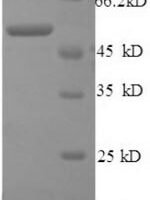
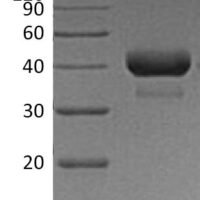
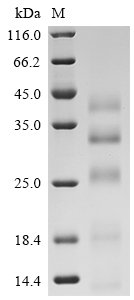
PurityGreater than 90% as determined by SDS-PAGE.
Expression SystemMammalian cell
Expression Region18-339aa(L26V)
SpeciesHomo sapiens (Human)
Tag InfoC-terminal 10xHis-tagged
Molecular weight37.3kDa
ActivityPlease contact us to obtain bioactivity data.
BufferIf the delivery form is liquid, the default storage buffer is Tris/PBS-based buffer, 5%-50% glycerol. If the delivery form is lyophilized powder, the buffer before lyophilization is Tris/PBS-based buffer, 6% Trehalose.
StorageStore at -20°C/-80°C upon receipt, aliquoting is necessary for mutiple use. Avoid repeated freeze-thaw cycles.
Research AreasNeuroscience

Function

Thiol protease which is believed to participate in intracellular degradation and turnover of proteins. Cleaves matrix extracellular phosphoglycoprotein MEPE. Involved in the solubilization of cross-linked TG/thyroglobulin in the thyroid follicle lumen.

Biological Context

Subcellular Location: Lysosome; Melanosome; Secreted, extracellular space; Apical cell membrane (Peripheral membrane protein)
Tissue Specificity: Expressed in the stratum spinosum of the epidermis. Weak expression is detected in the stratum granulosum
Disease Association: Keratolytic winter erythema (KWE) : An autosomal dominant genodermatosis characterized by recurrent episodes of palmoplantar erythema and epidermal peeling presenting seasonal variation. KWE manifests during childhood. Skin lesions may spread to the dorsum of hands and feet and to the interdigital spaces. Lower legs, knees and thighs may also be involved. A less common finding is a slowly migratory, annular erythema that is seen mostly on the extremities. Between flares, the skin can appear unremarkable. Itching can occur, and hyperhidrosis, associated with a pungent odor, is invariably present. Formation of vesicles is rare, whereas keratolysis that causes the formation of dry blisters is regularly seen. Cold weather, moisture, febrile diseases, and physical and mental stress can trigger exacerbations. In severely affected individuals, skin manifestations persist unremittingly. Penetrance of the disease is high, but expressivity is variable, even within the same family. [The gene represented in this entry is involved in disease pathogenesis. Tandem duplications in a non-coding genomic region containing an active enhancer element for CTSB result in CTSB abnormal expression with pathological consequences]

Product Specifications

Recombinant Human Cathepsin B (CTSB) (L26V) is a recombinant protein from Homo sapiens (Human), expressed in Mammalian cell, covering amino acids 18-339aa(L26V), with C-terminal 10xHis-tagged tag, molecular weight 37.3kDa, purity Greater than 90% as determined by SDS-PAGE.. Suitable for ELISA and Western Blot applications.
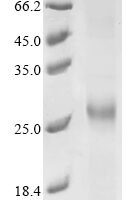
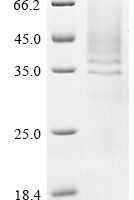
SDS-PAGE: Single band at expected molecular weight confirming purity.

ELISA: Suitable as coating antigen or detection standard.

Western Blot: Compatible with standard Western Blot protocols.

Protein Interaction: Validated for SPR (Surface Plasmon Resonance) and BLI (Bio-Layer Interferometry) studies.

Shipping: Shipped at ambient temperature. Lyophilized protein is stable during transit.

Storage: Store lyophilized protein at -20°C to -80°C. Reconstituted protein should be aliquoted and stored at -80°C. Avoid repeated freeze-thaw cycles.

Shelf Life: 12 months from date of receipt when stored as recommended.

Shipping Time: Orders placed before 2 PM EST ship same day. International orders typically deliver within 5-10 business days.

Protein Biology

Function

Thiol protease which is believed to participate in intracellular degradation and turnover of proteins (PubMed:12220505). Cleaves matrix extracellular phosphoglycoprotein MEPE (PubMed:12220505). Involved in the solubilization of cross-linked TG/thyroglobulin in the thyroid follicle lumen (By similarity). Has also been implicated in tumor invasion and metastasis (PubMed:3972105)

Subcellular Location

Lysosome; Melanosome; Secreted, extracellular space; Apical cell membrane (Peripheral membrane protein)

Disease Association

Keratolytic winter erythema (KWE) : An autosomal dominant genodermatosis characterized by recurrent episodes of palmoplantar erythema and epidermal peeling presenting seasonal variation. KWE manifests during childhood. Skin lesions may spread to the dorsum of hands and feet and to the interdigital spaces. Lower legs, knees and thighs may also be involved. A less common finding is a slowly migratory, annular erythema that is seen mostly on the extremities. Between flares, the skin can appear unremarkable. Itching can occur, and hyperhidrosis, associated with a pungent odor, is invariably present. Formation of vesicles is rare, whereas keratolysis that causes the formation of dry blisters is regularly seen. Cold weather, moisture, febrile diseases, and physical and mental stress can trigger exacerbations. In severely affected individuals, skin manifestations persist unremittingly. Penetrance of the disease is high, but expressivity is variable, even within the same family. [The gene represented in this entry is involved in disease pathogenesis. Tandem duplications in a non-coding genomic region containing an active enhancer element for CTSB result in CTSB abnormal expression with pathological consequences]

Tissue Specificity

Expressed in the stratum spinosum of the epidermis. Weak expression is detected in the stratum granulosum

Subunit

Dimer of a heavy chain and a light chain cross-linked by a disulfide bond. Interacts with SRPX2. Directly interacts with SHKBP1 (PubMed:16733801)

Gene: CTSB  |  Organism: Homo sapiens  |  Synonyms: APP secretase; Cathepsin B1
Key Publications

Frequently Asked Questions

How do I order or inquire about this product?

Fill out the Online Inquiry form with your required quantity and specifications. You can also email sales@biocrestsci.com. Our team typically responds within 4 business hours with a quote and availability confirmation.

What is the shipping and delivery time?

Orders placed before 2 PM EST ship the same day. Domestic (US) delivery typically takes 2-3 business days. International orders deliver within 5-10 business days. All products are shipped at ambient temperature with appropriate packaging to ensure stability.

How should I store this recombinant protein?

Lyophilized proteins should be stored at -20°C to -80°C upon receipt. After reconstitution, aliquot and store at -80°C. Avoid repeated freeze-thaw cycles. Shelf life is 12 months from date of receipt when stored as recommended.

What quality controls are performed on your products?

Each product undergoes SDS-PAGE purity analysis (typically >85-95%), endotoxin testing, and bioactivity validation. Products are validated for ELISA, Western Blot, and SPR/BLI applications as specified on this product page. A Certificate of Analysis (CoA) is available upon request.

Shopping Cart
Scroll to Top