Recombinant Human Chromodomain-helicase-DNA-binding protein 4 (CHD4), partial

Recombinant Human Chromodomain-helicase-DNA-binding protein 4 (CHD4), partial — ATP-dependent chromatin-remodeling factor that binds and distorts nucleosomal DNA. Purity >85%.

SKU: BCRECP-000359 Category:

Product Specifications

Product SkuBCRECP-000359
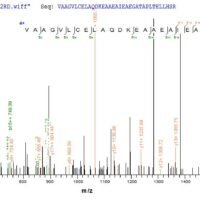
Product DescriptionRecombinant Human Chromodomain-helicase-DNA-binding protein 4 (CHD4) Protein is expressed from E.coli with N-terminal 6xHis-tagged. It contains 1-239aa. [Accession | Q14839].
Uniprot No.Q14839
Gene NamesCHD4
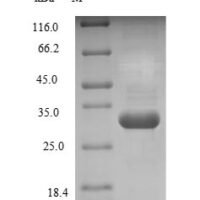
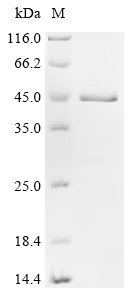
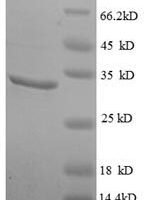
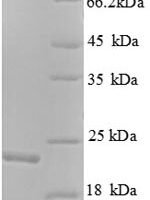
PurityGreater than 85% as determined by SDS-PAGE.
Expression SystemE.coli
Expression Region1-239aa
SpeciesHomo sapiens (Human)
Tag InfoN-terminal 6xHis-tagged
Molecular weight30.6kDa
ActivityPlease contact us to obtain bioactivity data.
BufferIf the delivery form is liquid, the default storage buffer is Tris/PBS-based buffer, 5%-50% glycerol. If the delivery form is lyophilized powder, the buffer before lyophilization is Tris/PBS-based buffer, 6% Trehalose.
StorageStore at -20°C/-80°C upon receipt, aliquoting is necessary for mutiple use. Avoid repeated freeze-thaw cycles.
Research AreasEpigenetics and Nuclear Signaling

Function

ATP-dependent chromatin-remodeling factor that binds and distorts nucleosomal DNA. Acts as a component of the histone deacetylase NuRD complex which participates in the remodeling of chromatin. Localizes to acetylated damaged chromatin in a ZMYND8-dependent manner, to promote transcriptional repression and double-strand break repair by homologous recombination.

Biological Context

Subcellular Location: Nucleus; Cytoplasm, cytoskeleton, microtubule organizing center, centrosome
Tissue Specificity: Widely expressed
Disease Association: Sifrim-Hitz-Weiss syndrome (SIHIWES) : An autosomal dominant syndrome characterized by intellectual disability, variable congenital defects affecting cardiac, skeletal, and urogenital systems. Short stature, macrocephaly, hearing impairment, and facial dysmorphism are present in some patients. [The disease is caused by variants affecting the gene represented in this entry]

Product Specifications

Recombinant Human Chromodomain-helicase-DNA-binding protein 4 (CHD4), partial is a recombinant protein from Homo sapiens (Human), expressed in E.coli, covering amino acids 1-239aa, with N-terminal 6xHis-tagged tag, molecular weight 30.6kDa, purity Greater than 85% as determined by SDS-PAGE.. Suitable for ELISA and Western Blot applications.
Recommended applications depend on the target, product format, and product-specific validation data. Refer to the product datasheet or Certificate of Analysis (CoA), or contact BioCrest Sci for application guidance.

Biological Activity: Please contact us to obtain bioactivity data.

Storage: Store at -20°C/-80°C upon receipt, aliquoting is necessary for mutiple use. Avoid repeated freeze-thaw cycles.

Shipping & Lead Time: Availability, shipping conditions, and estimated lead time are confirmed in the formal quotation or order confirmation based on the product format, destination, and order requirements.

Protein Biology

Function

ATP-dependent chromatin-remodeling factor that binds and distorts nucleosomal DNA (PubMed:28977666, PubMed:32543371). Acts as a component of the histone deacetylase NuRD complex which participates in the remodeling of chromatin (PubMed:16428440, PubMed:17626165, PubMed:28977666, PubMed:9804427). Localizes to acetylated damaged chromatin in a ZMYND8-dependent manner, to promote transcriptional repression and double-strand break repair by homologous recombination (PubMed:25593309). Involved in neurogenesis (By similarity)

Subcellular Location

Nucleus; Cytoplasm, cytoskeleton, microtubule organizing center, centrosome

Disease Association

Sifrim-Hitz-Weiss syndrome (SIHIWES) : An autosomal dominant syndrome characterized by intellectual disability, variable congenital defects affecting cardiac, skeletal, and urogenital systems. Short stature, macrocephaly, hearing impairment, and facial dysmorphism are present in some patients. [The disease is caused by variants affecting the gene represented in this entry]

Tissue Specificity

Widely expressed

Subunit

Component of the nucleosome remodeling and deacetylase (NuRD) repressor complex, composed of core proteins MTA1, MTA2, MTA3, RBBP4, RBBP7, HDAC1, HDAC2, MBD2, MBD3, and peripherally associated proteins CDK2AP1, CDK2AP2, GATAD2A, GATAD2B, CHD3, CHD4 and CHD5 (PubMed:10204490, PubMed:15454082, PubMed:16428440, PubMed:28977666, PubMed:33283408, PubMed:9804427). The exact stoichiometry of the NuRD complex is unknown, and some subunits such as MBD2 and MBD3, GATAD2A and GATAD2B, and CHD3, CHD4 and CHD5 define mutually exclusive NuRD complexes (PubMed:16428440, PubMed:28977666, PubMed:33283408). Interacts with IKFZ1; the interaction is direct and when in part of the NuRD complex (By similarity). Part of a complex containing ATR and HDAC2 (PubMed:10545197). Interacts with HDAC2; the interaction is direct (PubMed:12198550, PubMed:25593309). Interacts with the cohesin complex component RAD21; the interaction is direct (PubMed:12198550). Interacts with the ISWI chromatin remodeling complex component SMARCA5; the interaction is direct (PubMed:12198550). Interacts with ZGPAT; the interaction is direct (PubMed:19644445). Interacts with ZMYND8; the interaction is direct, appears to occur with monomeric ZMYND8, and is increased following DNA damage (PubMed:25593309, PubMed:30134174, PubMed:36064715). Interacts with BCL6 (PubMed:15454082). Interacts with BRD4 (PubMed:21555454). Interacts with CBX1 (PubMed:28977666). Interacts with CBX3 (PubMed:28977666). Interacts with CBX5 (PubMed:28977666). Interacts with GATAD2A (PubMed:33283408). Interacts with HDAC1 (PubMed:25593309, PubMed:27616479, PubMed:28977666, PubMed:36064715). Interacts with KLF1; the interaction depends on sumoylation of KLF1, and leads to its transcriptional repression (By similarity). Interacts with MTA1 (PubMed:28977666). Interacts with PCNT (PubMed:17626165). Interacts with RBBP7 (PubMed:28977666). Interacts with SETX (PubMed:23149945). Interacts with TRIM27 (PubMed:14530259). Interacts with histone H3 (PubMed:32543371). Interacts with histone H4 (PubMed:32543371). Does not interact with PWWP2A (By similarity). Does not interact with PWWP2B (By similarity). Interacts (via KIKL motif) with BRD3 (via NET domain) (PubMed:29567837)

Gene: CHD4  |  Organism: Homo sapiens  |  Synonyms: Chromo domain-containing protein 4; Mi-2 autoantigen 218 kDa protein; Mi2-beta
Key Publications

Frequently Asked Questions

How do I order or inquire about this product?

Submit the Online Inquiry form with your required quantity and specifications, or email sales@biocrestsci.com. Available sizes, pricing, stock status, documentation, and estimated lead time are confirmed in the formal quotation.

What is the shipping and delivery time?

Availability, dispatch timing, shipping conditions, and delivery estimates depend on the product format, destination, and order requirements. These details are confirmed in the formal quotation or order confirmation.

How should this product be stored?

Follow the storage and handling instructions in the product-specific datasheet and Certificate of Analysis (CoA). Requirements may vary by product form and formulation; contact BioCrest Sci if product-specific guidance is needed.

What quality controls are performed on your products?

Quality-control data such as identity, purity, endotoxin level, or biological activity are provided only when specified on this product page, the datasheet, or Certificate of Analysis (CoA). Biological activity is not implied unless explicitly stated.

Shopping Cart
Scroll to Top