Function
Component of the cytochrome c oxidase, the last enzyme in the mitochondrial electron transport chain which drives oxidative phosphorylation. The respiratory chain contains 3 multisubunit complexes succinate dehydrogenase (complex II, CII), ubiquinol-cytochrome c oxidoreductase (cytochrome b-c1 complex, complex III, CIII) and cytochrome c oxidase (complex IV, CIV), that cooperate to transfer electrons derived from NADH and succinate to molecular oxygen, creating an electrochemical gradient over the inner membrane that drives transmembrane transport and the ATP synthase. Cytochrome c oxidase is the component of the respiratory chain that catalyzes the reduction of oxygen to water.
Biological Context
Subcellular Location: Mitochondrion inner membrane (Peripheral membrane protein)
Disease Association: Mitochondrial complex IV deficiency, nuclear type 20 (MC4DN20) : An autosomal recessive mitochondrial disorder with onset in early infancy. MC4DN20 is characterized by pulmonary arterial hypertension, poor feeding, failure to thrive, hypotonia, delayed development, increased serum lactate and metabolic acidosis. Death in infancy occurs due to cardiorespiratory failure. Patient tissues show variably decreased levels and activity of mitochondrial respiratory complex IV. [The disease may be caused by variants affecting the gene represented in this entry]
Pathway: Energy metabolism; oxidative phosphorylation
Product Specifications
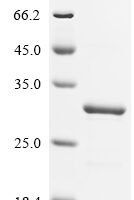
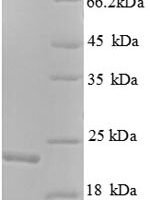
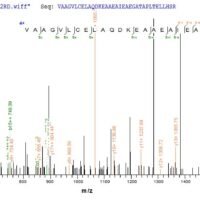
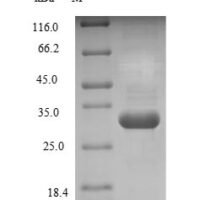
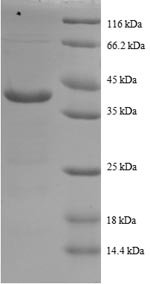
Recombinant Human Cytochrome c oxidase subunit 5A, mitochondrial (COX5A) is a recombinant protein from Homo sapiens (Human), expressed in E.coli, covering amino acids 42-150aa, with N-terminal GST-tagged tag, molecular weight 39.5kDa, purity Greater than 90% as determined by SDS-PAGE.. Suitable for ELISA and Western Blot applications. Explore more Enzyme proteins →