Function
A component of desmosome cell-cell junctions which are required for positive regulation of cellular adhesion. Required for adherens and desmosome junction assembly in response to mechanical force in keratinocytes. Required for desmosome-mediated cell-cell adhesion of cells surrounding the telogen hair club and the basal layer of the outer root sheath epithelium, consequently is essential for the anchoring of telogen hairs in the hair follicle.
Biological Context
Subcellular Location: Cell membrane (Single-pass type I membrane protein); Cell junction, desmosome; Cytoplasm; Cell junction, tight junction; Cell junction
Tissue Specificity: Expressed throughout the basal and spinous layer of the epidermis with weak expression in the granular layer (at protein level). Expressed in skin and mucosa (at protein level). Expressed throughout the esophageal mucosa (at protein level). Expressed in the basal layer of the outer root sheath of the telogen hair club, specifically at the cell membrane between the apex of the cells and the surrounding hair club (at protein level). Expression is less abundant between the lateral margins of the outer root sheath basal cells (at protein level). Also expressed in the tongue, tonsil and esophagus
Disease Association: Blistering, acantholytic, of oral and laryngeal mucosa (ABOLM) : An autosomal recessive disorder characterized by recurrent, suprabasal acantholytic blisters in the oral and laryngeal mucosa. Skin, conjunctival and genital mucosa, nail folds, and nails are unaffected. Normal structure is observed in the scalp epidermis and hair follicle. [The disease may be caused by variants affecting the gene represented in this entry]
Product Specifications
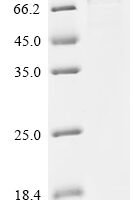
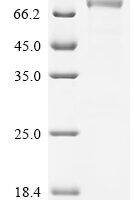
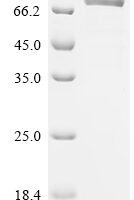
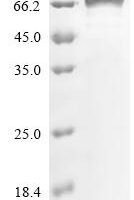
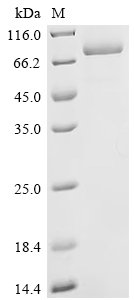
Recombinant Human Desmoglein-3 (DSG3), partial is a recombinant protein from Homo sapiens (Human), expressed in Mammalian cell, covering amino acids 50-615aa, with C-terminal 10xHis-Avi-tagged tag, molecular weight 67.5kDa, purity Greater than 90% as determined by SDS-PAGE.. Suitable for ELISA and Western Blot applications.