Recombinant Human DNA repair protein complementing XP-C cells (XPC), partial

Recombinant Human DNA repair protein complementing XP-C cells (XPC), partial — In absence of DNA repair, the XPC complex also acts as a transcription coactivator: XPC interacts with the DNA-binding transcription factor E2F1 at a subset of promoters to recruit KAT2A and histon… Purity >90%.

SKU: BCRECP-001918 Category:

Product Specifications

Product SkuBCRECP-001918
Product DescriptionRecombinant Human DNA repair protein complementing XP-C cells (XPC) Protein is expressed from E.coli with N-terminal 6xHis-tagged. It contains 496-734aa. [Accession | Q01831].
Uniprot No.Q01831
Gene NamesXPC
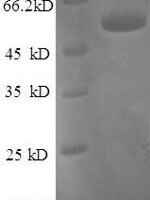
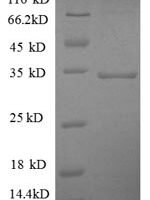
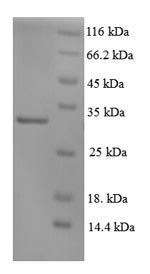
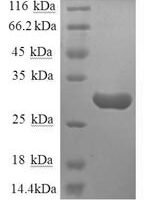
PurityGreater than 90% as determined by SDS-PAGE.
Expression SystemE.coli
Expression Region496-734aa
SpeciesHomo sapiens (Human)
Tag InfoN-terminal 6xHis-tagged
Molecular weight31.5kDa
ActivityPlease contact us to obtain bioactivity data.
BufferIf the delivery form is liquid, the default storage buffer is Tris/PBS-based buffer, 5%-50% glycerol. If the delivery form is lyophilized powder, the buffer before lyophilization is Tris/PBS-based buffer, 6% Trehalose.
StorageStore at -20°C/-80°C upon receipt, aliquoting is necessary for mutiple use. Avoid repeated freeze-thaw cycles.
Research AreasEpigenetics and Nuclear Signaling

Function

In absence of DNA repair, the XPC complex also acts as a transcription coactivator: XPC interacts with the DNA-binding transcription factor E2F1 at a subset of promoters to recruit KAT2A and histone acetyltransferase complexes (HAT). KAT2A recruitment specifically promotes acetylation of histone variant H2A.Z.1/H2A.Z, but not H2A.Z.2/H2A.V, thereby promoting expression of target genes.

Biological Context

Subcellular Location: Nucleus; Chromosome; Cytoplasm
Disease Association: Xeroderma pigmentosum complementation group C (XP-C) : An autosomal recessive pigmentary skin disorder characterized by solar hypersensitivity of the skin, high predisposition for developing cancers on areas exposed to sunlight and, in some cases, neurological abnormalities. The skin develops marked freckling and other pigmentation abnormalities. [The disease is caused by variants affecting the gene represented in this entry]

Product Specifications

Recombinant Human DNA repair protein complementing XP-C cells (XPC), partial is a recombinant protein from Homo sapiens (Human), expressed in E.coli, covering amino acids 496-734aa, with N-terminal 6xHis-tagged tag, molecular weight 31.5kDa, purity Greater than 90% as determined by SDS-PAGE.. Suitable for ELISA and Western Blot applications.
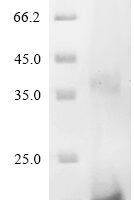
Recommended applications depend on the target, product format, and product-specific validation data. Refer to the product datasheet or Certificate of Analysis (CoA), or contact BioCrest Sci for application guidance.

Biological Activity: Please contact us to obtain bioactivity data.

Storage: Store at -20°C/-80°C upon receipt, aliquoting is necessary for mutiple use. Avoid repeated freeze-thaw cycles.

Shipping & Lead Time: Availability, shipping conditions, and estimated lead time are confirmed in the formal quotation or order confirmation based on the product format, destination, and order requirements.

Protein Biology

Function

In absence of DNA repair, the XPC complex also acts as a transcription coactivator: XPC interacts with the DNA-binding transcription factor E2F1 at a subset of promoters to recruit KAT2A and histone acetyltransferase complexes (HAT) (PubMed:29973595, PubMed:31527837). KAT2A recruitment specifically promotes acetylation of histone variant H2A.Z.1/H2A.Z, but not H2A.Z.2/H2A.V, thereby promoting expression of target genes (PubMed:31527837)

Subcellular Location

Nucleus; Chromosome; Cytoplasm

Disease Association

Xeroderma pigmentosum complementation group C (XP-C) : An autosomal recessive pigmentary skin disorder characterized by solar hypersensitivity of the skin, high predisposition for developing cancers on areas exposed to sunlight and, in some cases, neurological abnormalities. The skin develops marked freckling and other pigmentation abnormalities. [The disease is caused by variants affecting the gene represented in this entry]

Subunit

Component of the XPC complex composed of XPC, RAD23B and CETN2 (PubMed:11279143, PubMed:12509233, PubMed:15964821, PubMed:16533048, PubMed:16627479, PubMed:17897675). Interacts with RAD23A; the interaction is suggesting the existence of a functional equivalent variant XPC complex (PubMed:9372924). Interacts with TDG; the interaction is demonstrated using the XPC:RAD23B dimer (PubMed:12505994, PubMed:20798892). Interacts with SMUG1; the interaction is demonstrated using the XPC:RAD23B dimer (PubMed:20798892). Interacts with DDB2 (PubMed:15882621). Interacts with CCNH, GTF2H1 and ERCC3 (PubMed:10734143, PubMed:12509233). Interacts with E2F1 and KAT2A; leading to KAT2A recruitment to promoters and subsequent acetylation of histones (PubMed:29973595, PubMed:31527837)

Gene: XPC  |  Organism: Homo sapiens  |  Synonyms: Xeroderma pigmentosum group C-complementing protein; p125
Key Publications

Frequently Asked Questions

How do I order or inquire about this product?

Submit the Online Inquiry form with your required quantity and specifications, or email sales@biocrestsci.com. Available sizes, pricing, stock status, documentation, and estimated lead time are confirmed in the formal quotation.

What is the shipping and delivery time?

Availability, dispatch timing, shipping conditions, and delivery estimates depend on the product format, destination, and order requirements. These details are confirmed in the formal quotation or order confirmation.

How should this product be stored?

Follow the storage and handling instructions in the product-specific datasheet and Certificate of Analysis (CoA). Requirements may vary by product form and formulation; contact BioCrest Sci if product-specific guidance is needed.

What quality controls are performed on your products?

Quality-control data such as identity, purity, endotoxin level, or biological activity are provided only when specified on this product page, the datasheet, or Certificate of Analysis (CoA). Biological activity is not implied unless explicitly stated.

Shopping Cart
Scroll to Top