Recombinant Human DNA replication ATP-dependent helicase/nuclease DNA2 (DNA2), partial

Recombinant Human DNA replication ATP-dependent helicase/nuclease DNA2 (DNA2), partial — Key enzyme involved in DNA replication and DNA repair in nucleus and mitochondrion. Purity >90%.

SKU: BCRECP-000520 Category:

Product Specifications

Product SkuBCRECP-000520
Product DescriptionRecombinant Human DNA replication ATP-dependent helicase/nuclease DNA2 (DNA2) Protein is expressed from E.coli with C-terminal 6xHis-tagged. It contains 81-519aa. [Accession | P51530].
Uniprot No.P51530
Gene NamesDNA2
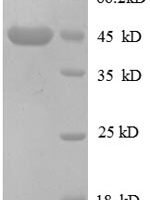
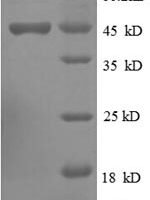
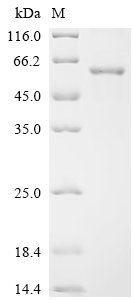
PurityGreater than 90% as determined by SDS-PAGE.
Expression SystemE.coli
Expression Region81-519aa
SpeciesHomo sapiens (Human)
Tag InfoC-terminal 6xHis-tagged
Molecular weight57.3kDa
ActivityPlease contact us to obtain bioactivity data.
BufferIf the delivery form is liquid, the default storage buffer is Tris/PBS-based buffer, 5%-50% glycerol. If the delivery form is lyophilized powder, the buffer before lyophilization is Tris/PBS-based buffer, 6% Trehalose.
StorageStore at -20°C/-80°C upon receipt, aliquoting is necessary for mutiple use. Avoid repeated freeze-thaw cycles.
Research AreasEpigenetics and Nuclear Signaling

Function

Key enzyme involved in DNA replication and DNA repair in nucleus and mitochondrion. Involved in Okazaki fragments processing by cleaving long flaps that escape FEN1: flaps that are longer than 27 nucleotides are coated by replication protein A complex (RPA), leading to recruit DNA2 which cleaves the flap until it is too short to bind RPA and becomes a substrate for FEN1. Also involved in 5'-end resection of DNA during double-strand break (DSB) repair: recruited by BLM and mediates the cleavage of 5'-ssDNA, while the 3'-ssDNA cleavage is prevented by the presence of RPA.

Biological Context

Subcellular Location: Nucleus; Mitochondrion
Disease Association: Progressive external ophthalmoplegia with mitochondrial DNA deletions, autosomal dominant, 6 (PEOA6) : A disorder characterized by muscle weakness, mainly affecting the lower limbs, external ophthalmoplegia, exercise intolerance, and mitochondrial DNA deletions on muscle biopsy. Symptoms may appear in childhood or adulthood and show slow progression. [The disease is caused by variants affecting the gene represented in this entry] | Seckel syndrome 8 (SCKL8) : A rare autosomal recessive disorder characterized by proportionate dwarfism of prenatal onset associated with low birth weight, growth retardation, severe microcephaly with a bird-headed like appearance, and intellectual disability. [The disease is caused by variants affecting the gene represented in this entry] | Rothmund-Thomson syndrome 4 (RTS4) : A form of Rothmund-Thomson syndrome, a disorder characterized by sparse hair, eyebrows and eyelashes, juvenile cataracts, and poikiloderma, a genodermatosis presenting with mottled pigmentation, telangiectasia and epidermal atrophy. Additional features are short stature, dysplastic nails, and skeletal and dental abnormalities. Inheritance is autosomal recessive. RTS4 patients also exhibit microcephaly and photosensitivity with bullae. Growth failure is severe, with some individuals showing signs of growth hormone or combined pituitary hormone deficiency. [The disease is caused by variants affecting the gene represented in this entry]

Product Specifications

Recombinant Human DNA replication ATP-dependent helicase/nuclease DNA2 (DNA2), partial is a recombinant protein from Homo sapiens (Human), expressed in E.coli, covering amino acids 81-519aa, with C-terminal 6xHis-tagged tag, molecular weight 57.3kDa, purity Greater than 90% as determined by SDS-PAGE.. Suitable for ELISA and Western Blot applications.
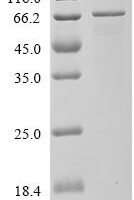
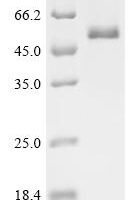
SDS-PAGE: Single band at expected molecular weight confirming purity.

ELISA: Suitable as coating antigen or detection standard.

Western Blot: Compatible with standard Western Blot protocols.

Protein Interaction: Validated for SPR (Surface Plasmon Resonance) and BLI (Bio-Layer Interferometry) studies.

Shipping: Shipped at ambient temperature. Lyophilized protein is stable during transit.

Storage: Store lyophilized protein at -20°C to -80°C. Reconstituted protein should be aliquoted and stored at -80°C. Avoid repeated freeze-thaw cycles.

Shelf Life: 12 months from date of receipt when stored as recommended.

Shipping Time: Orders placed before 2 PM EST ship same day. International orders typically deliver within 5-10 business days.

Protein Biology

Function

Key enzyme involved in DNA replication and DNA repair in nucleus and mitochondrion. Involved in Okazaki fragments processing by cleaving long flaps that escape FEN1: flaps that are longer than 27 nucleotides are coated by replication protein A complex (RPA), leading to recruit DNA2 which cleaves the flap until it is too short to bind RPA and becomes a substrate for FEN1. Also involved in 5'-end resection of DNA during double-strand break (DSB) repair: recruited by BLM and mediates the cleavage of 5'-ssDNA, while the 3'-ssDNA cleavage is prevented by the presence of RPA. Also involved in DNA replication checkpoint independently of Okazaki fragments processing. Possesses different enzymatic activities, such as single-stranded DNA (ssDNA)-dependent ATPase, 5'-3' helicase and endonuclease activities. While the ATPase and endonuclease activities are well-defined and play a key role in Okazaki fragments processing and DSB repair, the 5'-3' DNA helicase activity is subject to debate. According to various reports, the helicase activity is absent to weak and its function remains largely unclear. Helicase activity may promote the motion of DNA2 on the flap, helping the nuclease function

Subcellular Location

Nucleus; Mitochondrion

Disease Association

Progressive external ophthalmoplegia with mitochondrial DNA deletions, autosomal dominant, 6 (PEOA6) : A disorder characterized by muscle weakness, mainly affecting the lower limbs, external ophthalmoplegia, exercise intolerance, and mitochondrial DNA deletions on muscle biopsy. Symptoms may appear in childhood or adulthood and show slow progression. [The disease is caused by variants affecting the gene represented in this entry] | Seckel syndrome 8 (SCKL8) : A rare autosomal recessive disorder characterized by proportionate dwarfism of prenatal onset associated with low birth weight, growth retardation, severe microcephaly with a bird-headed like appearance, and intellectual disability. [The disease is caused by variants affecting the gene represented in this entry] | Rothmund-Thomson syndrome 4 (RTS4) : A form of Rothmund-Thomson syndrome, a disorder characterized by sparse hair, eyebrows and eyelashes, juvenile cataracts, and poikiloderma, a genodermatosis presenting with mottled pigmentation, telangiectasia and epidermal atrophy. Additional features are short stature, dysplastic nails, and skeletal and dental abnormalities. Inheritance is autosomal recessive. RTS4 patients also exhibit microcephaly and photosensitivity with bullae. Growth failure is severe, with some individuals showing signs of growth hormone or combined pituitary hormone deficiency. [The disease is caused by variants affecting the gene represented in this entry]

Subunit

Interacts with BLM and WDHD1

Gene: DNA2  |  Organism: Homo sapiens  |  Synonyms: DNA replication ATP-dependent helicase-like homolog
Key Publications

Frequently Asked Questions

How do I order or inquire about this product?

Fill out the Online Inquiry form with your required quantity and specifications. You can also email sales@biocrestsci.com. Our team typically responds within 4 business hours with a quote and availability confirmation.

What is the shipping and delivery time?

Orders placed before 2 PM EST ship the same day. Domestic (US) delivery typically takes 2-3 business days. International orders deliver within 5-10 business days. All products are shipped at ambient temperature with appropriate packaging to ensure stability.

How should I store this recombinant protein?

Lyophilized proteins should be stored at -20°C to -80°C upon receipt. After reconstitution, aliquot and store at -80°C. Avoid repeated freeze-thaw cycles. Shelf life is 12 months from date of receipt when stored as recommended.

What quality controls are performed on your products?

Each product undergoes SDS-PAGE purity analysis (typically >85-95%), endotoxin testing, and bioactivity validation. Products are validated for ELISA, Western Blot, and SPR/BLI applications as specified on this product page. A Certificate of Analysis (CoA) is available upon request.

Shopping Cart
Scroll to Top