,

Recombinant Human E3 ubiquitin-protein ligase AMFR (AMFR) Protein

Recombinant Human E3 ubiquitin-protein ligase AMFR (AMFR) Protein — E3 ubiquitin-protein ligase that mediates the polyubiquitination of lysine and cysteine residues on target proteins, such as CD3D, CYP3A4, CFTR, INSIG1, SOAT2/ACAT2 and APOB for proteasomal degrada… Purity >85%.

SKU: BCRECP-00272TM Categories: ,

Product Specifications

Uniprot No.Q9UKV5
Gene NamesAMFR
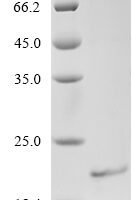
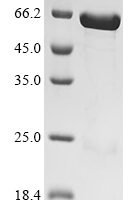
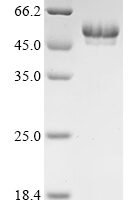
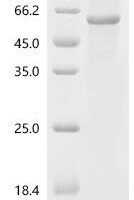
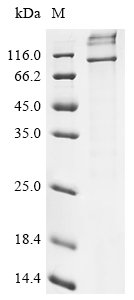
PurityGreater than 85% as determined by SDS-PAGE.
Expression Systemin vitro E.coli expression system
Expression Region1-643aa
SpeciesHomo sapiens (Human)
Tag InfoN-terminal 10xHis-tagged
Molecular weight79.0kDa
ActivityNot Test
BufferIf the delivery form is liquid, the default storage buffer is Tris/PBS-based buffer, 5%-50% glycerol.If the delivery form is lyophilized powder, the buffer before lyophilization is Tris/PBS-based buffer, 6% Trehalose.
StorageStore at -20°C/-80°C upon receipt, aliquoting is necessary for mutiple use. Avoid repeated freeze-thaw cycles.

Function

E3 ubiquitin-protein ligase that mediates the polyubiquitination of lysine and cysteine residues on target proteins, such as CD3D, CYP3A4, CFTR, INSIG1, SOAT2/ACAT2 and APOB for proteasomal degradation. Component of a VCP/p97-AMFR/gp78 complex that participates in the final step of endoplasmic reticulum-associated degradation (ERAD). The VCP/p97-AMFR/gp78 complex is involved in the sterol-accelerated ERAD degradation of HMGCR through binding to the HMGCR-INSIG1 complex at the ER membrane.

Biological Context

Subcellular Location: Endoplasmic reticulum membrane (Multi-pass membrane protein)
Tissue Specificity: Widely expressed
Disease Association: Spastic paraplegia 89, autosomal recessive (SPG89) : A form of spastic paraplegia, a neurodegenerative disorder characterized by a slow, gradual, progressive weakness and spasticity of the lower limbs. Rate of progression and the severity of symptoms are quite variable. Initial symptoms may include difficulty with balance, weakness and stiffness in the legs, muscle spasms, and dragging the toes when walking. In some forms of the disorder, bladder symptoms (such as incontinence) may appear, or weakness and stiffness may spread to other parts of the body. SPG89 affected individuals show delayed motor development, abnormal spastic gait, and hyperreflexia of the lower limbs. Some patients may have mildly impaired intellectual development or learning difficulties. SPG89 disease onset is in the first years of life. [The disease is caused by variants affecting the gene represented in this entry]
Pathway: Protein modification; protein ubiquitination

Product Specifications

Recombinant Human E3 ubiquitin-protein ligase AMFR (AMFR) Protein is a recombinant protein from Homo sapiens (Human), expressed in in vitro E.coli expression system, covering amino acids 1-643aa, with N-terminal 10xHis-tagged tag, molecular weight 79.0kDa, purity Greater than 85% as determined by SDS-PAGE.. Suitable for ELISA and Western Blot applications.

SDS-PAGE: Single band at expected molecular weight confirming purity.

ELISA: Suitable as coating antigen or detection standard.

Western Blot: Compatible with standard Western Blot protocols.

Protein Interaction: Validated for SPR (Surface Plasmon Resonance) and BLI (Bio-Layer Interferometry) studies.

Shipping: Shipped at ambient temperature. Lyophilized protein is stable during transit.

Storage: Store lyophilized protein at -20°C to -80°C. Reconstituted protein should be aliquoted and stored at -80°C. Avoid repeated freeze-thaw cycles.

Shelf Life: 12 months from date of receipt when stored as recommended.

Shipping Time: Orders placed before 2 PM EST ship same day. International orders typically deliver within 5-10 business days.

Protein Biology

Function

E3 ubiquitin-protein ligase that mediates the polyubiquitination of lysine and cysteine residues on target proteins, such as CD3D, CYP3A4, CFTR, INSIG1, SOAT2/ACAT2 and APOB for proteasomal degradation (PubMed:10456327, PubMed:11724934, PubMed:12670940, PubMed:19103148, PubMed:24424410, PubMed:28604676). Component of a VCP/p97-AMFR/gp78 complex that participates in the final step of endoplasmic reticulum-associated degradation (ERAD) (PubMed:10456327, PubMed:11724934, PubMed:19103148, PubMed:24424410). The VCP/p97-AMFR/gp78 complex is involved in the sterol-accelerated ERAD degradation of HMGCR through binding to the HMGCR-INSIG1 complex at the ER membrane (PubMed:16168377, PubMed:22143767). In addition, interaction of AMFR with AUP1 facilitates interaction of AMFR with ubiquitin-conjugating enzyme UBE2G2 and ubiquitin ligase RNF139, leading to sterol-induced HMGCR ubiquitination (PubMed:23223569). The ubiquitinated HMGCR is then released from the ER into the cytosol for subsequent destruction (PubMed:16168377, PubMed:22143767, PubMed:23223569). In addition to ubiquitination on lysine residues, catalyzes ubiquitination on cysteine residues: together with INSIG1, mediates polyubiquitination of SOAT2/ACAT2 at 'Cys-277', leading to its degradation when the lipid levels are low (PubMed:28604676). Catalyzes ubiquitination and subsequent degradation of INSIG1 when cells are depleted of sterols (PubMed:17043353). Mediates polyubiquitination of INSIG2 at 'Cys-215' in some tissues, leading to its degradation (PubMed:31953408). Also regulates ERAD through the ubiquitination of UBL4A a component of the BAG6/BAT3 complex (PubMed:21636303). Also acts as a scaffold protein to assemble a complex that couples ubiquitination, retranslocation and deglycosylation (PubMed:21636303). Mediates tumor invasion and metastasis as a receptor for the GPI/autocrine motility factor (PubMed:10456327). In association with LMBR1L and UBAC2, negatively regulates the canonical Wnt signaling pathway in the lymphocytes by promoting the ubiquitin-mediated degradation of CTNNB1 and Wnt receptors FZD6 and LRP6 (PubMed:31073040). Regulates NF-kappa-B and MAPK signaling pathways by mediating 'Lys-27'-linked polyubiquitination of TAB3 and promoting subsequent TAK1/MAP3K7 activation (PubMed:36593296). Required for proper lipid homeostasis (PubMed:37119330)

Subcellular Location

Endoplasmic reticulum membrane (Multi-pass membrane protein)

Disease Association

Spastic paraplegia 89, autosomal recessive (SPG89) : A form of spastic paraplegia, a neurodegenerative disorder characterized by a slow, gradual, progressive weakness and spasticity of the lower limbs. Rate of progression and the severity of symptoms are quite variable. Initial symptoms may include difficulty with balance, weakness and stiffness in the legs, muscle spasms, and dragging the toes when walking. In some forms of the disorder, bladder symptoms (such as incontinence) may appear, or weakness and stiffness may spread to other parts of the body. SPG89 affected individuals show delayed motor development, abnormal spastic gait, and hyperreflexia of the lower limbs. Some patients may have mildly impaired intellectual development or learning difficulties. SPG89 disease onset is in the first years of life. [The disease is caused by variants affecting the gene represented in this entry]

Tissue Specificity

Widely expressed

Subunit

(Microbial infection) Interacts with Staphylococcus aureus HIgB; this interaction regulates AMFR-mediated inflammation by promoting TAB3 ubiquitination to promote TAB3-TAK1 complex formation

Pathway

Protein modification; protein ubiquitination

Gene: AMFR  |  Organism: Homo sapiens  |  Synonyms: Autocrine motility factor receptor; RING finger protein 45; gp78
Key Publications

Frequently Asked Questions

How do I order or inquire about this product?

Fill out the Online Inquiry form with your required quantity and specifications. You can also email sales@biocrestsci.com. Our team typically responds within 4 business hours with a quote and availability confirmation.

What is the shipping and delivery time?

Orders placed before 2 PM EST ship the same day. Domestic (US) delivery typically takes 2-3 business days. International orders deliver within 5-10 business days. All products are shipped at ambient temperature with appropriate packaging to ensure stability.

How should I store this recombinant protein?

Lyophilized proteins should be stored at -20°C to -80°C upon receipt. After reconstitution, aliquot and store at -80°C. Avoid repeated freeze-thaw cycles. Shelf life is 12 months from date of receipt when stored as recommended.

What quality controls are performed on your products?

Each product undergoes SDS-PAGE purity analysis (typically >85-95%), endotoxin testing, and bioactivity validation. Products are validated for ELISA, Western Blot, and SPR/BLI applications as specified on this product page. A Certificate of Analysis (CoA) is available upon request.

Shopping Cart
Scroll to Top