,

Recombinant Human E3 ubiquitin-protein ligase MARCH2 (MARCH2) Protein

Recombinant Human E3 ubiquitin-protein ligase MARCH2 (MARCH2) Protein — (Microbial infection) Positively regulates the degradation of Vesicular stomatitis virus (VSV) G protein via the lysosomal degradation pathway. Purity >90%.

SKU: BCRECP-00609TM Categories: ,

Product Specifications

Uniprot No.Q9P0N8
Gene Names2-Mar
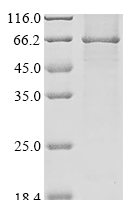
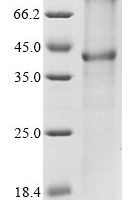
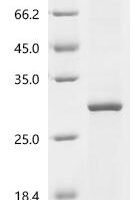
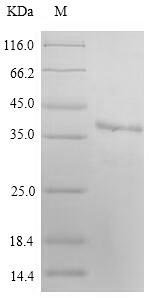
PurityGreater than 90% as determined by SDS-PAGE.
Expression Systemin vitro E.coli expression system
Expression Region1-246aa
SpeciesHomo sapiens (Human)
Tag InfoN-terminal 6xHis-SUMO-tagged
Molecular weight43.0kDa
BufferIf the delivery form is liquid, the default storage buffer is Tris/PBS-based buffer, 5%-50% glycerol.If the delivery form is lyophilized powder, the buffer before lyophilization is Tris/PBS-based buffer, 6% Trehalose.
StorageStore at -20°C/-80°C upon receipt, aliquoting is necessary for mutiple use. Avoid repeated freeze-thaw cycles.

Function

(Microbial infection) Positively regulates the degradation of Vesicular stomatitis virus (VSV) G protein via the lysosomal degradation pathway. Represses HIV-1 viral production and may inhibit the translocation of HIV-1 env to the cell surface, resulting in decreased viral cell-cell transmission.

Biological Context

Subcellular Location: Endoplasmic reticulum membrane (Multi-pass membrane protein); Lysosome membrane (Multi-pass membrane protein); Endosome membrane (Multi-pass membrane protein); Golgi apparatus membrane (Multi-pass membrane protein); Cytoplasm; Cell membrane (Multi-pass membrane protein)
Tissue Specificity: Broadly expressed
Pathway: Protein modification; protein ubiquitination

Product Specifications

Recombinant Human E3 ubiquitin-protein ligase MARCH2 (MARCH2) Protein is a recombinant protein from Homo sapiens (Human), expressed in in vitro E.coli expression system, covering amino acids 1-246aa, with N-terminal 6xHis-SUMO-tagged tag, molecular weight 43.0kDa, purity Greater than 90% as determined by SDS-PAGE.. Suitable for ELISA and Western Blot applications.

Recommended applications depend on the target, product format, and product-specific validation data. Refer to the product datasheet or Certificate of Analysis (CoA), or contact BioCrest Sci for application guidance.

Biological Activity: Not implied unless activity data are explicitly listed on this product page, the datasheet, or the CoA.

Storage: Store at -20°C/-80°C upon receipt, aliquoting is necessary for mutiple use. Avoid repeated freeze-thaw cycles.

Shipping & Lead Time: Availability, shipping conditions, and estimated lead time are confirmed in the formal quotation or order confirmation based on the product format, destination, and order requirements.

Protein Biology

Function

(Microbial infection) Positively regulates the degradation of Vesicular stomatitis virus (VSV) G protein via the lysosomal degradation pathway (PubMed:29573664). Represses HIV-1 viral production and may inhibit the translocation of HIV-1 env to the cell surface, resulting in decreased viral cell-cell transmission (PubMed:29573664)

Subcellular Location

Endoplasmic reticulum membrane (Multi-pass membrane protein); Lysosome membrane (Multi-pass membrane protein); Endosome membrane (Multi-pass membrane protein); Golgi apparatus membrane (Multi-pass membrane protein); Cytoplasm; Cell membrane (Multi-pass membrane protein)

Tissue Specificity

Broadly expressed

Subunit

Interacts with STX6; the interaction promotes MARCHF2-mediated ubiquitination and degradation of CFTR (PubMed:23818989). Interacts with MARCHF3 (PubMed:16428329). Interacts with GOPC/CAL; the interaction leads to CFTR ubiquitination and degradation (PubMed:23818989). Interacts with CFTR; the interaction leads to CFTR ubiquitination and degradation (PubMed:23818989). Interacts (via PDZ domain) with DLG1 (via PDZ domains); the interaction leads to DLG1 ubiquitination and degradation (PubMed:17980554). Interacts with ERGIC3 (PubMed:31142615). Interacts with ADRB2 (PubMed:23166351). Interacts with IKBKG/NEMO; during the late stages of macrophage viral and bacterial infection; the interaction leads to ubiquitination and degradation of IKBKG/NEMO (PubMed:32935379)

Pathway

Protein modification; protein ubiquitination

Gene: MARCHF2  |  Organism: Homo sapiens  |  Synonyms: Membrane-associated RING finger protein 2; Membrane-associated RING-CH protein II; RING finger protein 172; RING-type E3 ubiquitin transferase MARCHF2
Key Publications

Frequently Asked Questions

How do I order or inquire about this product?

Submit the Online Inquiry form with your required quantity and specifications, or email sales@biocrestsci.com. Available sizes, pricing, stock status, documentation, and estimated lead time are confirmed in the formal quotation.

What is the shipping and delivery time?

Availability, dispatch timing, shipping conditions, and delivery estimates depend on the product format, destination, and order requirements. These details are confirmed in the formal quotation or order confirmation.

How should this product be stored?

Follow the storage and handling instructions in the product-specific datasheet and Certificate of Analysis (CoA). Requirements may vary by product form and formulation; contact BioCrest Sci if product-specific guidance is needed.

What quality controls are performed on your products?

Quality-control data such as identity, purity, endotoxin level, or biological activity are provided only when specified on this product page, the datasheet, or Certificate of Analysis (CoA). Biological activity is not implied unless explicitly stated.

Shopping Cart
Scroll to Top