,

Recombinant Human E3 ubiquitin-protein ligase NEDD4-like (NEDD4L)

Recombinant Human E3 ubiquitin-protein ligase NEDD4-like (NEDD4L) — E3 ubiquitin-protein ligase that mediates the polyubiquitination of lysine and cysteine residues on target proteins and is thereby implicated in the regulation of various signaling pathways includi… Purity >90%.

SKU: BCRECP-001231 Categories: ,

Product Specifications

Product SkuBCRECP-001231
Product DescriptionRecombinant Human E3 ubiquitin-protein ligase NEDD4-like (NEDD4L) Protein is expressed from E.coli with N-terminal GST-tagged. It contains 2-975aa. [Accession | Q96PU5].
Uniprot No.Q96PU5
Gene NamesNEDD4L
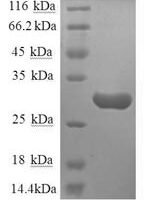
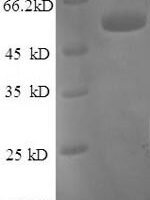
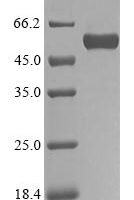
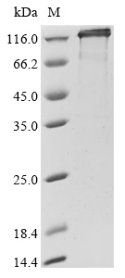
PurityGreater than 90% as determined by SDS-PAGE.
Expression SystemE.coli
Expression Region2-975aa
SpeciesHomo sapiens (Human)
Tag InfoN-terminal GST-tagged
Molecular weight138.5kDa
ActivityPlease contact us to obtain bioactivity data.
BufferIf the delivery form is liquid, the default storage buffer is Tris/PBS-based buffer, 5%-50% glycerol. If the delivery form is lyophilized powder, the buffer before lyophilization is Tris/PBS-based buffer, 6% Trehalose.
StorageStore at -20°C/-80°C upon receipt, aliquoting is necessary for mutiple use. Avoid repeated freeze-thaw cycles.
Research AreasCell Biology

Function

E3 ubiquitin-protein ligase that mediates the polyubiquitination of lysine and cysteine residues on target proteins and is thereby implicated in the regulation of various signaling pathways including autophagy, innate immunity or DNA repair. Inhibits TGF-beta signaling by triggering SMAD2 and TGFBR1 ubiquitination and proteasome-dependent degradation. Downregulates autophagy and cell growth by ubiquitinating and reducing cellular ULK1 or ASCT2 levels.

Biological Context

Subcellular Location: Cytoplasm; Golgi apparatus; Endosome, multivesicular body
Tissue Specificity: Ubiquitously expressed, with highest levels in prostate, pancreas, and kidney. Expressed in melanocytes
Disease Association: Periventricular nodular heterotopia 7 (PVNH7) : A form of periventricular nodular heterotopia, a disorder resulting from a defect in the pattern of neuronal migration in which ectopic collections of neurons lie along the lateral ventricles of the brain or just beneath, contiguously or in isolated patches. PVNH7 is an autosomal dominant disease characterized by delayed psychomotor development, intellectual disability, and seizures in some patients. Additional features include cleft palate and toe syndactyly. [The disease is caused by variants affecting the gene represented in this entry]
Pathway: Protein modification; protein ubiquitination

Product Specifications

Recombinant Human E3 ubiquitin-protein ligase NEDD4-like (NEDD4L) is a recombinant protein from Homo sapiens (Human), expressed in E.coli, covering amino acids 2-975aa, with N-terminal GST-tagged tag, molecular weight 138.5kDa, purity Greater than 90% as determined by SDS-PAGE.. Suitable for ELISA and Western Blot applications.

SDS-PAGE: Single band at expected molecular weight confirming purity.

ELISA: Suitable as coating antigen or detection standard.

Western Blot: Compatible with standard Western Blot protocols.

Protein Interaction: Validated for SPR (Surface Plasmon Resonance) and BLI (Bio-Layer Interferometry) studies.

Shipping: Shipped at ambient temperature. Lyophilized protein is stable during transit.

Storage: Store lyophilized protein at -20°C to -80°C. Reconstituted protein should be aliquoted and stored at -80°C. Avoid repeated freeze-thaw cycles.

Shelf Life: 12 months from date of receipt when stored as recommended.

Shipping Time: Orders placed before 2 PM EST ship same day. International orders typically deliver within 5-10 business days.

Protein Biology

Function

E3 ubiquitin-protein ligase that mediates the polyubiquitination of lysine and cysteine residues on target proteins and is thereby implicated in the regulation of various signaling pathways including autophagy, innate immunity or DNA repair (PubMed:20064473, PubMed:31959741, PubMed:33608556). Inhibits TGF-beta signaling by triggering SMAD2 and TGFBR1 ubiquitination and proteasome-dependent degradation (PubMed:15496141). Downregulates autophagy and cell growth by ubiquitinating and reducing cellular ULK1 or ASCT2 levels (PubMed:28820317, PubMed:31959741). Promotes ubiquitination and internalization of various plasma membrane channels such as ENaC, SCN2A/Nav1.2, SCN3A/Nav1.3, SCN5A/Nav1.5, SCN9A/Nav1.7, SCN10A/Nav1.8, KCNA3/Kv1.3, KCNH2, EAAT1, KCNQ2/Kv7.2, KCNQ3/Kv7.3 or CLC5 (PubMed:26363003, PubMed:27445338). Promotes ubiquitination and degradation of SGK1 and TNK2. Ubiquitinates BRAT1 and this ubiquitination is enhanced in the presence of NDFIP1 (PubMed:25631046). Plays a role in dendrite formation by melanocytes (PubMed:23999003). Involved in the regulation of TOR signaling (PubMed:27694961). Ubiquitinates and regulates protein levels of NTRK1 once this one is activated by NGF (PubMed:27445338). Plays a role in antiviral innate immunity by catalyzing 'Lys-29'-linked cysteine ubiquitination of TRAF3, resulting in enhanced 'Lys-48' and 'Lys-63'-linked ubiquitination of TRAF3 (PubMed:33608556). Ubiquitinates TTYH2 and TTYH3 and regulates protein levels of TTYH2 (PubMed:18577513)

Subcellular Location

Cytoplasm; Golgi apparatus; Endosome, multivesicular body

Disease Association

Periventricular nodular heterotopia 7 (PVNH7) : A form of periventricular nodular heterotopia, a disorder resulting from a defect in the pattern of neuronal migration in which ectopic collections of neurons lie along the lateral ventricles of the brain or just beneath, contiguously or in isolated patches. PVNH7 is an autosomal dominant disease characterized by delayed psychomotor development, intellectual disability, and seizures in some patients. Additional features include cleft palate and toe syndactyly. [The disease is caused by variants affecting the gene represented in this entry]

Tissue Specificity

Ubiquitously expressed, with highest levels in prostate, pancreas, and kidney (PubMed:14615060, PubMed:15496141, PubMed:19664597). Expressed in melanocytes (PubMed:23999003)

Subunit

(Microbial infection) Interacts with Epstein-Barr virus LMP2A

Pathway

Protein modification; protein ubiquitination

Gene: NEDD4L  |  Organism: Homo sapiens  |  Synonyms: HECT-type E3 ubiquitin transferase NED4L; NEDD4.2; Nedd4-2
Key Publications

Frequently Asked Questions

How do I order or inquire about this product?

Fill out the Online Inquiry form with your required quantity and specifications. You can also email sales@biocrestsci.com. Our team typically responds within 4 business hours with a quote and availability confirmation.

What is the shipping and delivery time?

Orders placed before 2 PM EST ship the same day. Domestic (US) delivery typically takes 2-3 business days. International orders deliver within 5-10 business days. All products are shipped at ambient temperature with appropriate packaging to ensure stability.

How should I store this recombinant protein?

Lyophilized proteins should be stored at -20°C to -80°C upon receipt. After reconstitution, aliquot and store at -80°C. Avoid repeated freeze-thaw cycles. Shelf life is 12 months from date of receipt when stored as recommended.

What quality controls are performed on your products?

Each product undergoes SDS-PAGE purity analysis (typically >85-95%), endotoxin testing, and bioactivity validation. Products are validated for ELISA, Western Blot, and SPR/BLI applications as specified on this product page. A Certificate of Analysis (CoA) is available upon request.

Shopping Cart
Scroll to Top