,

Recombinant Human E3 ubiquitin-protein ligase RNF128 (RNF128), partial

Recombinant Human E3 ubiquitin-protein ligase RNF128 (RNF128), partial — E3 ubiquitin-protein ligase that catalyzes ‘Lys-27’, ‘Lys-48’- or ‘Lys-63’-linked polyubiquitin chains formation and plays a role in different biological processes such as modulation of immune resp… Purity >90%.

SKU: BCRECP-001550 Categories: ,

Product Specifications

Product SkuBCRECP-001550
Product DescriptionRecombinant Human E3 ubiquitin-protein ligase RNF128 (RNF128) Protein is expressed from E.coli with C-terminal 6xHis-tagged. It contains 75-183aa. [Accession | Q8TEB7].
Uniprot No.Q8TEB7
Gene NamesRNF128
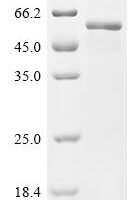
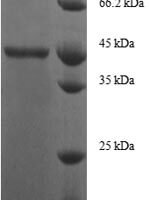
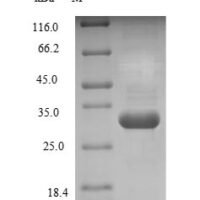
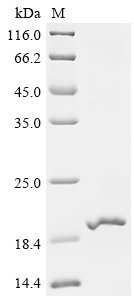
PurityGreater than 90% as determined by SDS-PAGE.
Expression SystemE.coli
Expression Region75-183aa
SpeciesHomo sapiens (Human)
Tag InfoC-terminal 6xHis-tagged
Molecular weight18.2kDa
ActivityPlease contact us to obtain bioactivity data.
BufferIf the delivery form is liquid, the default storage buffer is Tris/PBS-based buffer, 5%-50% glycerol. If the delivery form is lyophilized powder, the buffer before lyophilization is Tris/PBS-based buffer, 6% Trehalose.
StorageStore at -20°C/-80°C upon receipt, aliquoting is necessary for mutiple use. Avoid repeated freeze-thaw cycles.
Research AreasCell Biology

Function

E3 ubiquitin-protein ligase that catalyzes 'Lys-27', 'Lys-48'- or 'Lys-63'-linked polyubiquitin chains formation and plays a role in different biological processes such as modulation of immune response, cytoskeletal dynamics or protein homeostasis. Inhibits IL2 and IL4 transcription, thereby playing an important role in the induction of the anergic phenotype, a long-term stable state of T-lymphocyte unresponsiveness to antigenic stimulation associated with the blockade of interleukin production.

Product Specifications

Recombinant Human E3 ubiquitin-protein ligase RNF128 (RNF128), partial — E3 ubiquitin-protein ligase that catalyzes 'Lys-27', 'Lys-48'- or 'Lys-63'-linked polyubiquitin chains formation and plays a role in different biological processes such as modulation of immune resp… Purity >90%. Suitable for ELISA and Western Blot applications.

Recommended applications depend on the target, product format, and product-specific validation data. Refer to the product datasheet or Certificate of Analysis (CoA), or contact BioCrest Sci for application guidance.

Biological Activity: Please contact us to obtain bioactivity data.

Storage: Store at -20°C/-80°C upon receipt, aliquoting is necessary for mutiple use. Avoid repeated freeze-thaw cycles.

Shipping & Lead Time: Availability, shipping conditions, and estimated lead time are confirmed in the formal quotation or order confirmation based on the product format, destination, and order requirements.

Protein Biology

Function

E3 ubiquitin-protein ligase that catalyzes 'Lys-27', 'Lys-48'- or 'Lys-63'-linked polyubiquitin chains formation and plays a role in different biological processes such as modulation of immune response, cytoskeletal dynamics or protein homeostasis. Inhibits IL2 and IL4 transcription, thereby playing an important role in the induction of the anergic phenotype, a long-term stable state of T-lymphocyte unresponsiveness to antigenic stimulation associated with the blockade of interleukin production (PubMed:12705856). Ubiquitinates ARPC5 with 'Lys-48' linkages and COR1A with 'Lys-63' linkages leading to their degradation, down-regulation of these cytoskeletal components results in impaired lamellipodium formation and reduced accumulation of F-actin at the immunological synapse (PubMed:22016387). Functions in the patterning of the dorsal ectoderm; sensitizes ectoderm to respond to neural-inducing signals. Plays a positive role in innate immune response by promoting 'Lys-63'-linked ubiquitination of TBK1 after RNA- or DNA-virus infection (PubMed:27776110). Regulates alveolar macrophage activation and neutrophil infiltration by interacting with TLR4, targeting it for degradation, and inhibiting NF-kappa-B activation, hence decreasing pro-inflammatory cytokines (PubMed:37344492). Negatively regulates the IL-3/STAT5 signaling pathway by facilitating 'Lys-27'-linked polyubiquitination of IL3RA leading to its degradation via lysosomal pathway (PubMed:38702781). Directly regulates the N-glycosylation process in the endoplasmic reticulum by targeting the glycosyl-transferase RPN1 for ubiquitination and degradation (PubMed:39567208). Other substrates targeted for degradation by RNF128 include transmembrane proteins CD40L, CD83 or the tetraspanin CD151 (PubMed:18713730, PubMed:19542455)

Subcellular Location

Cytoplasm; Endomembrane system (Single-pass membrane protein); Cytoplasm, cytoskeleton; Cytoplasm, perinuclear region

Pathway

Protein modification; protein ubiquitination

Gene: RNF128  |  Organism: Homo sapiens  |  Synonyms: Gene related to anergy in lymphocytes protein; RING finger protein 128; RING-type E3 ubiquitin transferase RNF128
Key Publications

Frequently Asked Questions

How do I order or inquire about this product?

Submit the Online Inquiry form with your required quantity and specifications, or email sales@biocrestsci.com. Available sizes, pricing, stock status, documentation, and estimated lead time are confirmed in the formal quotation.

What is the shipping and delivery time?

Availability, dispatch timing, shipping conditions, and delivery estimates depend on the product format, destination, and order requirements. These details are confirmed in the formal quotation or order confirmation.

How should this product be stored?

Follow the storage and handling instructions in the product-specific datasheet and Certificate of Analysis (CoA). Requirements may vary by product form and formulation; contact BioCrest Sci if product-specific guidance is needed.

What quality controls are performed on your products?

Quality-control data such as identity, purity, endotoxin level, or biological activity are provided only when specified on this product page, the datasheet, or Certificate of Analysis (CoA). Biological activity is not implied unless explicitly stated.

Shopping Cart
Scroll to Top