

Function
E3 ubiquitin-protein ligase which accepts ubiquitin specifically from endoplasmic reticulum-associated UBC7 E2 ligase and transfers it to substrates, promoting their degradation. Component of the endoplasmic reticulum quality control (ERQC) system also called ER-associated degradation (ERAD) involved in ubiquitin-dependent degradation of misfolded endoplasmic reticulum proteins. Also promotes the degradation of normal but naturally short-lived proteins such as SGK.
Biological Context
Subcellular Location: Endoplasmic reticulum membrane (Multi-pass membrane protein)
Tissue Specificity: Ubiquitously expressed, with highest levels in liver and kidney (at protein level). Up-regulated in synovial tissues from patients with rheumatoid arthritis (at protein level)
Disease Association: [In certain aggressive cases of activated B cell-like diffuse large B-cell lymphoma (ABC-DLBCL), plays a role in the degradation of misfolded N-terminal mutated PRDM1 proteins]
Pathway: Protein modification; protein ubiquitination
Product Specifications
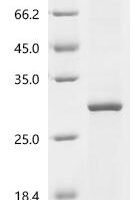
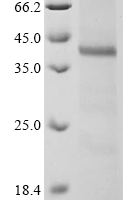
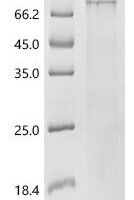
Recombinant Human E3 ubiquitin-protein ligase synoviolin (SYVN1) Protein is a recombinant protein from Homo sapiens (Human), expressed in in vitro E.coli expression system, covering amino acids 1-617aa, with C-terminal Twin-Strep-tagged tag, molecular weight 70.8kDa, purity Greater than 85% as determined by SDS-PAGE.. Suitable for ELISA and Western Blot applications. Explore more Enzyme proteins →
![Recombinant Human NADH dehydrogenase [ubiquinone] 1 beta subcomplex subunit 1 (NDUFB1) Protein - BioCrest Sci](https://www.biocrestsci.com/wp-content/uploads/protein/1/BCRECP-00477TM-SDS-134x200.jpg)