Function
Cellular oxygen sensor that catalyzes, under normoxic conditions, the post-translational formation of 4-hydroxyproline in hypoxia-inducible factor (HIF) alpha proteins. Hydroxylates a specific proline found in each of the oxygen-dependent degradation (ODD) domains (N-terminal, NODD, and C-terminal, CODD) of HIF1A. Also hydroxylates HIF2A.
Biological Context
Subcellular Location: Cytoplasm; Nucleus
Tissue Specificity: According to PubMed:11056053, widely expressed with highest levels in skeletal muscle and heart, moderate levels in pancreas, brain (dopaminergic neurons of adult and fetal substantia nigra) and kidney, and lower levels in lung and liver. According to PubMed:12351678 widely expressed with highest levels in brain, kidney and adrenal gland. Expressed in cardiac myocytes, aortic endothelial cells and coronary artery smooth muscle. According to PubMed:12788921; expressed in adult and fetal heart, brain, liver, lung, skeletal muscle and kidney. Also expressed in placenta. Highest levels in adult heart, brain, lung and liver and fetal brain, heart spleen and skeletal muscle
Disease Association: Erythrocytosis, familial, 3 (ECYT3) : An autosomal dominant disorder characterized by elevated serum hemoglobin and hematocrit, and normal serum erythropoietin levels. [The disease is caused by variants affecting the gene represented in this entry]
Product Specifications
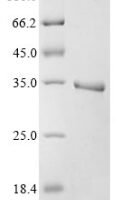
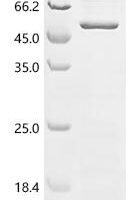
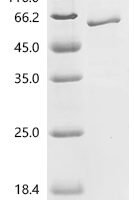
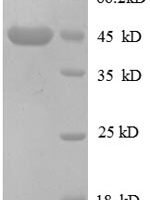
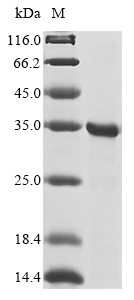
Recombinant Human Egl nine homolog 1 (EGLN1), partial is a recombinant protein from Homo sapiens (Human), expressed in E.coli, covering amino acids 177-426aa, with N-terminal 10xHis-tagged and C-terminal Myc-tagged tag, molecular weight 35.3kDa, purity Greater than 85% as determined by SDS-PAGE.. Suitable for ELISA and Western Blot applications.