Function
Receptor for endothelin-1. Mediates its action by association with G proteins that activate a phosphatidylinositol-calcium second messenger system. The rank order of binding affinities for ET-A is: ET1 > ET2 >> ET3.
Biological Context
Subcellular Location: Cell membrane (Multi-pass membrane protein)
Tissue Specificity: Isoform 1, isoform 3 and isoform 4 are expressed in a variety of tissues, with highest levels in the aorta and cerebellum, followed by lung, atrium and cerebral cortex, lower levels in the placenta, kidney, adrenal gland, duodenum, colon, ventricle and liver but no expression in umbilical vein endothelial cells. Within the placenta, isoform 1, isoform 2, isoform 3 and isoform 4 are expressed in the villi and stem villi vessels
Disease Association: Mandibulofacial dysostosis with alopecia (MFDA) : A form of mandibulofacial dysostosis, a disorder characterized by malar and mandibular hypoplasia, typically associated with abnormalities of the ears and eyelids. MFDA features include maxillary dysmorphism with dysplastic zygomatic arch, hypoplastic mandible, scalp alopecia, scant eyebrows and eyelashes, severe hypoplasia or aplasia of eyelids, small cupped dysplastic ears, conductive hearing loss, cleft palate, dental anomalies, micrognathia, and limited jaw mobility. [The disease is caused by variants affecting the gene represented in this entry]
Product Specifications
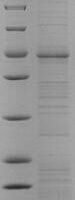
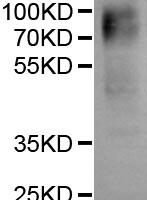
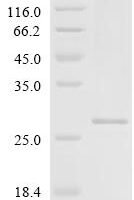
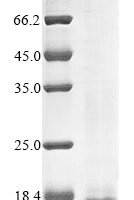
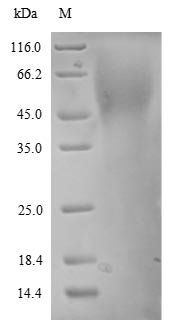
Recombinant Human Endothelin-1 receptor (EDNRA), partial is a recombinant protein from Homo sapiens (Human), expressed in Yeast, covering amino acids 21-80aa, with N-terminal 6xHis-tagged tag, molecular weight 8.8kDa, purity Greater than 90% as determined by SDS-PAGE.. Suitable for ELISA and Western Blot applications.