, ,

Recombinant Human Extracellular serine/threonine protein kinase FAM20C (FAM20C)

Recombinant Human Extracellular serine/threonine protein kinase FAM20C (FAM20C) — Golgi serine/threonine protein kinase that phosphorylates secretory pathway proteins within Ser-x-Glu/pSer motifs and plays a key role in biomineralization of bones and teeth. Purity >95%.

SKU: BCRECP-000631 Categories: , ,

Product Specifications

Product SkuBCRECP-000631
Product DescriptionRecombinant Human Extracellular serine/threonine protein kinase FAM20C (FAM20C) Protein is expressed from Mammalian cell with N-terminal 10xHis-tagged and C-terminal Myc-tagged. It contains 93-584aa. [Accession | Q8IXL6].
Uniprot No.Q8IXL6
Gene NamesFAM20C
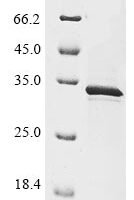
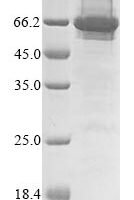
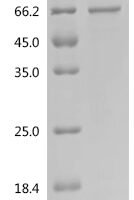
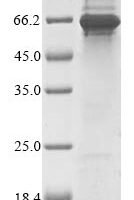
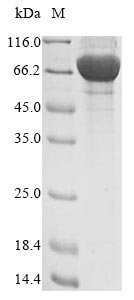
PurityGreater than 95% as determined by SDS-PAGE.
Expression SystemMammalian cell
Expression Region93-584aa
SpeciesHomo sapiens (Human)
Tag InfoN-terminal 10xHis-tagged and C-terminal Myc-tagged
Molecular weight61.4kDa
ActivityPlease contact us to obtain bioactivity data.
BufferIf the delivery form is liquid, the default storage buffer is Tris/PBS-based buffer, 5%-50% glycerol. If the delivery form is lyophilized powder, the buffer before lyophilization is Tris/PBS-based buffer, 6% Trehalose.
StorageStore at -20°C/-80°C upon receipt, aliquoting is necessary for mutiple use. Avoid repeated freeze-thaw cycles.
Research AreasOthers

Function

Golgi serine/threonine protein kinase that phosphorylates secretory pathway proteins within Ser-x-Glu/pSer motifs and plays a key role in biomineralization of bones and teeth. Constitutes the main protein kinase for extracellular proteins, generating the majority of the extracellular phosphoproteome. Mainly phosphorylates proteins within the Ser-x-Glu/pSer motif, but also displays a broader substrate specificity.

Biological Context

Subcellular Location: Golgi apparatus membrane (Single-pass type II membrane protein); Secreted; Endoplasmic reticulum
Tissue Specificity: Widely expressed
Disease Association: Raine syndrome (RNS) : An autosomal recessive osteosclerotic bone dysplasia with neonatal lethal outcome, although some patients survive into childhood. Clinical features include generalized increase in the density of all bones and a marked increase in the ossification of the skull, craniofacial dysplasia and microcephaly. [The disease is caused by variants affecting the gene represented in this entry]

Product Specifications

Recombinant Human Extracellular serine/threonine protein kinase FAM20C (FAM20C) is a recombinant protein from Homo sapiens (Human), expressed in Mammalian cell, covering amino acids 93-584aa, with N-terminal 10xHis-tagged and C-terminal Myc-tagged tag, molecular weight 61.4kDa, purity Greater than 95% as determined by SDS-PAGE.. Suitable for ELISA and Western Blot applications.

Recommended applications depend on the target, product format, and product-specific validation data. Refer to the product datasheet or Certificate of Analysis (CoA), or contact BioCrest Sci for application guidance.

Biological Activity: Please contact us to obtain bioactivity data.

Storage: Store at -20°C/-80°C upon receipt, aliquoting is necessary for mutiple use. Avoid repeated freeze-thaw cycles.

Shipping & Lead Time: Availability, shipping conditions, and estimated lead time are confirmed in the formal quotation or order confirmation based on the product format, destination, and order requirements.

Protein Biology

Function

Golgi serine/threonine protein kinase that phosphorylates secretory pathway proteins within Ser-x-Glu/pSer motifs and plays a key role in biomineralization of bones and teeth (PubMed:22582013, PubMed:23754375, PubMed:25789606). Constitutes the main protein kinase for extracellular proteins, generating the majority of the extracellular phosphoproteome (PubMed:26091039). Mainly phosphorylates proteins within the Ser-x-Glu/pSer motif, but also displays a broader substrate specificity (PubMed:26091039). Phosphorylates ERO1A, enhancing its activity which is required to maintain endoplasmic reticulum redox homeostasis and for oxidative protein folding (PubMed:29858230, PubMed:34349020). During endoplasmic reticulum stress, phosphorylates P4HB/PDIA1 which induces a functional switch, causing P4HB to change from an oxidoreductase to a molecular chaperone (PubMed:32149426). This is critical to maintain ER proteostasis and reduce cell death under ER stress (PubMed:32149426). Phosphorylation of P4HB also promotes its interaction with ERN1, leading to reduced activity of ERN1, a key sensor for the endoplasmic reticulum unfolded protein response (PubMed:32149426). Required for osteoblast differentiation and mineralization (PubMed:34349020). Phosphorylates casein as well as a number of proteins involved in biomineralization such as AMELX, AMTN, ENAM and SPP1/OPN (PubMed:22582013, PubMed:25789606, PubMed:34349020). In addition to its role in biomineralization, also plays a role in lipid homeostasis, wound healing and cell migration and adhesion (PubMed:26091039)

Subcellular Location

Golgi apparatus membrane (Single-pass type II membrane protein); Secreted; Endoplasmic reticulum

Disease Association

Raine syndrome (RNS) : An autosomal recessive osteosclerotic bone dysplasia with neonatal lethal outcome, although some patients survive into childhood. Clinical features include generalized increase in the density of all bones and a marked increase in the ossification of the skull, craniofacial dysplasia and microcephaly. [The disease is caused by variants affecting the gene represented in this entry]

Tissue Specificity

Widely expressed

Subunit

Homodimer; disulfide-linked (PubMed:34349020). Interacts with FAM20A; probably forming a heterotetramer of 2 subunits of FAM20A and 2 subunits of FAM20C (PubMed:25789606). Interacts with protease MBTPS1/S1P; the interaction results in FAM20C cleavage and secretion (PubMed:34349020). Interacts with COPII components SEC23A and SEC24A; transport of FAM20C from the endoplasmic reticulum to the Golgi is likely to be mediated by COPII vesicles (PubMed:34349020)

Gene: FAM20C  |  Organism: Homo sapiens  |  Synonyms: Dentin matrix protein 4; Golgi casein kinase; Golgi-enriched fraction casein kinase

Frequently Asked Questions

How do I order or inquire about this product?

Submit the Online Inquiry form with your required quantity and specifications, or email sales@biocrestsci.com. Available sizes, pricing, stock status, documentation, and estimated lead time are confirmed in the formal quotation.

What is the shipping and delivery time?

Availability, dispatch timing, shipping conditions, and delivery estimates depend on the product format, destination, and order requirements. These details are confirmed in the formal quotation or order confirmation.

How should this product be stored?

Follow the storage and handling instructions in the product-specific datasheet and Certificate of Analysis (CoA). Requirements may vary by product form and formulation; contact BioCrest Sci if product-specific guidance is needed.

What quality controls are performed on your products?

Quality-control data such as identity, purity, endotoxin level, or biological activity are provided only when specified on this product page, the datasheet, or Certificate of Analysis (CoA). Biological activity is not implied unless explicitly stated.

Shopping Cart
Scroll to Top