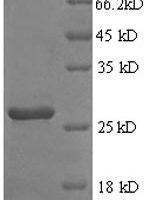
,

Recombinant Human Fibroblast growth factor 23 protein (FGF23) (Active)

Recombinant Human Fibroblast growth factor 23 protein (FGF23) (Active) — Regulator of phosphate homeostasis. Purity >95%.

SKU: BCACP-000922 Categories: ,
Product SKUBCACP-000922
Product DescriptionRecombinant Human Fibroblast growth factor 23 protein (FGF23) protein is expressed from E.Coli with Tag-Free. It contains 25-251aa. [Accession | Q9GZV9].
Uniprot No.Q9GZV9
Gene NamesFGF23
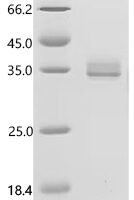
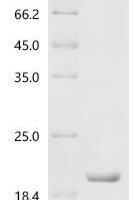
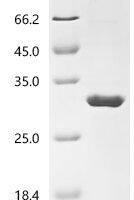
Purity>95% as determined by SDS-PAGE.
Expression SystemE.Coli
Expression Region25-251aa
SpeciesHomo sapiens (Human)
Tag InfoTag-Free
Molecular weight25.3 kDa
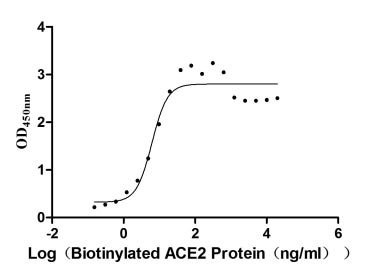
ActivityFully biologically active when compared to standard. The ED50 as determined by a cell proliferation assay using serum free human MCF-7 cells is less than 2 ng/ml, corresponding to a specific activity of >5.0x10⁵ IU/mg.
BufferLyophilized from a 0.2 μm filtered 20 mM Tris-HCl, 0.5 M NaCl, 6% Trehalose, pH 8.0
StorageStore at -20°C/-80°C upon receipt, aliquoting is necessary for mutiple use. Avoid repeated freeze-thaw cycles.
Alternative NamesADHR ; FGF-23; Fgf23; FGF23_HUMAN; FGFN; Fibroblast growth factor 23 ; Fibroblast growth factor 23 C-terminal peptide; Fibroblast growth factor 23 precursor ; HPDR2 ; HYPF ; Phosphatonin; PHPTC ; Tumor derived hypophosphatemia inducing factor; Tumor-derived hypophosphatemia-inducing factor

Function

Regulator of phosphate homeostasis. Inhibits renal tubular phosphate transport by reducing SLC34A1 levels.

Product Specifications

Recombinant Human Fibroblast growth factor 23 protein (FGF23) (Active) — Regulator of phosphate homeostasis. Purity >95%. Suitable for ELISA and Western Blot applications.

SDS-PAGE: Single band at expected molecular weight confirming purity.

ELISA: Suitable as coating antigen or detection standard.

Western Blot: Compatible with standard Western Blot protocols.

Protein Interaction: Validated for SPR (Surface Plasmon Resonance) and BLI (Bio-Layer Interferometry) studies.

Shipping: Shipped at ambient temperature. Lyophilized protein is stable during transit.

Storage: Store lyophilized protein at -20°C to -80°C. Reconstituted protein should be aliquoted and stored at -80°C. Avoid repeated freeze-thaw cycles.

Shelf Life: 12 months from date of receipt when stored as recommended.

Shipping Time: Orders placed before 2 PM EST ship same day. International orders typically deliver within 5-10 business days.

Protein Biology

Function

Regulator of phosphate homeostasis (PubMed:11062477). Inhibits renal tubular phosphate transport by reducing SLC34A1 levels (PubMed:11409890). Up-regulates EGR1 expression in the presence of KL (By similarity). Acts directly on the parathyroid to decrease PTH secretion (By similarity). Regulator of vitamin-D metabolism (PubMed:15040831). Negatively regulates osteoblast differentiation and matrix mineralization (PubMed:18282132)

Subcellular Location

Secreted

Disease Association

Hypophosphatemic rickets, autosomal dominant (ADHR) : A disease characterized by isolated renal phosphate wasting, hypophosphatemia, and inappropriately normal 1,25-dihydroxyvitamin D3 (calcitriol) levels. Patients frequently present with bone pain, rickets, and tooth abscesses. [The disease is caused by variants affecting the gene represented in this entry] | Tumoral calcinosis, hyperphosphatemic, familial, 2 (HFTC2) : A form of hyperphosphatemic tumoral calcinosis, a rare autosomal recessive metabolic disorder that manifests with hyperphosphatemia and massive calcium deposits in the skin and subcutaneous tissues. Some patients have recurrent, transient, painful swellings of the long bones associated with the radiographic findings of periosteal reaction and cortical hyperostosis and absence of skin involvement. [The disease is caused by variants affecting the gene represented in this entry]

Tissue Specificity

Expressed in osteogenic cells particularly during phases of active bone remodeling. In adult trabecular bone, expressed in osteocytes and flattened bone-lining cells (inactive osteoblasts)

Subunit

Interacts with FGFR1, FGFR2, FGFR3 and FGFR4 (PubMed:16597617). Affinity between fibroblast growth factors (FGFs) and their receptors is increased by KL and heparan sulfate glycosaminoglycans that function as coreceptors (By similarity)

Gene: FGF23  |  Organism: Homo sapiens  |  Synonyms: Phosphatonin; Tumor-derived hypophosphatemia-inducing factor
Key Publications

Frequently Asked Questions

How do I order or inquire about this product?

Fill out the Online Inquiry form with your required quantity and specifications. You can also email sales@biocrestsci.com. Our team typically responds within 4 business hours with a quote and availability confirmation.

What is the shipping and delivery time?

Orders placed before 2 PM EST ship the same day. Domestic (US) delivery typically takes 2-3 business days. International orders deliver within 5-10 business days. All products are shipped at ambient temperature with appropriate packaging to ensure stability.

How should I store this recombinant protein?

Lyophilized proteins should be stored at -20°C to -80°C upon receipt. After reconstitution, aliquot and store at -80°C. Avoid repeated freeze-thaw cycles. Shelf life is 12 months from date of receipt when stored as recommended.

What quality controls are performed on your products?

Each product undergoes SDS-PAGE purity analysis (typically >85-95%), endotoxin testing, and bioactivity validation. Products are validated for ELISA, Western Blot, and SPR/BLI applications as specified on this product page. A Certificate of Analysis (CoA) is available upon request.

Shopping Cart
Scroll to Top