Recombinant Human Follicle-stimulating hormone receptor (FSHR), partial

Recombinant Human Follicle-stimulating hormone receptor (FSHR), partial — G protein-coupled receptor for follitropin, the follicle-stimulating hormone. Purity >90%.

SKU: BCRECP-000696 Category:

Product Specifications

Product SkuBCRECP-000696
Product DescriptionRecombinant Human Follicle-stimulating hormone receptor (FSHR) Protein is expressed from E.coli with N-terminal 6xHis-tagged. It contains 18-366aa. [Accession | P23945].
Uniprot No.P23945
Gene NamesFSHR
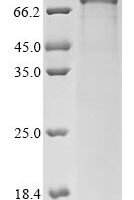
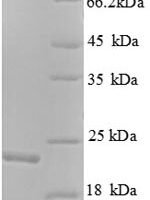
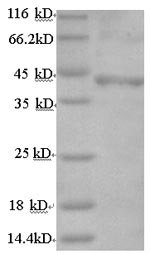
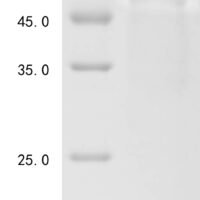
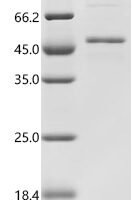
PurityGreater than 90% as determined by SDS-PAGE.
Expression SystemE.coli
Expression Region18-366aa
SpeciesHomo sapiens (Human)
Tag InfoN-terminal 6xHis-tagged
Molecular weight44.0kDa
ActivityPlease contact us to obtain bioactivity data.
BufferIf the delivery form is liquid, the default storage buffer is Tris/PBS-based buffer, 5%-50% glycerol. If the delivery form is lyophilized powder, the buffer before lyophilization is Tris/PBS-based buffer, 6% Trehalose.
StorageStore at -20°C/-80°C upon receipt, aliquoting is necessary for mutiple use. Avoid repeated freeze-thaw cycles.
Research AreasNeuroscience

Function

G protein-coupled receptor for follitropin, the follicle-stimulating hormone. Through cAMP production activates the downstream PI3K-AKT and ERK1/ERK2 signaling pathways.

Biological Context

Subcellular Location: Cell membrane (Multi-pass membrane protein)
Tissue Specificity: Sertoli cells and ovarian granulosa cells
Disease Association: Ovarian dysgenesis 1 (ODG1) : An autosomal recessive disease characterized by primary amenorrhea, variable development of secondary sex characteristics, poorly developed streak ovaries, and high serum levels of follicle-stimulating hormone (FSH) and luteinizing hormone (LH). [The disease is caused by variants affecting the gene represented in this entry] | Ovarian hyperstimulation syndrome (OHSS) : Disorder which occurs either spontaneously or most often as an iatrogenic complication of ovarian stimulation treatments for in vitro fertilization. The clinical manifestations vary from abdominal distention and discomfort to potentially life-threatening, massive ovarian enlargement and capillary leak with fluid sequestration. Pathologic features of this syndrome include the presence of multiple serous and hemorrhagic follicular cysts lined by luteinized cells, a condition called hyperreactio luteinalis. [The disease is caused by variants affecting the gene represented in this entry]

Product Specifications

Recombinant Human Follicle-stimulating hormone receptor (FSHR), partial is a recombinant protein from Homo sapiens (Human), expressed in E.coli, covering amino acids 18-366aa, with N-terminal 6xHis-tagged tag, molecular weight 44.0kDa, purity Greater than 90% as determined by SDS-PAGE.. Suitable for ELISA and Western Blot applications.
Recommended applications depend on the target, product format, and product-specific validation data. Refer to the product datasheet or Certificate of Analysis (CoA), or contact BioCrest Sci for application guidance.

Biological Activity: Please contact us to obtain bioactivity data.

Storage: Store at -20°C/-80°C upon receipt, aliquoting is necessary for mutiple use. Avoid repeated freeze-thaw cycles.

Shipping & Lead Time: Availability, shipping conditions, and estimated lead time are confirmed in the formal quotation or order confirmation based on the product format, destination, and order requirements.

Protein Biology

Function

G protein-coupled receptor for follitropin, the follicle-stimulating hormone (PubMed:11847099, PubMed:24058690, PubMed:24692546). Through cAMP production activates the downstream PI3K-AKT and ERK1/ERK2 signaling pathways (PubMed:24058690)

Subcellular Location

Cell membrane (Multi-pass membrane protein)

Disease Association

Ovarian dysgenesis 1 (ODG1) : An autosomal recessive disease characterized by primary amenorrhea, variable development of secondary sex characteristics, poorly developed streak ovaries, and high serum levels of follicle-stimulating hormone (FSH) and luteinizing hormone (LH). [The disease is caused by variants affecting the gene represented in this entry] | Ovarian hyperstimulation syndrome (OHSS) : Disorder which occurs either spontaneously or most often as an iatrogenic complication of ovarian stimulation treatments for in vitro fertilization. The clinical manifestations vary from abdominal distention and discomfort to potentially life-threatening, massive ovarian enlargement and capillary leak with fluid sequestration. Pathologic features of this syndrome include the presence of multiple serous and hemorrhagic follicular cysts lined by luteinized cells, a condition called hyperreactio luteinalis. [The disease is caused by variants affecting the gene represented in this entry]

Tissue Specificity

Sertoli cells and ovarian granulosa cells

Subunit

Homotrimer. Functions as a homotrimer binding the FSH hormone heterodimer composed of CGA and FSHB (PubMed:24692546). Interacts with ARRB2 (By similarity). Interacts with APPL2; interaction is independent of follicle stimulating hormone stimulation (PubMed:17030088)

Gene: FSHR  |  Organism: Homo sapiens  |  Synonyms: Follitropin receptor
Key Publications

Frequently Asked Questions

How do I order or inquire about this product?

Submit the Online Inquiry form with your required quantity and specifications, or email sales@biocrestsci.com. Available sizes, pricing, stock status, documentation, and estimated lead time are confirmed in the formal quotation.

What is the shipping and delivery time?

Availability, dispatch timing, shipping conditions, and delivery estimates depend on the product format, destination, and order requirements. These details are confirmed in the formal quotation or order confirmation.

How should this product be stored?

Follow the storage and handling instructions in the product-specific datasheet and Certificate of Analysis (CoA). Requirements may vary by product form and formulation; contact BioCrest Sci if product-specific guidance is needed.

What quality controls are performed on your products?

Quality-control data such as identity, purity, endotoxin level, or biological activity are provided only when specified on this product page, the datasheet, or Certificate of Analysis (CoA). Biological activity is not implied unless explicitly stated.

Shopping Cart
Scroll to Top