Recombinant Human Forkhead box protein N1 (FOXN1) Protein

Recombinant Human Forkhead box protein N1 (FOXN1) Protein — Transcriptional regulator which regulates the development, differentiation, and function of thymic epithelial cells (TECs) both in the prenatal and postnatal thymus. Purity >85%.

SKU: BCRECP-00351TM Category:

Product Specifications

Uniprot No.O15353
Gene NamesFOXN1
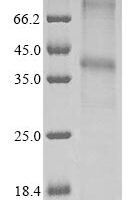
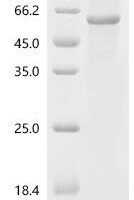
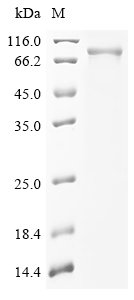
PurityGreater than 85% as determined by SDS-PAGE.
Expression Systemin vitro E.coli expression system
Expression Region1-648aa
SpeciesHomo sapiens (Human)
Tag InfoN-terminal 10xHis-tagged and C-terminal Myc-tagged
Molecular weight76.4kDa
BufferIf the delivery form is liquid, the default storage buffer is Tris/PBS-based buffer, 5%-50% glycerol.If the delivery form is lyophilized powder, the buffer before lyophilization is Tris/PBS-based buffer, 6% Trehalose.
StorageStore at -20°C/-80°C upon receipt, aliquoting is necessary for mutiple use. Avoid repeated freeze-thaw cycles.

Function

Transcriptional regulator which regulates the development, differentiation, and function of thymic epithelial cells (TECs) both in the prenatal and postnatal thymus. Acts as a master regulator of the TECs lineage development and is required from the onset of differentiation in progenitor TECs in the developing fetus to the final differentiation steps through which TECs mature to acquire their full functionality. Regulates, either directly or indirectly the expression of a variety of genes that mediate diverse aspects of thymus development and function, including MHC Class II, DLL4, CCL25, CTSL, CD40 and PAX1.

Biological Context

Subcellular Location: Nucleus
Tissue Specificity: Expressed in thymus
Disease Association: T-cell immunodeficiency, congenital alopecia, and nail dystrophy (TIDAND) : A disorder characterized by the association of congenital alopecia, severe T-cell immunodeficiency, and ridging and pitting of all nails. [The disease is caused by variants affecting the gene represented in this entry] | T-cell lymphopenia, infantile, with or without nail dystrophy, autosomal dominant (TLIND) : An autosomal dominant disorder characterized by decreased numbers of T cells, particularly cytotoxic CD8+ T cells, and increased susceptibility to recurrent infections, mainly respiratory viral infections. Additional features may include impaired thymic development, skin abnormalities, such as atopic dermatitis, and nail dystrophy. [The disease is caused by variants affecting the gene represented in this entry] | T-cell immunodeficiency with thymic aplasia (TIDTA) : An autosomal recessive disorder characterized by selective hypo- or aplasia of the thymus, T-cell immunodeficiency due to impaired T-cell development, and increased susceptibility to viral infections. [The disease is caused by variants affecting the gene represented in this entry]

Product Specifications

Recombinant Human Forkhead box protein N1 (FOXN1) Protein is a recombinant protein from Homo sapiens (Human), expressed in in vitro E.coli expression system, covering amino acids 1-648aa, with N-terminal 10xHis-tagged and C-terminal Myc-tagged tag, molecular weight 76.4kDa, purity Greater than 85% as determined by SDS-PAGE.. Suitable for ELISA and Western Blot applications.
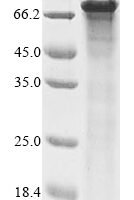
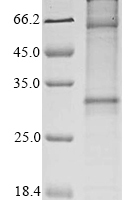
SDS-PAGE: Single band at expected molecular weight confirming purity.

ELISA: Suitable as coating antigen or detection standard.

Western Blot: Compatible with standard Western Blot protocols.

Protein Interaction: Validated for SPR (Surface Plasmon Resonance) and BLI (Bio-Layer Interferometry) studies.

Shipping: Shipped at ambient temperature. Lyophilized protein is stable during transit.

Storage: Store lyophilized protein at -20°C to -80°C. Reconstituted protein should be aliquoted and stored at -80°C. Avoid repeated freeze-thaw cycles.

Shelf Life: 12 months from date of receipt when stored as recommended.

Shipping Time: Orders placed before 2 PM EST ship same day. International orders typically deliver within 5-10 business days.

Protein Biology

Function

Transcriptional regulator which regulates the development, differentiation, and function of thymic epithelial cells (TECs) both in the prenatal and postnatal thymus. Acts as a master regulator of the TECs lineage development and is required from the onset of differentiation in progenitor TECs in the developing fetus to the final differentiation steps through which TECs mature to acquire their full functionality. Regulates, either directly or indirectly the expression of a variety of genes that mediate diverse aspects of thymus development and function, including MHC Class II, DLL4, CCL25, CTSL, CD40 and PAX1. Regulates the differentiation of the immature TECs into functional cortical TECs (cTECs) and medullary TECs (mTECs). Essential for maintenance of mTECs population in the postnatal thymus. Involved in the morphogenesis and maintenance of the three-dimensional thymic microstructure which is necessary for a fully functional thymus. Plays an important role in the maintenance of hematopoiesis and particularly T lineage progenitors within the bone marrow niche with age. Essential for the vascularization of the thymus anlage. Promotes the terminal differentiation of epithelial cells in the epidermis and hair follicles, partly by negatively regulating the activity of protein kinase C (By similarity). Plays a crucial role in the early prenatal stages of T-cell ontogeny (PubMed:21507891)

Subcellular Location

Nucleus

Disease Association

T-cell immunodeficiency, congenital alopecia, and nail dystrophy (TIDAND) : A disorder characterized by the association of congenital alopecia, severe T-cell immunodeficiency, and ridging and pitting of all nails. [The disease is caused by variants affecting the gene represented in this entry] | T-cell lymphopenia, infantile, with or without nail dystrophy, autosomal dominant (TLIND) : An autosomal dominant disorder characterized by decreased numbers of T cells, particularly cytotoxic CD8+ T cells, and increased susceptibility to recurrent infections, mainly respiratory viral infections. Additional features may include impaired thymic development, skin abnormalities, such as atopic dermatitis, and nail dystrophy. [The disease is caused by variants affecting the gene represented in this entry] | T-cell immunodeficiency with thymic aplasia (TIDTA) : An autosomal recessive disorder characterized by selective hypo- or aplasia of the thymus, T-cell immunodeficiency due to impaired T-cell development, and increased susceptibility to viral infections. [The disease is caused by variants affecting the gene represented in this entry]

Tissue Specificity

Expressed in thymus

Gene: FOXN1  |  Organism: Homo sapiens  |  Synonyms: Winged-helix transcription factor nude

Frequently Asked Questions

How do I order or inquire about this product?

Fill out the Online Inquiry form with your required quantity and specifications. You can also email sales@biocrestsci.com. Our team typically responds within 4 business hours with a quote and availability confirmation.

What is the shipping and delivery time?

Orders placed before 2 PM EST ship the same day. Domestic (US) delivery typically takes 2-3 business days. International orders deliver within 5-10 business days. All products are shipped at ambient temperature with appropriate packaging to ensure stability.

How should I store this recombinant protein?

Lyophilized proteins should be stored at -20°C to -80°C upon receipt. After reconstitution, aliquot and store at -80°C. Avoid repeated freeze-thaw cycles. Shelf life is 12 months from date of receipt when stored as recommended.

What quality controls are performed on your products?

Each product undergoes SDS-PAGE purity analysis (typically >85-95%), endotoxin testing, and bioactivity validation. Products are validated for ELISA, Western Blot, and SPR/BLI applications as specified on this product page. A Certificate of Analysis (CoA) is available upon request.

Shopping Cart
Scroll to Top