Recombinant Human G-protein coupled receptor 182 (GPR182) Protein

Recombinant Human G-protein coupled receptor 182 (GPR182) Protein — Atypical chemokine receptor that regulates chemokine levels and localization through chemokine binding, independently of activating classical ligand-induced signaling pathways such as G protein act… Purity >85%.

SKU: BCRECP-00172TM Category:

Product Specifications

Uniprot No.O15218
Gene NamesGPR182
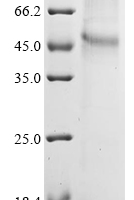
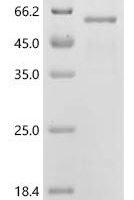
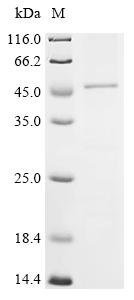
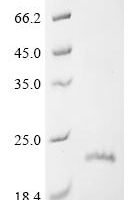
PurityGreater than 85% as determined by SDS-PAGE.
Expression Systemin vitro E.coli expression system
Expression Region1-404aa
SpeciesHomo sapiens (Human)
Tag InfoN-terminal 10xHis-tagged
Molecular weight46.8kDa
ActivityNot Test
BufferIf the delivery form is liquid, the default storage buffer is Tris/PBS-based buffer, 5%-50% glycerol.If the delivery form is lyophilized powder, the buffer before lyophilization is Tris/PBS-based buffer, 6% Trehalose.
StorageStore at -20°C/-80°C upon receipt, aliquoting is necessary for mutiple use. Avoid repeated freeze-thaw cycles.

Function

Atypical chemokine receptor that regulates chemokine levels and localization through chemokine binding, independently of activating classical ligand-induced signaling pathways such as G protein activation and Ca(2+) mobilization. Instead, it mediates chemokine sequestration, transport, or internalization to control their availability. Acts as a scavenger for a broad range of chemokines from CXC, CC and XC chemokine ligand families including CXCL9, CXCL10, CXCL12, CXCL13, CXCL11, CXCL14, CCL1, CCL11, CCL19, CCL25, CCL28 and XCL1.

Biological Context

Subcellular Location: Cell membrane (Multi-pass membrane protein); Endosome membrane (Multi-pass membrane protein)
Tissue Specificity: Highly expressed in heart, skeletal muscle, immune system, adrenal gland and liver

Product Specifications

Recombinant Human G-protein coupled receptor 182 (GPR182) Protein is a recombinant protein from Homo sapiens (Human), expressed in in vitro E.coli expression system, covering amino acids 1-404aa, with N-terminal 10xHis-tagged tag, molecular weight 46.8kDa, purity Greater than 85% as determined by SDS-PAGE.. Suitable for ELISA and Western Blot applications.
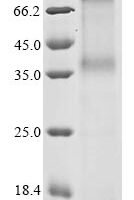
Recommended applications depend on the target, product format, and product-specific validation data. Refer to the product datasheet or Certificate of Analysis (CoA), or contact BioCrest Sci for application guidance.

Biological Activity: Not Test

Storage: Store at -20°C/-80°C upon receipt, aliquoting is necessary for mutiple use. Avoid repeated freeze-thaw cycles.

Shipping & Lead Time: Availability, shipping conditions, and estimated lead time are confirmed in the formal quotation or order confirmation based on the product format, destination, and order requirements.

Protein Biology

Function

Atypical chemokine receptor that regulates chemokine levels and localization through chemokine binding, independently of activating classical ligand-induced signaling pathways such as G protein activation and Ca(2+) mobilization (PubMed:33875597, PubMed:35013216, PubMed:37554323, PubMed:38026988). Instead, it mediates chemokine sequestration, transport, or internalization to control their availability (PubMed:33875597, PubMed:35013216, PubMed:37554323, PubMed:38026988). Acts as a scavenger for a broad range of chemokines from CXC, CC and XC chemokine ligand families including CXCL9, CXCL10, CXCL12, CXCL13, CXCL11, CXCL14, CCL1, CCL11, CCL19, CCL25, CCL28 and XCL1 (PubMed:33875597, PubMed:35013216, PubMed:38026988). Is the only atypical receptor for chemokines CXCL13 and CCL28 (PubMed:37554323). Has a strong constitutive association with beta-arrestins, which is essential for intracellular receptor trafficking and chemokine scavenging, and occurs independently of ligand binding (PubMed:33875597, PubMed:37554323). Cooperates with ACKR3 and ACKR4 in regulating serum levels of CXCL12 and CCL19, respectively (PubMed:37554323). Acts as an important modulator of cellular immunity (By similarity)

Subcellular Location

Cell membrane (Multi-pass membrane protein); Endosome membrane (Multi-pass membrane protein)

Tissue Specificity

Highly expressed in heart, skeletal muscle, immune system, adrenal gland and liver

Subunit

Strong constitutive association with beta-arrestins; leading to internalization of ACKR5 and its ligands

Gene: ACKR5  |  Organism: Homo sapiens  |  Synonyms: G protein-coupled receptor 182
Key Publications

Frequently Asked Questions

How do I order or inquire about this product?

Submit the Online Inquiry form with your required quantity and specifications, or email sales@biocrestsci.com. Available sizes, pricing, stock status, documentation, and estimated lead time are confirmed in the formal quotation.

What is the shipping and delivery time?

Availability, dispatch timing, shipping conditions, and delivery estimates depend on the product format, destination, and order requirements. These details are confirmed in the formal quotation or order confirmation.

How should this product be stored?

Follow the storage and handling instructions in the product-specific datasheet and Certificate of Analysis (CoA). Requirements may vary by product form and formulation; contact BioCrest Sci if product-specific guidance is needed.

What quality controls are performed on your products?

Quality-control data such as identity, purity, endotoxin level, or biological activity are provided only when specified on this product page, the datasheet, or Certificate of Analysis (CoA). Biological activity is not implied unless explicitly stated.

Shopping Cart
Scroll to Top