,

Recombinant Human Hepatocyte growth factor receptor (MET), partial (Active)

Recombinant Human Hepatocyte growth factor receptor (MET), partial (Active) — recombinant protein from Homo sapiens (Human), expressed in Mammalian cell. Purity >95%.

SKU: BCACP-000356 Categories: ,
Product SKUBCACP-000356
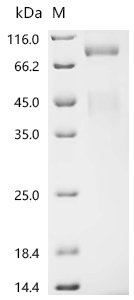
Product DescriptionRecombinant Human Hepatocyte growth factor receptor (MET) protein is expressed from Mammalian cell with C-terminal 6xHis-tagged. It contains 25-932aa. [Accession | P08581].
Uniprot No.P08581
Gene NamesMET
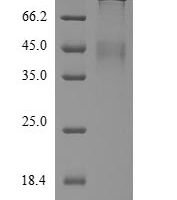
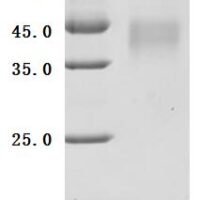
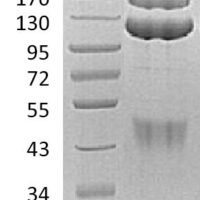
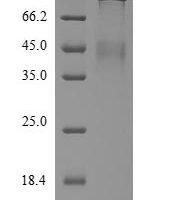
PurityGreater than 95% as determined by SDS-PAGE.Greater than 95% as determined by SEC-HPLC.
Expression SystemMammalian cell
Expression Region25-932aa
SpeciesHomo sapiens (Human)
Tag InfoC-terminal 6xHis-tagged
Molecular weight103.9 kDa
ActivityThe ED50 as determined by the dose-dependent stimulation of the proliferation of TF-1 cells is 0.3534 to 0.7096 ng/mL.;Measured by its binding ability in a functional ELISA.Immobilized Human EPO at 2 μg/mL can bind Anti-EPO recombinant antibody .The EC50 is 0.4354-0.5532 ng/mL.
BufferLyophilized from a 0.2 μm filtered 20 mM Tris-HCl, 0.5 M NaCl, 6% Trehalose, pH 8.0
StorageStore at -20°C/-80°C upon receipt, aliquoting is necessary for mutiple use. Avoid repeated freeze-thaw cycles.
Alternative NamesHepatocyte growth factor receptor; HGF receptor; EC 2.7.10.1; HGF/SF receptor; Proto-oncogene c-Met; Scatter factor receptor; SF receptor; Tyrosine-protein kinase Met

Function

(Microbial infection) Acts as a receptor for Listeria monocytogenes internalin InlB, mediating entry of the pathogen into cells.

Biological Context

Subcellular Location: Secreted
Tissue Specificity: Expressed in normal hepatocytes as well as in epithelial cells lining the stomach, the small and the large intestine. Found also in basal keratinocytes of esophagus and skin. High levels are found in liver, gastrointestinal tract, thyroid and kidney. Also present in the brain. Expressed in metaphyseal bone (at protein level)
Disease Association: [Activation of MET after rearrangement with the TPR gene produces an oncogenic protein] | [Defects in MET may be associated with gastric cancer] | Hepatocellular carcinoma (HCC) : A primary malignant neoplasm of epithelial liver cells. The major risk factors for HCC are chronic hepatitis B virus (HBV) infection, chronic hepatitis C virus (HCV) infection, prolonged dietary aflatoxin exposure, alcoholic cirrhosis, and cirrhosis due to other causes. [The disease is caused by variants affecting the gene represented in this entry] | Renal cell carcinoma papillary (RCCP) : A subtype of renal cell carcinoma tending to show a tubulo-papillary architecture formed by numerous, irregular, finger-like projections of connective tissue. Renal cell carcinoma is a heterogeneous group of sporadic or hereditary carcinoma derived from cells of the proximal renal tubular epithelium. [The disease is caused by variants affecting the gene represented in this entry] | [A common allele in the promoter region of the MET shows genetic association with susceptibility to autism in some families. Functional assays indicate a decrease in MET promoter activity and altered binding of specific transcription factor complexes] | [MET activating mutations may be involved in the development of a highly malignant, metastatic syndrome known as cancer of unknown primary origin (CUP) or primary occult malignancy. Systemic neoplastic spread is generally a late event in cancer progression. However, in some instances, distant dissemination arises at a very early stage, so that metastases reach clinical relevance before primary lesions. Sometimes, the primary lesions cannot be identified in spite of the progresses in the diagnosis of malignancies] | Deafness, autosomal recessive, 97 (DFNB97) : A form of non-syndromic sensorineural hearing loss with prelingual onset. Sensorineural deafness results from damage to the neural receptors of the inner ear, the nerve pathways to the brain, or the area of the brain that receives sound information. [The disease is caused by variants affecting the gene represented in this entry] | Osteofibrous dysplasia (OSFD) : A congenital disorder of osteogenesis characterized by non-neoplastic, radiolucent lesions that affect the cortical bone immediately under the periosteum. It usually manifests as a painless swelling or anterior bowing of the long bones, most commonly the tibia and fibula. [Disease susceptibility is associated with variants affecting the gene represented in this entry. Disease-associated variants identified in 4 families cause the deletion of exon 14. This results in the exclusion of an ubiquitination target site within the cytoplasmic domain, hence in protein stabilization. The persistent presence of MET at the cell surface in conditions of ligand-dependent activation retards osteoblastic differentiation] | Arthrogryposis, distal, 11 (DA11) : A form of distal arthrogryposis, a disease characterized by congenital joint contractures that mainly involve two or more distal parts of the limbs, in the absence of a primary neurological or muscle disease. DA11 is an autosomal dominant form characterized mainly by camptodactyly. Other features include absent flexion creases and limited forearm supination. [The disease may be caused by variants affecting the gene represented in this entry]

Product Specifications

Recombinant Human Hepatocyte growth factor receptor (MET), partial (Active) is a recombinant protein from Homo sapiens (Human), expressed in Mammalian cell, covering amino acids 25-932aa, with C-terminal 6xHis-tagged tag, molecular weight 103.9 kDa, purity Greater than 95% as determined by SDS-PAGE.Greater than 95% as determined by SEC-HPLC.. Suitable for ELISA and Western Blot applications.

Recommended applications depend on the target, product format, and product-specific validation data. Refer to the product datasheet or Certificate of Analysis (CoA), or contact BioCrest Sci for application guidance.

Biological Activity: The ED50 as determined by the dose-dependent stimulation of the proliferation of TF-1 cells is 0.3534 to 0.7096 ng/mL.;Measured by its binding ability in a functional ELISA.Immobilized Human EPO at 2 μg/mL can bind Anti-EPO recombinant antibody .The EC50 is 0.4354-0.5532 ng/mL.

Storage: Store at -20°C/-80°C upon receipt, aliquoting is necessary for mutiple use. Avoid repeated freeze-thaw cycles.

Shipping & Lead Time: Availability, shipping conditions, and estimated lead time are confirmed in the formal quotation or order confirmation based on the product format, destination, and order requirements.

Protein Biology

Function

(Microbial infection) Acts as a receptor for Listeria monocytogenes internalin InlB, mediating entry of the pathogen into cells

Subcellular Location

Secreted

Disease Association

[Activation of MET after rearrangement with the TPR gene produces an oncogenic protein] | [Defects in MET may be associated with gastric cancer] | Hepatocellular carcinoma (HCC) : A primary malignant neoplasm of epithelial liver cells. The major risk factors for HCC are chronic hepatitis B virus (HBV) infection, chronic hepatitis C virus (HCV) infection, prolonged dietary aflatoxin exposure, alcoholic cirrhosis, and cirrhosis due to other causes. [The disease is caused by variants affecting the gene represented in this entry] | Renal cell carcinoma papillary (RCCP) : A subtype of renal cell carcinoma tending to show a tubulo-papillary architecture formed by numerous, irregular, finger-like projections of connective tissue. Renal cell carcinoma is a heterogeneous group of sporadic or hereditary carcinoma derived from cells of the proximal renal tubular epithelium. [The disease is caused by variants affecting the gene represented in this entry] | [A common allele in the promoter region of the MET shows genetic association with susceptibility to autism in some families. Functional assays indicate a decrease in MET promoter activity and altered binding of specific transcription factor complexes] | [MET activating mutations may be involved in the development of a highly malignant, metastatic syndrome known as cancer of unknown primary origin (CUP) or primary occult malignancy. Systemic neoplastic spread is generally a late event in cancer progression. However, in some instances, distant dissemination arises at a very early stage, so that metastases reach clinical relevance before primary lesions. Sometimes, the primary lesions cannot be identified in spite of the progresses in the diagnosis of malignancies] | Deafness, autosomal recessive, 97 (DFNB97) : A form of non-syndromic sensorineural hearing loss with prelingual onset. Sensorineural deafness results from damage to the neural receptors of the inner ear, the nerve pathways to the brain, or the area of the brain that receives sound information. [The disease is caused by variants affecting the gene represented in this entry] | Osteofibrous dysplasia (OSFD) : A congenital disorder of osteogenesis characterized by non-neoplastic, radiolucent lesions that affect the cortical bone immediately under the periosteum. It usually manifests as a painless swelling or anterior bowing of the long bones, most commonly the tibia and fibula. [Disease susceptibility is associated with variants affecting the gene represented in this entry. Disease-associated variants identified in 4 families cause the deletion of exon 14. This results in the exclusion of an ubiquitination target site within the cytoplasmic domain, hence in protein stabilization. The persistent presence of MET at the cell surface in conditions of ligand-dependent activation retards osteoblastic differentiation] | Arthrogryposis, distal, 11 (DA11) : A form of distal arthrogryposis, a disease characterized by congenital joint contractures that mainly involve two or more distal parts of the limbs, in the absence of a primary neurological or muscle disease. DA11 is an autosomal dominant form characterized mainly by camptodactyly. Other features include absent flexion creases and limited forearm supination. [The disease may be caused by variants affecting the gene represented in this entry]

Tissue Specificity

Expressed in normal hepatocytes as well as in epithelial cells lining the stomach, the small and the large intestine. Found also in basal keratinocytes of esophagus and skin. High levels are found in liver, gastrointestinal tract, thyroid and kidney. Also present in the brain. Expressed in metaphyseal bone (at protein level) (PubMed:26637977)

Subunit

(Microbial infection) Interacts via extracytoplasmic residues 25-656 with L.monocytogenes InlB; MET can bind HGF, its endogenous ligand, and InlB simultaneously (PubMed:11081636, PubMed:17662939). InlB probably dimerizes upon binding to MET, which encourages subsequent dimerization of MET (Probable)

Gene: MET  |  Organism: Homo sapiens  |  Synonyms: HGF/SF receptor; Proto-oncogene c-Met; Scatter factor receptor; Tyrosine-protein kinase Met
Key Publications

Frequently Asked Questions

How do I order or inquire about this product?

Submit the Online Inquiry form with your required quantity and specifications, or email sales@biocrestsci.com. Available sizes, pricing, stock status, documentation, and estimated lead time are confirmed in the formal quotation.

What is the shipping and delivery time?

Availability, dispatch timing, shipping conditions, and delivery estimates depend on the product format, destination, and order requirements. These details are confirmed in the formal quotation or order confirmation.

How should this product be stored?

Follow the storage and handling instructions in the product-specific datasheet and Certificate of Analysis (CoA). Requirements may vary by product form and formulation; contact BioCrest Sci if product-specific guidance is needed.

What quality controls are performed on your products?

Quality-control data such as identity, purity, endotoxin level, or biological activity are provided only when specified on this product page, the datasheet, or Certificate of Analysis (CoA). Biological activity is not implied unless explicitly stated.

Shopping Cart
Scroll to Top