Function
Transcriptional regulator which controls the expression of hepatic genes during the transition of endodermal cells to hepatic progenitor cells, facilitating the recruitment of RNA pol II to the promoters of target genes. Activates the transcription of CYP2C38. Represses the CLOCK-BMAL1 transcriptional activity and is essential for circadian rhythm maintenance and period regulation in the liver and colon cells.
Biological Context
Subcellular Location: Nucleus
Disease Association: Maturity-onset diabetes of the young 1 (MODY1) : A form of diabetes that is characterized by an autosomal dominant mode of inheritance, onset in childhood or early adulthood (usually before 25 years of age), a primary defect in insulin secretion and frequent insulin-independence at the beginning of the disease. [The disease is caused by variants affecting the gene represented in this entry] | Type 2 diabetes mellitus (T2D) : A multifactorial disorder of glucose homeostasis caused by a lack of sensitivity to insulin. Affected individuals usually have an obese body habitus and manifestations of a metabolic syndrome characterized by diabetes, insulin resistance, hypertension and hypertriglyceridemia. The disease results in long-term complications that affect the eyes, kidneys, nerves, and blood vessels. [Disease susceptibility may be associated with variants affecting the gene represented in this entry] | Fanconi renotubular syndrome 4 with maturity-onset diabetes of the young (FRTS4) : An autosomal dominant disease characterized by Fanconi syndrome associated with a beta cell phenotype of neonatal hyperinsulinism with macrosomia and young onset diabetes. Fanconi syndrome is a proximal tubulopathy resulting in generalized aminoaciduria, low molecular weight proteinuria, glycosuria, hyperphosphaturia and hypouricemia. Some FRTS4 patients have nephrocalcinosis, renal impairment, hypercalciuria with relative hypocalcemia, and hypermagnesemia. [The disease is caused by variants affecting the gene represented in this entry]
Product Specifications
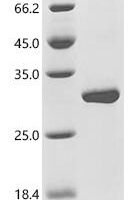
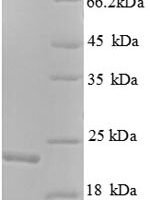
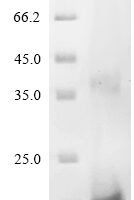
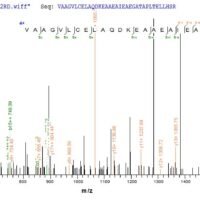
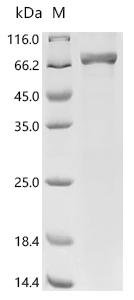
Recombinant Human Hepatocyte nuclear factor 4-alpha (HNF4A) is a recombinant protein from Homo sapiens (Human), expressed in E.coli, covering amino acids 1-474aa, with N-terminal 10xHis-tagged and C-terminal Myc-tagged tag, molecular weight 59.8kDa, purity Greater than 85% as determined by SDS-PAGE.. Suitable for ELISA and Western Blot applications.