Function
Converts guanine to guanosine monophosphate, and hypoxanthine to inosine monophosphate. Transfers the 5-phosphoribosyl group from 5-phosphoribosylpyrophosphate onto the purine. Plays a central role in the generation of purine nucleotides through the purine salvage pathway.
Biological Context
Subcellular Location: Cytoplasm
Disease Association: Lesch-Nyhan syndrome (LNS) : Characterized by complete lack of enzymatic activity that results in hyperuricemia, choreoathetosis, intellectual disability, and compulsive self-mutilation. [The disease is caused by variants affecting the gene represented in this entry] | Hyperuricemia, HPRT-related (HRH) : An X-linked metabolic disorder characterized by uric acid excess in the blood, renal stones, uric acid nephropathy, and renal obstruction. After puberty, the hyperuricemia may cause gout. [The disease is caused by variants affecting the gene represented in this entry]
Pathway: Purine metabolism; IMP biosynthesis via salvage pathway; IMP from hypoxanthine: step 1/1
Product Specifications
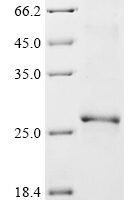
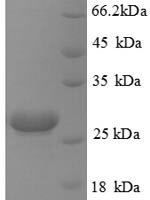
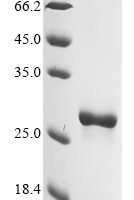
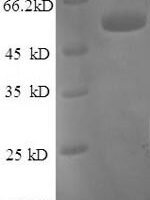
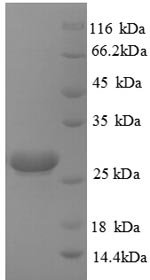
Recombinant Human Hypoxanthine-guanine phosphoribosyltransferase (HPRT1) is a recombinant protein from Homo sapiens (Human), expressed in E.coli, covering amino acids 2-218aa, with N-terminal 6xHis-tagged tag, molecular weight 28.4kDa, purity Greater than 90% as determined by SDS-PAGE.. Suitable for ELISA and Western Blot applications. Explore more Enzyme proteins →