Function
Has very low kinase activity in vitro and is unlikely to function as a tyrosine kinase in vivo. Receptor for ligand WNT5A which activates downstream NFkB signaling pathway and may result in the inhibition of WNT3A-mediated signaling. In the inner ear, crucial for spiral ganglion neurons to innervate auditory hair cells.
Biological Context
Subcellular Location: Cell membrane (Single-pass type I membrane protein); Cell projection, axon
Tissue Specificity: Expressed strongly in human heart, lung and kidney, but weakly in the CNS. Isoform Short is strongly expressed in fetal and adult CNS and in a variety of human cancers, including those originating from CNS or PNS neuroectoderm
Disease Association: Deafness, autosomal recessive, 108 (DFNB108) : A form of non-syndromic sensorineural hearing loss. Sensorineural deafness results from damage to the neural receptors of the inner ear, the nerve pathways to the brain, or the area of the brain that receives sound information. [The disease is caused by variants affecting the gene represented in this entry]
Product Specifications
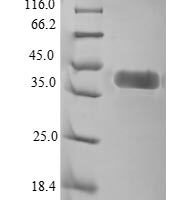
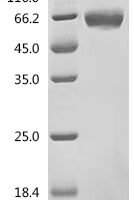
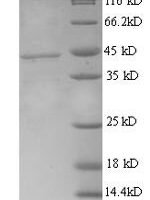
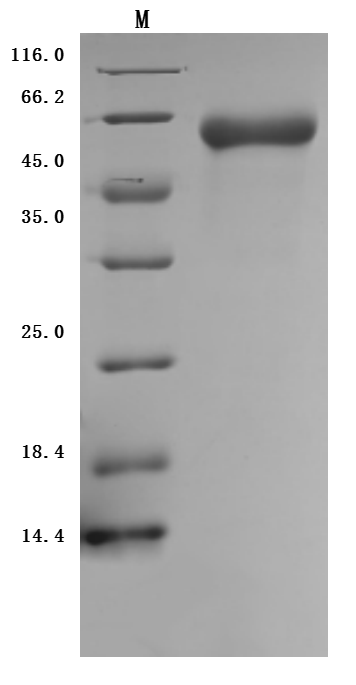
Recombinant Human Inactive tyrosine-protein kinase transmembrane receptor ROR1 (ROR1), partial (Active) is a recombinant protein from Homo sapiens (Human), expressed in Mammalian cell, covering amino acids 30-403aa, with C-terminal 10xHis-tagged tag, molecular weight 44.8kDa, purity Greater than 95% as determined by SDS-PAGE.. Suitable for ELISA and Western Blot applications. Explore more Kinase proteins →