Recombinant Human Keratin, type II cytoskeletal 2 epidermal (KRT2)

Recombinant Human Keratin, type II cytoskeletal 2 epidermal (KRT2) — Structural component of intermediate filaments in suprabasal keratinocytes of stratified epidermis. Purity >90%.

SKU: BCRECP-001035 Category:

Product Specifications

Product SkuBCRECP-001035
Product DescriptionRecombinant Human Keratin, type II cytoskeletal 2 epidermal (KRT2) Protein is expressed from E.coli with N-terminal 10xHis-tagged and C-terminal Myc-tagged. It contains 1-639aa. [Accession | P35908].
Uniprot No.P35908
Gene NamesKRT2
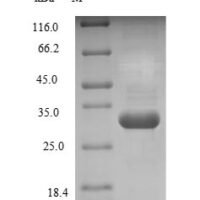
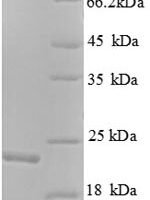
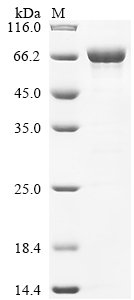
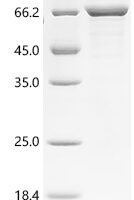
PurityGreater than 90% as determined by SDS-PAGE.
Expression SystemE.coli
Expression Region1-639aa
SpeciesHomo sapiens (Human)
Tag InfoN-terminal 10xHis-tagged and C-terminal Myc-tagged
Molecular weight72.9kDa
ActivityPlease contact us to obtain bioactivity data.
BufferIf the delivery form is liquid, the default storage buffer is Tris/PBS-based buffer, 5%-50% glycerol. If the delivery form is lyophilized powder, the buffer before lyophilization is Tris/PBS-based buffer, 6% Trehalose.
StorageStore at -20°C/-80°C upon receipt, aliquoting is necessary for mutiple use. Avoid repeated freeze-thaw cycles.
Research AreasOthers

Function

Structural component of intermediate filaments in suprabasal keratinocytes of stratified epidermis. Forms heteropolymers with type I keratins (e.g., KRT10), assembling into keratin intermediate filament networks that support mechanical integrity and resilience of the differentiating epidermis. Contributes to terminal differentiation and cornification of keratinocytes and plays a role in establishing the epidermal barrier.

Biological Context

Subcellular Location: Cytoplasm
Tissue Specificity: Expressed in the upper spinous and granular suprabasal layers of normal adult epidermal tissues from most body sites including thigh, breast nipple, foot sole, penile shaft and axilla. Not present in foreskin, squamous metaplasias and carcinomas. Expression in hypertrophic and keloid scars begins in the deepest suprabasal layer. Weakly expressed in normal gingiva and tongue, however expression is induced in benign keratoses of lingual mucosa and in mild-to-moderate oral dysplasia with orthokeratinization
Disease Association: Ichthyosis bullosa of Siemens (IBS) : A rare autosomal dominant skin disorder displaying a type of epidermolytic hyperkeratosis characterized by generalized erythema and extensive blistering from birth. Large, dark gray hyperkeratoses are observed in later weeks. The skin of IBS patients is unusually fragile and has a tendency to shed the outer layers of the epidermis, producing localized denuded areas (molting effect). IBS usually improves with age so that in most middle-aged patients the hyperkeratosis and keratotic lichenification is limited to the flexural folds of the major joints. [The disease is caused by variants affecting the gene represented in this entry]

Product Specifications

Recombinant Human Keratin, type II cytoskeletal 2 epidermal (KRT2) is a recombinant protein from Homo sapiens (Human), expressed in E.coli, covering amino acids 1-639aa, with N-terminal 10xHis-tagged and C-terminal Myc-tagged tag, molecular weight 72.9kDa, purity Greater than 90% as determined by SDS-PAGE.. Suitable for ELISA and Western Blot applications.
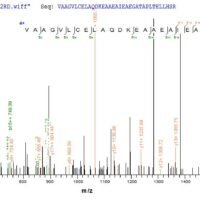
Recommended applications depend on the target, product format, and product-specific validation data. Refer to the product datasheet or Certificate of Analysis (CoA), or contact BioCrest Sci for application guidance.

Biological Activity: Please contact us to obtain bioactivity data.

Storage: Store at -20°C/-80°C upon receipt, aliquoting is necessary for mutiple use. Avoid repeated freeze-thaw cycles.

Shipping & Lead Time: Availability, shipping conditions, and estimated lead time are confirmed in the formal quotation or order confirmation based on the product format, destination, and order requirements.

Protein Biology

Function

Structural component of intermediate filaments in suprabasal keratinocytes of stratified epidermis. Forms heteropolymers with type I keratins (e.g., KRT10), assembling into keratin intermediate filament networks that support mechanical integrity and resilience of the differentiating epidermis (PubMed:12598329, PubMed:1380918). Contributes to terminal differentiation and cornification of keratinocytes and plays a role in establishing the epidermal barrier (PubMed:9804344)

Subcellular Location

Cytoplasm

Disease Association

Ichthyosis bullosa of Siemens (IBS) : A rare autosomal dominant skin disorder displaying a type of epidermolytic hyperkeratosis characterized by generalized erythema and extensive blistering from birth. Large, dark gray hyperkeratoses are observed in later weeks. The skin of IBS patients is unusually fragile and has a tendency to shed the outer layers of the epidermis, producing localized denuded areas (molting effect). IBS usually improves with age so that in most middle-aged patients the hyperkeratosis and keratotic lichenification is limited to the flexural folds of the major joints. [The disease is caused by variants affecting the gene represented in this entry]

Tissue Specificity

Expressed in the upper spinous and granular suprabasal layers of normal adult epidermal tissues from most body sites including thigh, breast nipple, foot sole, penile shaft and axilla. Not present in foreskin, squamous metaplasias and carcinomas. Expression in hypertrophic and keloid scars begins in the deepest suprabasal layer. Weakly expressed in normal gingiva and tongue, however expression is induced in benign keratoses of lingual mucosa and in mild-to-moderate oral dysplasia with orthokeratinization

Subunit

Heterodimers composed of one type I and one type II keratins; forms parallel coiled-coil heterodimers (By similarity). Heterodimers associate in an antiparallel manner to form heterotetramers, which further assemble into higher-order keratin intermediate filaments (By similarity). Associates with KRT10

Gene: KRT2  |  Organism: Homo sapiens  |  Synonyms: Cytokeratin-2e; Epithelial keratin-2e; Keratin-2 epidermis; Keratin-2e; Type-II keratin Kb2
Key Publications

Frequently Asked Questions

How do I order or inquire about this product?

Submit the Online Inquiry form with your required quantity and specifications, or email sales@biocrestsci.com. Available sizes, pricing, stock status, documentation, and estimated lead time are confirmed in the formal quotation.

What is the shipping and delivery time?

Availability, dispatch timing, shipping conditions, and delivery estimates depend on the product format, destination, and order requirements. These details are confirmed in the formal quotation or order confirmation.

How should this product be stored?

Follow the storage and handling instructions in the product-specific datasheet and Certificate of Analysis (CoA). Requirements may vary by product form and formulation; contact BioCrest Sci if product-specific guidance is needed.

What quality controls are performed on your products?

Quality-control data such as identity, purity, endotoxin level, or biological activity are provided only when specified on this product page, the datasheet, or Certificate of Analysis (CoA). Biological activity is not implied unless explicitly stated.

Shopping Cart
Scroll to Top