Recombinant Human Leukemia inhibitory factor (LIF) (Active)

Recombinant Human Leukemia inhibitory factor (LIF) (Active) — Functions as a cytokine that binds to the LIF receptor complex. Purity >90%.

SKU: BCRECP-001068 Category:

Product Specifications

Product SkuBCRECP-001068
Product DescriptionRecombinant Human Leukemia inhibitory factor (LIF) (Active) Protein is expressed from Mammalian cell with C-terminal hFc1-tagged. It contains 23-202aa. [Accession | P15018].
Uniprot No.P15018
Gene NamesLIF
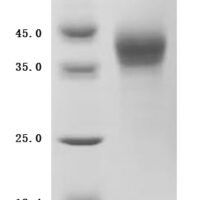
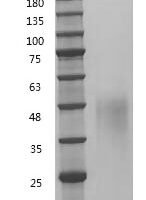
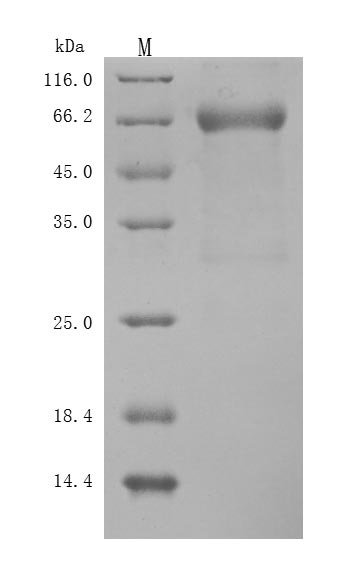
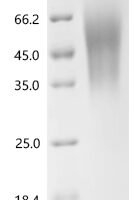
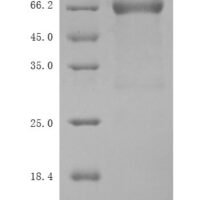
PurityGreater than 90% as determined by SDS-PAGE.
Expression SystemMammalian cell
Expression Region23-202aa
SpeciesHomo sapiens (Human)
Tag InfoC-terminal hFc1-tagged
Molecular weight48.6kDa
ActivityPlease contact us to obtain bioactivity data.
BufferIf the delivery form is liquid, the default storage buffer is Tris/PBS-based buffer, 5%-50% glycerol. If the delivery form is lyophilized powder, the buffer before lyophilization is Tris/PBS-based buffer, 6% Trehalose.
StorageStore at -20°C/-80°C upon receipt, aliquoting is necessary for mutiple use. Avoid repeated freeze-thaw cycles.
Research AreasCancer

Function

Functions as a cytokine that binds to the LIF receptor complex. The LIF receptor complex indeed consists of two signaling receptor subunits IL6ST/gp130 and LIFR that transduce the signal into the cell. Functionally, regulates cell self-renewal, differentiation and survival of embryonic stem cells (ESCs) and is crucial for embryonic implantation.

Biological Context

Subcellular Location: Secreted

Product Specifications

Recombinant Human Leukemia inhibitory factor (LIF) (Active) is a recombinant protein from Homo sapiens (Human), expressed in Mammalian cell, covering amino acids 23-202aa, with C-terminal hFc1-tagged tag, molecular weight 48.6kDa, purity Greater than 90% as determined by SDS-PAGE.. Suitable for ELISA and Western Blot applications.
Recommended applications depend on the target, product format, and product-specific validation data. Refer to the product datasheet or Certificate of Analysis (CoA), or contact BioCrest Sci for application guidance.

Biological Activity: Please contact us to obtain bioactivity data.

Storage: Store at -20°C/-80°C upon receipt, aliquoting is necessary for mutiple use. Avoid repeated freeze-thaw cycles.

Shipping & Lead Time: Availability, shipping conditions, and estimated lead time are confirmed in the formal quotation or order confirmation based on the product format, destination, and order requirements.

Protein Biology

Function

Functions as a cytokine that binds to the LIF receptor complex (PubMed:11294841, PubMed:14527405, PubMed:36930708). The LIF receptor complex indeed consists of two signaling receptor subunits IL6ST/gp130 and LIFR that transduce the signal into the cell (PubMed:14527405, PubMed:36930708). Functionally, regulates cell self-renewal, differentiation and survival of embryonic stem cells (ESCs) and is crucial for embryonic implantation (By similarity). Mechanistically, ligand binding to LIFR, induces heterodimerization with IL6ST/gp130 activating JAK tyrosine kinases (JAK1 or JAK2 and to a lesser extent TYK2) bound to their intracellular domains (PubMed:11294841). These kinases subsequently phosphorylate IL6ST/gp130 and LIFR (PubMed:11294841). The tyrosine phosphorylated signaling receptors serve in turn as docking sites for recruitment and activation of signal transducers and activators of transcription (STAT3 and to lesser extent STAT1) (PubMed:11294841). In parallel to the activation of the STAT3-pathway, the binding of LIF to the LIF receptor complex leads to the activation of the mitogen-activated protein kinase (MAPK) and the phosphatidylinositol 3-kinase (PI(3)K) pathways (PubMed:11294841). Tyrosine phosphorylation of the p85 subunit of PI(3)K by JAK1 leads to activation of the serine/ threonine kinase AKT (protein kinase B) (PubMed:11294841). PI(3)K-dependent signaling is required for efficient self-renewal of murine ES cells, and regulation of ERK activity is functionally important in this response (By similarity). Moreover, induces tyrosine phosphorylation of PTPN11, that associates with IL6ST/gp130-LIFR, which in turn recruits the p85 regulatory subunit of PI(3)K protein kinase, promoting PI3K-AKT activation, and GRB2-RAS-MAPK signaling (PubMed:11294841)

Subcellular Location

Secreted

Gene: LIF  |  Organism: Homo sapiens  |  Synonyms: Differentiation-stimulating factor; Melanoma-derived LPL inhibitor
Key Publications

Frequently Asked Questions

How do I order or inquire about this product?

Submit the Online Inquiry form with your required quantity and specifications, or email sales@biocrestsci.com. Available sizes, pricing, stock status, documentation, and estimated lead time are confirmed in the formal quotation.

What is the shipping and delivery time?

Availability, dispatch timing, shipping conditions, and delivery estimates depend on the product format, destination, and order requirements. These details are confirmed in the formal quotation or order confirmation.

How should this product be stored?

Follow the storage and handling instructions in the product-specific datasheet and Certificate of Analysis (CoA). Requirements may vary by product form and formulation; contact BioCrest Sci if product-specific guidance is needed.

What quality controls are performed on your products?

Quality-control data such as identity, purity, endotoxin level, or biological activity are provided only when specified on this product page, the datasheet, or Certificate of Analysis (CoA). Biological activity is not implied unless explicitly stated.

Shopping Cart
Scroll to Top