Function
Mediates the levels of long-chain fatty acids (LCFA) in the cell by facilitating their transport across cell membranes. Appears to be the principal fatty acid transporter in small intestinal enterocytes. Also functions as an acyl-CoA ligase catalyzing the ATP-dependent formation of fatty acyl-CoA using LCFA and very-long-chain fatty acids (VLCFA) as substrates, which prevents fatty acid efflux from cells and might drive more fatty acid uptake.
Biological Context
Subcellular Location: Endoplasmic reticulum membrane (Multi-pass membrane protein)
Tissue Specificity: Expressed at highest levels in brain, testis, colon and kidney. Expressed at medium levels in heart and liver, small intestine and stomach. Expressed at low levels in peripheral leukocytes, bone marrow, skeletal muscle and aorta. Expressed in adipose tissue. Expressed in brain gray matter
Disease Association: Ichthyosis prematurity syndrome (IPS) : A keratinization disorder characterized by complications in the second trimester of pregnancy resulting from polyhydramnion, with premature birth of a child with thick caseous desquamating epidermis, respiratory complications and transient eosinophilia. After recovery during the first months of life, the symptoms are relatively benign and the patients suffer from a lifelong non-scaly ichthyosis with atopic manifestations. [The disease is caused by variants affecting the gene represented in this entry]
Product Specifications
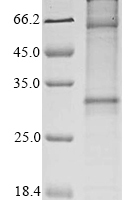
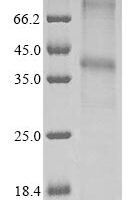
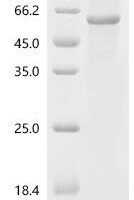
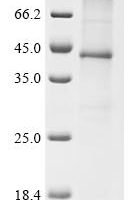
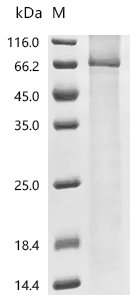
Recombinant Human Long-chain fatty acid transport protein 4 (SLC27A4) Protein is a recombinant protein from Homo sapiens (Human), expressed in in vitro E.coli expression system, covering amino acids 1-643aa, with N-terminal 10xHis-tagged tag, molecular weight 73.6kDa, purity Greater than 85% as determined by SDS-PAGE.. Suitable for ELISA and Western Blot applications.