Function
Receptor for the Fc region of complexed or aggregated immunoglobulins gamma. Low affinity receptor. Involved in a variety of effector and regulatory functions such as phagocytosis of immune complexes and modulation of antibody production by B-cells.
Biological Context
Subcellular Location: Cell membrane (Single-pass type I membrane protein)
Tissue Specificity: Is the most broadly distributed Fc-gamma-receptor. Expressed in monocyte, neutrophils, macrophages, basophils, eosinophils, Langerhans cells, B-cells, platelets cells and placenta (endothelial cells). Not detected in natural killer cells
Disease Association: Systemic lupus erythematosus (SLE) : A chronic, relapsing, inflammatory, and often febrile multisystemic disorder of connective tissue, characterized principally by involvement of the skin, joints, kidneys and serosal membranes. It is of unknown etiology, but is thought to represent a failure of the regulatory mechanisms of the autoimmune system. The disease is marked by a wide range of system dysfunctions, an elevated erythrocyte sedimentation rate, and the formation of LE cells in the blood or bone marrow. [Disease susceptibility is associated with variants affecting the gene represented in this entry]
Product Specifications
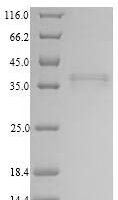
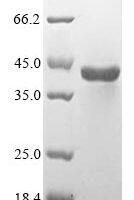
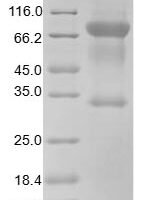
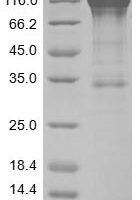
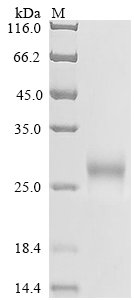
Recombinant Human Low affinity immunoglobulin gamma Fc region receptor II-b (FCGR2B), partial is a recombinant protein from Homo sapiens (Human), expressed in Mammalian cell, covering amino acids 46-217aa, with C-terminal 6xHis-tagged tag, molecular weight 21.6kDa, purity Greater than 85% as determined by SDS-PAGE.. Suitable for ELISA and Western Blot applications. Explore more Fc Receptor proteins →