Recombinant Human Malonyl-CoA decarboxylase, mitochondrial (MLYCD)

Recombinant Human Malonyl-CoA decarboxylase, mitochondrial (MLYCD) — Catalyzes the conversion of malonyl-CoA to acetyl-CoA. Purity >90%.

SKU: BCRECP-001171 Category:

Product Specifications

Product SkuBCRECP-001171
Product DescriptionRecombinant Human Malonyl-CoA decarboxylase, mitochondrial (MLYCD) Protein is expressed from E.coli with N-terminal 10xHis-tagged and C-terminal Myc-tagged. It contains 40-493aa. [Accession | O95822].
Uniprot No.O95822
Gene NamesMLYCD
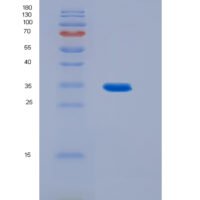
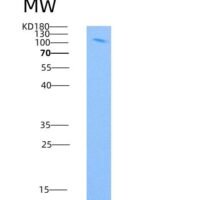
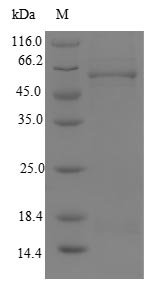
PurityGreater than 90% as determined by SDS-PAGE.
Expression SystemE.coli
Expression Region40-493aa
SpeciesHomo sapiens (Human)
Tag InfoN-terminal 10xHis-tagged and C-terminal Myc-tagged
Molecular weight55.9kDa
ActivityPlease contact us to obtain bioactivity data.
BufferIf the delivery form is liquid, the default storage buffer is Tris/PBS-based buffer, 5%-50% glycerol. If the delivery form is lyophilized powder, the buffer before lyophilization is Tris/PBS-based buffer, 6% Trehalose.
StorageStore at -20°C/-80°C upon receipt, aliquoting is necessary for mutiple use. Avoid repeated freeze-thaw cycles.
Research AreasOthers

Function

Catalyzes the conversion of malonyl-CoA to acetyl-CoA. In the fatty acid biosynthesis MCD selectively removes malonyl-CoA and thus assures that methyl-malonyl-CoA is the only chain elongating substrate for fatty acid synthase and that fatty acids with multiple methyl side chains are produced. In peroxisomes it may be involved in degrading intraperoxisomal malonyl-CoA, which is generated by the peroxisomal beta-oxidation of odd chain-length dicarboxylic fatty acids.

Biological Context

Subcellular Location: Cytoplasm; Mitochondrion matrix; Peroxisome; Peroxisome matrix
Tissue Specificity: Expressed in fibroblasts and hepatoblastoma cells (at protein level). Expressed strongly in heart, liver, skeletal muscle, kidney and pancreas. Expressed in myotubes. Expressed weakly in brain, placenta, spleen, thymus, testis, ovary and small intestine
Disease Association: Malonyl-CoA decarboxylase deficiency (MLYCD deficiency) : Autosomal recessive disease characterized by abdominal pain, chronic constipation, episodic vomiting, metabolic acidosis and malonic aciduria. [The disease is caused by variants affecting the gene represented in this entry]
Pathway: Metabolic intermediate biosynthesis; acetyl-CoA biosynthesis; acetyl-CoA from malonyl-CoA: step 1/1

Product Specifications

Recombinant Human Malonyl-CoA decarboxylase, mitochondrial (MLYCD) is a recombinant protein from Homo sapiens (Human), expressed in E.coli, covering amino acids 40-493aa, with N-terminal 10xHis-tagged and C-terminal Myc-tagged tag, molecular weight 55.9kDa, purity Greater than 90% as determined by SDS-PAGE.. Suitable for ELISA and Western Blot applications.
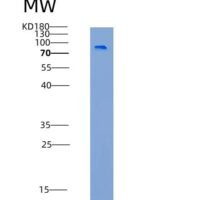
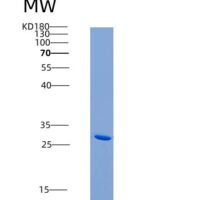
SDS-PAGE: Single band at expected molecular weight confirming purity.

ELISA: Suitable as coating antigen or detection standard.

Western Blot: Compatible with standard Western Blot protocols.

Protein Interaction: Validated for SPR (Surface Plasmon Resonance) and BLI (Bio-Layer Interferometry) studies.

Shipping: Shipped at ambient temperature. Lyophilized protein is stable during transit.

Storage: Store lyophilized protein at -20°C to -80°C. Reconstituted protein should be aliquoted and stored at -80°C. Avoid repeated freeze-thaw cycles.

Shelf Life: 12 months from date of receipt when stored as recommended.

Shipping Time: Orders placed before 2 PM EST ship same day. International orders typically deliver within 5-10 business days.

Protein Biology

Function

Catalyzes the conversion of malonyl-CoA to acetyl-CoA. In the fatty acid biosynthesis MCD selectively removes malonyl-CoA and thus assures that methyl-malonyl-CoA is the only chain elongating substrate for fatty acid synthase and that fatty acids with multiple methyl side chains are produced. In peroxisomes it may be involved in degrading intraperoxisomal malonyl-CoA, which is generated by the peroxisomal beta-oxidation of odd chain-length dicarboxylic fatty acids. Plays a role in the metabolic balance between glucose and lipid oxidation in muscle independent of alterations in insulin signaling. May play a role in controlling the extent of ischemic injury by promoting glucose oxidation

Subcellular Location

Cytoplasm; Mitochondrion matrix; Peroxisome; Peroxisome matrix

Disease Association

Malonyl-CoA decarboxylase deficiency (MLYCD deficiency) : Autosomal recessive disease characterized by abdominal pain, chronic constipation, episodic vomiting, metabolic acidosis and malonic aciduria. [The disease is caused by variants affecting the gene represented in this entry]

Tissue Specificity

Expressed in fibroblasts and hepatoblastoma cells (at protein level). Expressed strongly in heart, liver, skeletal muscle, kidney and pancreas. Expressed in myotubes. Expressed weakly in brain, placenta, spleen, thymus, testis, ovary and small intestine

Subunit

Homotetramer. Dimer of dimers. The two subunits within a dimer display conformational differences suggesting that at any given moment, only one of the two subunits is competent for malonyl-CoA binding and catalytic activity. Under oxidizing conditions, can form disulfide-linked homotetramers (in vitro). Associates with the peroxisomal targeting signal receptor PEX5

Pathway

Metabolic intermediate biosynthesis; acetyl-CoA biosynthesis; acetyl-CoA from malonyl-CoA: step 1/1

Gene: MLYCD  |  Organism: Homo sapiens
Key Publications

Frequently Asked Questions

How do I order or inquire about this product?

Fill out the Online Inquiry form with your required quantity and specifications. You can also email sales@biocrestsci.com. Our team typically responds within 4 business hours with a quote and availability confirmation.

What is the shipping and delivery time?

Orders placed before 2 PM EST ship the same day. Domestic (US) delivery typically takes 2-3 business days. International orders deliver within 5-10 business days. All products are shipped at ambient temperature with appropriate packaging to ensure stability.

How should I store this recombinant protein?

Lyophilized proteins should be stored at -20°C to -80°C upon receipt. After reconstitution, aliquot and store at -80°C. Avoid repeated freeze-thaw cycles. Shelf life is 12 months from date of receipt when stored as recommended.

What quality controls are performed on your products?

Each product undergoes SDS-PAGE purity analysis (typically >85-95%), endotoxin testing, and bioactivity validation. Products are validated for ELISA, Western Blot, and SPR/BLI applications as specified on this product page. A Certificate of Analysis (CoA) is available upon request.

Shopping Cart
Scroll to Top