, ,

Recombinant Human Membrane-bound transcription factor site-1 protease (MBTPS1), partial

Recombinant Human Membrane-bound transcription factor site-1 protease (MBTPS1), partial — Serine protease that cleaves after hydrophobic or small residues, provided that Arg or Lys is in position P4: known substrates include SREBF1/SREBP1, SREBF2/SREBP2, BDNF, GNPTAB, ATF6, ATF6B and FA… Purity…

SKU: BCRECP-001140 Categories: , ,

Product Specifications

Product SkuBCRECP-001140
Product DescriptionRecombinant Human Membrane-bound transcription factor site-1 protease (MBTPS1) Protein is expressed from E.coli with N-terminal 6xHis-tagged. It contains 187-400aa. [Accession | Q14703].
Uniprot No.Q14703
Gene NamesMBTPS1
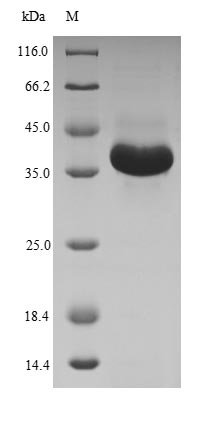
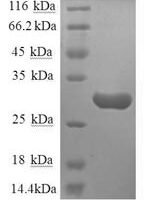
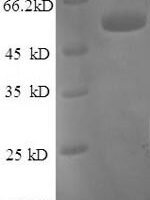
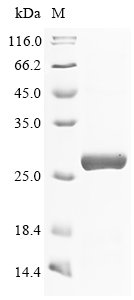
PurityGreater than 90% as determined by SDS-PAGE.
Expression SystemE.coli
Expression Region187-400aa
SpeciesHomo sapiens (Human)
Tag InfoN-terminal 6xHis-tagged
Molecular weight27.8kDa
ActivityPlease contact us to obtain bioactivity data.
BufferIf the delivery form is liquid, the default storage buffer is Tris/PBS-based buffer, 5%-50% glycerol. If the delivery form is lyophilized powder, the buffer before lyophilization is Tris/PBS-based buffer, 6% Trehalose.
StorageStore at -20°C/-80°C upon receipt, aliquoting is necessary for mutiple use. Avoid repeated freeze-thaw cycles.
Research AreasEpigenetics and Nuclear Signaling

Function

Serine protease that cleaves after hydrophobic or small residues, provided that Arg or Lys is in position P4: known substrates include SREBF1/SREBP1, SREBF2/SREBP2, BDNF, GNPTAB, ATF6, ATF6B and FAM20C. Cleaves substrates after Arg-Ser-Val-Leu (SREBP2), Arg-His-Leu-Leu (ATF6), Arg-Gly-Leu-Thr (BDNF) and its own propeptide after Arg-Arg-Leu-Leu. Catalyzes the first step in the proteolytic activation of the sterol regulatory element-binding proteins (SREBPs) SREBF1/SREBP1 and SREBF2/SREBP2.

Biological Context

Subcellular Location: Endoplasmic reticulum membrane (Single-pass type I membrane protein); Golgi apparatus membrane (Single-pass type I membrane protein); Secreted; Mitochondrion
Tissue Specificity: Widely expressed
Disease Association: Spondyloepiphyseal dysplasia, Kondo-Fu type (SEDKF) : A disorder characterized by severely retarded growth, spondyloepiphyseal dysplasia, reduced bone mineral density, and markedly elevated plasma levels of various lysosomal enzymes. Additional features include pectus carinatum, kyphosis, a waddling gait, brachydactyly and dysmorphic facial features. SEDKF transmission pattern is consistent with autosomal recessive inheritance. [The disease is caused by variants affecting the gene represented in this entry] | Cataract, alopecia, oral mucosal disorder, and psoriasis-like syndrome (CAOP) : An autosomal recessive disorder characterized by early-onset bilateral lens cataract, generalized non-scarring alopecia, oral mucosal disorder, and severe psoriasiform skin lesions affecting the scalp, facial, inguinal region, buttocks, and lower extremities. [The disease is caused by variants affecting the gene represented in this entry]

Product Specifications

Recombinant Human Membrane-bound transcription factor site-1 protease (MBTPS1), partial is a recombinant protein from Homo sapiens (Human), expressed in E.coli, covering amino acids 187-400aa, with N-terminal 6xHis-tagged tag, molecular weight 27.8kDa, purity Greater than 90% as determined by SDS-PAGE.. Suitable for ELISA and Western Blot applications.

Recommended applications depend on the target, product format, and product-specific validation data. Refer to the product datasheet or Certificate of Analysis (CoA), or contact BioCrest Sci for application guidance.

Biological Activity: Please contact us to obtain bioactivity data.

Storage: Store at -20°C/-80°C upon receipt, aliquoting is necessary for mutiple use. Avoid repeated freeze-thaw cycles.

Shipping & Lead Time: Availability, shipping conditions, and estimated lead time are confirmed in the formal quotation or order confirmation based on the product format, destination, and order requirements.

Protein Biology

Function

Serine protease that cleaves after hydrophobic or small residues, provided that Arg or Lys is in position P4: known substrates include SREBF1/SREBP1, SREBF2/SREBP2, BDNF, GNPTAB, ATF6, ATF6B and FAM20C (PubMed:10644685, PubMed:12782636, PubMed:21719679, PubMed:34349020). Cleaves substrates after Arg-Ser-Val-Leu (SREBP2), Arg-His-Leu-Leu (ATF6), Arg-Gly-Leu-Thr (BDNF) and its own propeptide after Arg-Arg-Leu-Leu (PubMed:10644685, PubMed:21719679). Catalyzes the first step in the proteolytic activation of the sterol regulatory element-binding proteins (SREBPs) SREBF1/SREBP1 and SREBF2/SREBP2 (PubMed:12782636). Also mediates the first step in the proteolytic activation of the cyclic AMP-dependent transcription factor ATF-6 (ATF6 and ATF6B) (PubMed:12782636). Mediates the protein cleavage of GNPTAB into subunit alpha and beta, thereby participating in biogenesis of lysosomes (PubMed:21719679). Cleaves the propeptide from FAM20C which is required for FAM20C secretion from the Golgi apparatus membrane and for enhancement of FAM20C kinase activity, promoting osteoblast differentiation and biomineralization (PubMed:34349020). Involved in the regulation of M6P-dependent Golgi-to-lysosome trafficking of lysosomal enzymes (PubMed:21719679, PubMed:30046013). It is required for the activation of CREB3L2/BBF2H7, a transcriptional activator of MIA3/TANGO and other genes controlling mega vesicle formation (PubMed:30046013). Therefore, it plays a key role in the regulation of mega vesicle-mediated collagen trafficking (PubMed:30046013). Promotes FAD binding to the ETFA/ETFB complex and is therefore involved in mitochondrial respiratory chain regulation (PubMed:35362222). In astrocytes and osteoblasts, upon DNA damage and ER stress, mediates the first step of the regulated intramembrane proteolytic activation of the transcription factor CREB3L1, leading to the inhibition of cell-cycle progression (PubMed:16417584)

Subcellular Location

Endoplasmic reticulum membrane (Single-pass type I membrane protein); Golgi apparatus membrane (Single-pass type I membrane protein); Secreted; Mitochondrion

Disease Association

Spondyloepiphyseal dysplasia, Kondo-Fu type (SEDKF) : A disorder characterized by severely retarded growth, spondyloepiphyseal dysplasia, reduced bone mineral density, and markedly elevated plasma levels of various lysosomal enzymes. Additional features include pectus carinatum, kyphosis, a waddling gait, brachydactyly and dysmorphic facial features. SEDKF transmission pattern is consistent with autosomal recessive inheritance. [The disease is caused by variants affecting the gene represented in this entry] | Cataract, alopecia, oral mucosal disorder, and psoriasis-like syndrome (CAOP) : An autosomal recessive disorder characterized by early-onset bilateral lens cataract, generalized non-scarring alopecia, oral mucosal disorder, and severe psoriasiform skin lesions affecting the scalp, facial, inguinal region, buttocks, and lower extremities. [The disease is caused by variants affecting the gene represented in this entry]

Tissue Specificity

Widely expressed

Subunit

Interacts with LYSET; this interaction bridges GNPTAB to MBTPS1. Forms a complex with ETFA and ETFB; the interaction stabilizes the ETFA/ETFB heterodimer, promotes FAD binding to ETFA/ETFB and is independent of MBTPS1 proteolytic activity (PubMed:35362222)

Gene: MBTPS1  |  Organism: Homo sapiens  |  Synonyms: Endopeptidase S1P; Subtilisin/kexin-isozyme 1
Key Publications

Frequently Asked Questions

How do I order or inquire about this product?

Submit the Online Inquiry form with your required quantity and specifications, or email sales@biocrestsci.com. Available sizes, pricing, stock status, documentation, and estimated lead time are confirmed in the formal quotation.

What is the shipping and delivery time?

Availability, dispatch timing, shipping conditions, and delivery estimates depend on the product format, destination, and order requirements. These details are confirmed in the formal quotation or order confirmation.

How should this product be stored?

Follow the storage and handling instructions in the product-specific datasheet and Certificate of Analysis (CoA). Requirements may vary by product form and formulation; contact BioCrest Sci if product-specific guidance is needed.

What quality controls are performed on your products?

Quality-control data such as identity, purity, endotoxin level, or biological activity are provided only when specified on this product page, the datasheet, or Certificate of Analysis (CoA). Biological activity is not implied unless explicitly stated.

Shopping Cart
Scroll to Top