,

Recombinant Human Membrane cofactor protein (CD46), partial (Active)

Recombinant Human Membrane cofactor protein (CD46), partial (Active) — (Microbial infection) Plays a minor role in fiber protein-mediated human adenovirus 55 infection; via its interaction with fiber protein. Purity >90%.

SKU: BCACP-000011 Categories: ,
Product SKUBCACP-000011
Product DescriptionRecombinant Human Membrane cofactor protein (CD46) protein is expressed from Mammalian cell with C-terminal hFc1-tagged. It contains 35-328aa. [Accession | P15529].
Uniprot No.P15529
Gene NamesCD46
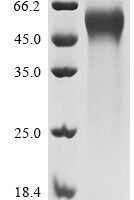
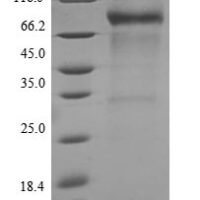
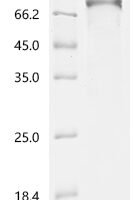
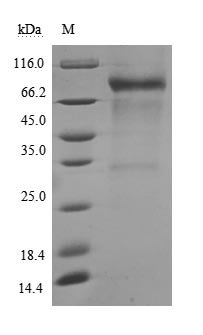
PurityGreater than 90% as determined by SDS-PAGE.Greater than 95% as determined by SEC-HPLC.
Expression SystemMammalian cell
Expression Region35-328aa
SpeciesHomo sapiens (Human)
Tag InfoC-terminal hFc1-tagged
Molecular weight61.6 kDa
ActivityMeasured by its binding ability in a functional ELISA. Immobilized CD46 at 2 μg/ml can bind Anti-CD46 rabbit monoclonal antibody, the EC50 of human CD46 protein is 0.8333-1.054 ng/ml.
BufferLyophilized from a 0.2 μm filtered 20 mM Tris-HCl, 0.5 M NaCl, 6% Trehalose, pH 8.0
StorageStore at -20°C/-80°C upon receipt, aliquoting is necessary for mutiple use. Avoid repeated freeze-thaw cycles.
Alternative NamesCD46; MCP; MIC10; Membrane cofactor protein; TLX; Trophoblast leukocyte common antigen; CD antigen CD46

Function

(Microbial infection) Plays a minor role in fiber protein-mediated human adenovirus 55 infection; via its interaction with fiber protein. Plays a minor role in fiber protein-mediated human adenovirus 14a infection.

Biological Context

Subcellular Location: Cytoplasmic vesicle, secretory vesicle, acrosome inner membrane (Single-pass type I membrane protein)
Tissue Specificity: Expressed by all cells except erythrocytes
Disease Association: Hemolytic uremic syndrome, atypical, 2 (AHUS2) : An atypical form of hemolytic uremic syndrome. It is a complex genetic disease characterized by microangiopathic hemolytic anemia, thrombocytopenia, renal failure and absence of episodes of enterocolitis and diarrhea. In contrast to typical hemolytic uremic syndrome, atypical forms have a poorer prognosis, with higher death rates and frequent progression to end-stage renal disease. [Disease susceptibility is associated with variants affecting the gene represented in this entry. Other genes may play a role in modifying the phenotype. Patients with CD46 mutations seem to have an overall better prognosis compared to patients carrying CFH mutations]

Product Specifications

Recombinant Human Membrane cofactor protein (CD46), partial (Active) is a recombinant protein from Homo sapiens (Human), expressed in Mammalian cell, covering amino acids 35-328aa, with C-terminal hFc1-tagged tag, molecular weight 61.6 kDa, purity Greater than 90% as determined by SDS-PAGE.Greater than 95% as determined by SEC-HPLC.. Suitable for ELISA and Western Blot applications.

Recommended applications depend on the target, product format, and product-specific validation data. Refer to the product datasheet or Certificate of Analysis (CoA), or contact BioCrest Sci for application guidance.

Biological Activity: Measured by its binding ability in a functional ELISA. Immobilized CD46 at 2 μg/ml can bind Anti-CD46 rabbit monoclonal antibody, the EC50 of human CD46 protein is 0.8333-1.054 ng/ml.

Storage: Store at -20°C/-80°C upon receipt, aliquoting is necessary for mutiple use. Avoid repeated freeze-thaw cycles.

Shipping & Lead Time: Availability, shipping conditions, and estimated lead time are confirmed in the formal quotation or order confirmation based on the product format, destination, and order requirements.

Protein Biology

Function

(Microbial infection) Plays a minor role in fiber protein-mediated human adenovirus 55 infection; via its interaction with fiber protein (PubMed:32581096). Plays a minor role in fiber protein-mediated human adenovirus 14a infection (PubMed:32581096)

Subcellular Location

Cytoplasmic vesicle, secretory vesicle, acrosome inner membrane (Single-pass type I membrane protein)

Disease Association

Hemolytic uremic syndrome, atypical, 2 (AHUS2) : An atypical form of hemolytic uremic syndrome. It is a complex genetic disease characterized by microangiopathic hemolytic anemia, thrombocytopenia, renal failure and absence of episodes of enterocolitis and diarrhea. In contrast to typical hemolytic uremic syndrome, atypical forms have a poorer prognosis, with higher death rates and frequent progression to end-stage renal disease. [Disease susceptibility is associated with variants affecting the gene represented in this entry. Other genes may play a role in modifying the phenotype. Patients with CD46 mutations seem to have an overall better prognosis compared to patients carrying CFH mutations]

Tissue Specificity

Expressed by all cells except erythrocytes

Subunit

(Microbial infection) Binds to Streptococcus pyogenes M protein and to type IV pili from Neisseria (PubMed:11260136, PubMed:11971006, PubMed:7708671, PubMed:9379894)

Gene: CD46  |  Organism: Homo sapiens  |  Synonyms: TLX; Trophoblast leukocyte common antigen
Key Publications

Frequently Asked Questions

How do I order or inquire about this product?

Submit the Online Inquiry form with your required quantity and specifications, or email sales@biocrestsci.com. Available sizes, pricing, stock status, documentation, and estimated lead time are confirmed in the formal quotation.

What is the shipping and delivery time?

Availability, dispatch timing, shipping conditions, and delivery estimates depend on the product format, destination, and order requirements. These details are confirmed in the formal quotation or order confirmation.

How should this product be stored?

Follow the storage and handling instructions in the product-specific datasheet and Certificate of Analysis (CoA). Requirements may vary by product form and formulation; contact BioCrest Sci if product-specific guidance is needed.

What quality controls are performed on your products?

Quality-control data such as identity, purity, endotoxin level, or biological activity are provided only when specified on this product page, the datasheet, or Certificate of Analysis (CoA). Biological activity is not implied unless explicitly stated.

Shopping Cart
Scroll to Top