Recombinant Human Merlin (NF2)

Recombinant Human Merlin (NF2) — Probable regulator of the Hippo/SWH (Sav/Wts/Hpo) signaling pathway, a signaling pathway that plays a pivotal role in tumor suppression by restricting proliferation and promoting apoptosis. Purity >85%.

SKU: BCRECP-001238 Category:

Product Specifications

Product SkuBCRECP-001238
Product DescriptionRecombinant Human Merlin (NF2) Protein is expressed from E.coli with N-terminal 6xHis-tagged. It contains 1-595aa. [Accession | P35240].
Uniprot No.P35240
Gene NamesNF2
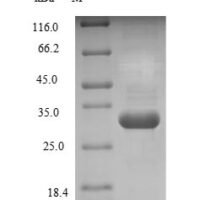
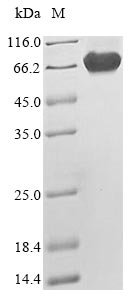
PurityGreater than 85% as determined by SDS-PAGE.
Expression SystemE.coli
Expression Region1-595aa
SpeciesHomo sapiens (Human)
Tag InfoN-terminal 6xHis-tagged
Molecular weight73.7kDa
ActivityPlease contact us to obtain bioactivity data.
BufferIf the delivery form is liquid, the default storage buffer is Tris/PBS-based buffer, 5%-50% glycerol. If the delivery form is lyophilized powder, the buffer before lyophilization is Tris/PBS-based buffer, 6% Trehalose.
StorageStore at -20°C/-80°C upon receipt, aliquoting is necessary for mutiple use. Avoid repeated freeze-thaw cycles.
Research AreasCancer

Function

Probable regulator of the Hippo/SWH (Sav/Wts/Hpo) signaling pathway, a signaling pathway that plays a pivotal role in tumor suppression by restricting proliferation and promoting apoptosis. Along with WWC1 can synergistically induce the phosphorylation of LATS1 and LATS2 and can probably function in the regulation of the Hippo/SWH (Sav/Wts/Hpo) signaling pathway. May act as a membrane stabilizing protein.

Biological Context

Subcellular Location: Nucleus; Cell projection, filopodium membrane (Peripheral membrane protein); Cell projection, ruffle membrane (Peripheral membrane protein); Cytoplasm, perinuclear region; Cytoplasmic granule; Cytoplasm, cytoskeleton
Tissue Specificity: Widely expressed. Isoform 1 and isoform 3 are predominant. Isoform 4, isoform 5 and isoform 6 are expressed moderately. Isoform 8 is found at low frequency. Isoform 7, isoform 9 and isoform 10 are not expressed in adult tissues, with the exception of adult retina expressing isoform 10. Isoform 9 is faintly expressed in fetal brain, heart, lung, skeletal muscle and spleen. Fetal thymus expresses isoforms 1, 7, 9 and 10 at similar levels
Disease Association: Schwannomatosis, vestibular (SWNV) : An autosomal dominant neoplasia syndrome characterized by the development of multiple benign nerve sheath tumors called schwannomas, particularly affecting the vestibular nerve. Affected individuals usually present with bilateral vestibular schwannomas but can have schwannomas on other cranial, spinal, and peripheral/cutaneous nerves. Meningiomas are common, whereas 20 to 35% of affected individuals develop intramedullary spinal cord tumors called ependymomas. The condition is also characterized by several ophthalmic features such as lenticular opacities, retinal hamartoma, epiretinal membranes. [The disease is caused by variants affecting the gene represented in this entry] | Mesothelioma, malignant (MESOM) : An aggressive neoplasm of the serosal lining of the chest. It appears as broad sheets of cells, with some regions containing spindle-shaped, sarcoma-like cells and other regions showing adenomatous patterns. Pleural mesotheliomas have been linked to exposure to asbestos. [The disease may be caused by variants affecting the gene represented in this entry]

Product Specifications

Recombinant Human Merlin (NF2) is a recombinant protein from Homo sapiens (Human), expressed in E.coli, covering amino acids 1-595aa, with N-terminal 6xHis-tagged tag, molecular weight 73.7kDa, purity Greater than 85% as determined by SDS-PAGE.. Suitable for ELISA and Western Blot applications.
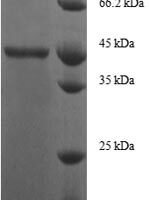
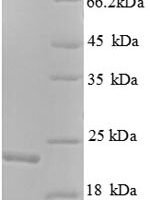
SDS-PAGE: Single band at expected molecular weight confirming purity.

ELISA: Suitable as coating antigen or detection standard.

Western Blot: Compatible with standard Western Blot protocols.

Protein Interaction: Validated for SPR (Surface Plasmon Resonance) and BLI (Bio-Layer Interferometry) studies.

Shipping: Shipped at ambient temperature. Lyophilized protein is stable during transit.

Storage: Store lyophilized protein at -20°C to -80°C. Reconstituted protein should be aliquoted and stored at -80°C. Avoid repeated freeze-thaw cycles.

Shelf Life: 12 months from date of receipt when stored as recommended.

Shipping Time: Orders placed before 2 PM EST ship same day. International orders typically deliver within 5-10 business days.

Protein Biology

Function

Probable regulator of the Hippo/SWH (Sav/Wts/Hpo) signaling pathway, a signaling pathway that plays a pivotal role in tumor suppression by restricting proliferation and promoting apoptosis. Along with WWC1 can synergistically induce the phosphorylation of LATS1 and LATS2 and can probably function in the regulation of the Hippo/SWH (Sav/Wts/Hpo) signaling pathway. May act as a membrane stabilizing protein. May inhibit PI3 kinase by binding to AGAP2 and impairing its stimulating activity. Suppresses cell proliferation and tumorigenesis by inhibiting the CUL4A-RBX1-DDB1-VprBP/DCAF1 E3 ubiquitin-protein ligase complex

Subcellular Location

Nucleus; Cell projection, filopodium membrane (Peripheral membrane protein); Cell projection, ruffle membrane (Peripheral membrane protein); Cytoplasm, perinuclear region; Cytoplasmic granule; Cytoplasm, cytoskeleton

Disease Association

Schwannomatosis, vestibular (SWNV) : An autosomal dominant neoplasia syndrome characterized by the development of multiple benign nerve sheath tumors called schwannomas, particularly affecting the vestibular nerve. Affected individuals usually present with bilateral vestibular schwannomas but can have schwannomas on other cranial, spinal, and peripheral/cutaneous nerves. Meningiomas are common, whereas 20 to 35% of affected individuals develop intramedullary spinal cord tumors called ependymomas. The condition is also characterized by several ophthalmic features such as lenticular opacities, retinal hamartoma, epiretinal membranes. [The disease is caused by variants affecting the gene represented in this entry] | Mesothelioma, malignant (MESOM) : An aggressive neoplasm of the serosal lining of the chest. It appears as broad sheets of cells, with some regions containing spindle-shaped, sarcoma-like cells and other regions showing adenomatous patterns. Pleural mesotheliomas have been linked to exposure to asbestos. [The disease may be caused by variants affecting the gene represented in this entry]

Tissue Specificity

Widely expressed. Isoform 1 and isoform 3 are predominant. Isoform 4, isoform 5 and isoform 6 are expressed moderately. Isoform 8 is found at low frequency. Isoform 7, isoform 9 and isoform 10 are not expressed in adult tissues, with the exception of adult retina expressing isoform 10. Isoform 9 is faintly expressed in fetal brain, heart, lung, skeletal muscle and spleen. Fetal thymus expresses isoforms 1, 7, 9 and 10 at similar levels

Subunit

Interacts with NHERF1, HGS and AGAP2. Interacts with LAYN (By similarity). Interacts with SGSM3. Interacts (via FERM domain) with MPP1. Interacts with WWC1. Interacts with the CUL4A-RBX1-DDB1-VprBP/DCAF1 E3 ubiquitin-protein ligase complex. The unphosphorylated form interacts (via FERM domain) with VPRBP/DCAF1. Interacts (via FERM domain) with NOP53; the interaction is direct (PubMed:21167305). Interacts with SCHIP1; the interaction is direct (PubMed:10669747)

Gene: NF2  |  Organism: Homo sapiens  |  Synonyms: Moesin-ezrin-radixin-like protein; Neurofibromin-2; Schwannomerlin; Schwannomin
Key Publications

Frequently Asked Questions

How do I order or inquire about this product?

Fill out the Online Inquiry form with your required quantity and specifications. You can also email sales@biocrestsci.com. Our team typically responds within 4 business hours with a quote and availability confirmation.

What is the shipping and delivery time?

Orders placed before 2 PM EST ship the same day. Domestic (US) delivery typically takes 2-3 business days. International orders deliver within 5-10 business days. All products are shipped at ambient temperature with appropriate packaging to ensure stability.

How should I store this recombinant protein?

Lyophilized proteins should be stored at -20°C to -80°C upon receipt. After reconstitution, aliquot and store at -80°C. Avoid repeated freeze-thaw cycles. Shelf life is 12 months from date of receipt when stored as recommended.

What quality controls are performed on your products?

Each product undergoes SDS-PAGE purity analysis (typically >85-95%), endotoxin testing, and bioactivity validation. Products are validated for ELISA, Western Blot, and SPR/BLI applications as specified on this product page. A Certificate of Analysis (CoA) is available upon request.

Shopping Cart
Scroll to Top