Function
Independently of inflammasome activation, regulates the differentiation of T helper 2 (Th2) cells and has a role in Th2 cell-dependent asthma and tumor growth. During Th2 differentiation, required for optimal IRF4 binding to IL4 promoter and for IRF4-dependent IL4 transcription. Binds to the consensus DNA sequence 5'-GRRGGNRGAG-3'.
Biological Context
Subcellular Location: Cytoplasm, cytosol; Inflammasome; Cytoplasm, cytoskeleton, microtubule organizing center; Golgi apparatus membrane; Endoplasmic reticulum; Mitochondrion; Secreted; Nucleus
Tissue Specificity: Predominantly expressed in macrophages. Also expressed in dendritic cells, B- and T-cells (at protein level). Expressed in LPS-treated granulocytes, but not in resting cells (at protein level). Expression in monocytes is very weak (at protein level). Expressed in stratified non-keratinizing squamous epithelium, including oral, esophageal and ectocervical mucosa and in the Hassall's corpuscles in the thymus. Also, detected in the stratified epithelium covering the bladder and ureter (transitional mucosa) (at protein level). Expressed in lung epithelial cells (at protein level). Expressed in chondrocytes. Expressed at low levels in resting osteoblasts
Disease Association: Familial cold autoinflammatory syndrome 1 (FCAS1) : A rare autosomal dominant systemic inflammatory disease characterized by recurrent episodes of maculopapular rash associated with arthralgias, myalgias, fever and chills, swelling of the extremities, and conjunctivitis after generalized exposure to cold. Rarely, some patients may also develop late-onset renal amyloidosis. [The disease is caused by variants affecting the gene represented in this entry] | Muckle-Wells syndrome (MWS) : A hereditary periodic fever syndrome characterized by fever, chronic recurrent urticaria, arthralgias, progressive sensorineural deafness, and reactive renal amyloidosis. The disease may be severe if generalized reactive amyloidosis occurs. [The disease is caused by variants affecting the gene represented in this entry] | Chronic infantile neurologic cutaneous and articular syndrome (CINCA) : Rare congenital inflammatory disorder characterized by a triad of neonatal onset of cutaneous symptoms, chronic meningitis, and joint manifestations with recurrent fever and inflammation. [The disease is caused by variants affecting the gene represented in this entry] | Keratoendothelitis fugax hereditaria (KEFH) : An autosomal dominant corneal disease that periodically, and fleetingly, affects the corneal endothelium, stroma, and vision, eventually leading to central corneal stromal opacities in some patients. The disease is characterized by unilateral attacks of ocular pain, pericorneal injection, and photophobia. The acute symptoms vanish in 1-2 days but vision remains blurry for several weeks. The attacks start at the age of 3-12 years and can affect either eye. They generally decrease in frequency and get milder with age. [The disease is caused by variants affecting the gene represented in this entry] | Deafness, autosomal dominant, 34, with or without inflammation (DFNA34) : A form of sensorineural hearing loss. Sensorineural deafness results from damage to the neural receptors of the inner ear, the nerve pathways to the brain, or the area of the brain that receives sound information. DFNA34 is a postlingual, slowly progressive form with variable severity and variable additional features. Some DFNA34 patients have autoinflammatory manifestations. [The disease may be caused by variants affecting the gene represented in this entry]
Product Specifications
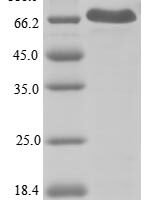
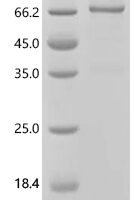
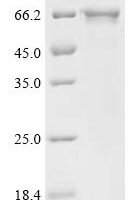
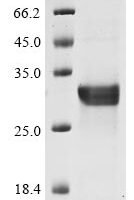
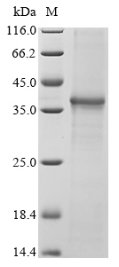
Recombinant Human NACHT, LRR and PYD domains-containing protein 3 (NLRP3), partial is a recombinant protein from Homo sapiens (Human), expressed in E.coli, covering amino acids 733-1036aa, with N-terminal 10xHis-tagged and C-terminal Myc-tagged tag, molecular weight 40.7kDa, purity Greater than 85% as determined by SDS-PAGE.. Suitable for ELISA and Western Blot applications.