Function
NADPH oxidase that catalyzes the generation of superoxide from molecular oxygen utilizing NADPH as an electron donor.
Biological Context
Subcellular Location: Cell projection, invadopodium membrane (Multi-pass membrane protein); Cell membrane (Multi-pass membrane protein)
Tissue Specificity: Detected in colon, uterus, prostate, and colon carcinoma, but not in peripheral blood leukocytes
Disease Association: [Defects in NOX1 may play a role in the pathogenesis of very early onset inflammatory bowel disease (VEOIBD), a chronic, relapsing inflammation of the gastrointestinal tract with a complex etiology diagnosed before 6 years of age. VEOIBD is subdivided into Crohn disease and ulcerative colitis phenotypes. Crohn disease may affect any part of the gastrointestinal tract from the mouth to the anus, but the phenotype of children with onset of Crohn disease occurring younger than the age of 10 is predominantly colonic, with a lower risk of ileal disease. Bowel inflammation is transmural and discontinuous; it may contain granulomas or be associated with intestinal or perianal fistulas. In contrast, in ulcerative colitis, the inflammation is continuous and limited to rectal and colonic mucosal layers; fistulas and granulomas are not observed. Both diseases include extraintestinal inflammation of the skin, eyes, or joints]
Product Specifications
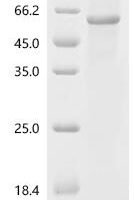
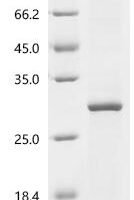
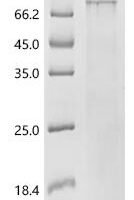
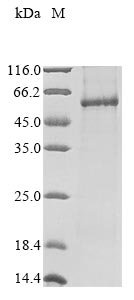
Recombinant Human NADPH oxidase 1 (NOX1) Protein is a recombinant protein from Homo sapiens (Human), expressed in in vitro E.coli expression system, covering amino acids 1-564aa, with N-terminal 10xHis-tagged tag, molecular weight 67.7kDa, purity Greater than 85% as determined by SDS-PAGE.. Suitable for ELISA and Western Blot applications. Explore more Enzyme proteins →