Recombinant Human Neutrophil gelatinase-associated lipocalin (LCN2) (Active)

Recombinant Human Neutrophil gelatinase-associated lipocalin (LCN2) (Active) — Iron-trafficking protein involved in multiple processes such as apoptosis, innate immunity and renal development. Purity >95%.

SKU: BCACP-000872 Category:
Product SKUBCACP-000872
Product DescriptionRecombinant Human Neutrophil gelatinase-associated lipocalin (LCN2) protein is expressed from E.Coli with Tag-Free. It contains 21-198aa. [Accession | P80188].
Uniprot No.P80188
Gene NamesLCN2
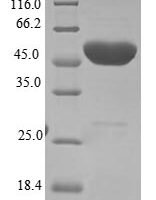
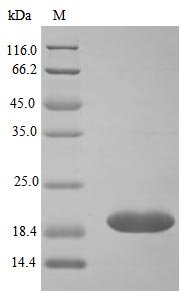
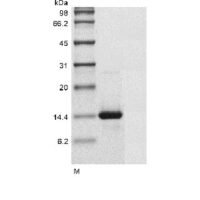
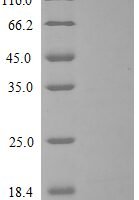
Purity>95% as determined by SDS-PAGE.
Expression SystemE.Coli
Expression Region21-198aa
SpeciesHomo sapiens (Human)
Tag InfoTag-Free
Molecular weight20.5 kDa
ActivityFully biologically active when compared to standard. The ED50 as determined by inducing alkaline phosphatase production of murine C3H10T1/2 cells is 0.5 - 1.0 μg/ml.
BufferLyophilized from a 0.2 μm filtered 20 mM Tris-HCl, 0.5 M NaCl, 6% Trehalose, pH 8.0
StorageStore at -20°C/-80°C upon receipt, aliquoting is necessary for mutiple use. Avoid repeated freeze-thaw cycles.
Alternative Names24p3; 25 kDa alpha 2 microglobulin related subunit of MMP9; 25 kDa alpha-2-microglobulin-related subunit of MMP-9; Alpha 2 microglobulin related protein; HGNC:6526; HNL; Lcn 2; Lcn2; Lipocalin-2; Migration stimulating factor inhibitor; MSFI; Neutrophil gelatinase associated lipocalin; Neutrophil gelatinase associated lipocalin precursor; Neutrophil gelatinase-associated lipocalin; NGAL; NGAL_HUMAN; Oncogene 24p3; Oncogenic lipocalin 24p3; p25; Siderocalin; siderocalin LCN2; SV40 induced 24P3 protein; Uterocalin

Function

Iron-trafficking protein involved in multiple processes such as apoptosis, innate immunity and renal development. Binds iron through association with 2,3-dihydroxybenzoic acid (2,3-DHBA), a siderophore that shares structural similarities with bacterial enterobactin, and delivers or removes iron from the cell, depending on the context. Iron-bound form (holo-24p3) is internalized following binding to the SLC22A17 (24p3R) receptor, leading to release of iron and subsequent increase of intracellular iron concentration.

Biological Context

Subcellular Location: Secreted; Cytoplasmic granule lumen; Cytoplasmic vesicle lumen
Tissue Specificity: Detected in neutrophils (at protein level). Expressed in bone marrow and in tissues that are prone to exposure to microorganism. High expression is found in bone marrow as well as in uterus, prostate, salivary gland, stomach, appendix, colon, trachea and lung. Expressed in the medullary tubules of the kidney. Not found in the small intestine or peripheral blood leukocytes

Product Specifications

Recombinant Human Neutrophil gelatinase-associated lipocalin (LCN2) (Active) is a recombinant protein from Homo sapiens (Human), expressed in E.Coli, covering amino acids 21-198aa, with Tag-Free tag, molecular weight 20.5 kDa, purity >95% as determined by SDS-PAGE.. Suitable for ELISA and Western Blot applications.
Recommended applications depend on the target, product format, and product-specific validation data. Refer to the product datasheet or Certificate of Analysis (CoA), or contact BioCrest Sci for application guidance.

Biological Activity: Fully biologically active when compared to standard. The ED50 as determined by inducing alkaline phosphatase production of murine C3H10T1/2 cells is 0.5 - 1.0 μg/ml.

Storage: Store at -20°C/-80°C upon receipt, aliquoting is necessary for mutiple use. Avoid repeated freeze-thaw cycles.

Shipping & Lead Time: Availability, shipping conditions, and estimated lead time are confirmed in the formal quotation or order confirmation based on the product format, destination, and order requirements.

Protein Biology

Function

Iron-trafficking protein involved in multiple processes such as apoptosis, innate immunity and renal development (PubMed:12453413, PubMed:20581821, PubMed:27780864). Binds iron through association with 2,3-dihydroxybenzoic acid (2,3-DHBA), a siderophore that shares structural similarities with bacterial enterobactin, and delivers or removes iron from the cell, depending on the context. Iron-bound form (holo-24p3) is internalized following binding to the SLC22A17 (24p3R) receptor, leading to release of iron and subsequent increase of intracellular iron concentration. In contrast, association of the iron-free form (apo-24p3) with the SLC22A17 (24p3R) receptor is followed by association with an intracellular siderophore, iron chelation and iron transfer to the extracellular medium, thereby reducing intracellular iron concentration. Involved in apoptosis due to interleukin-3 (IL3) deprivation: iron-loaded form increases intracellular iron concentration without promoting apoptosis, while iron-free form decreases intracellular iron levels, inducing expression of the proapoptotic protein BCL2L11/BIM, resulting in apoptosis (By similarity). Involved in innate immunity; limits bacterial proliferation by sequestering iron bound to microbial siderophores, such as enterobactin (PubMed:27780864). Can also bind siderophores from M.tuberculosis (PubMed:15642259, PubMed:21978368)

Subcellular Location

Secreted; Cytoplasmic granule lumen; Cytoplasmic vesicle lumen

Tissue Specificity

Detected in neutrophils (at protein level) (PubMed:7683678, PubMed:8298140). Expressed in bone marrow and in tissues that are prone to exposure to microorganism (PubMed:9339356). High expression is found in bone marrow as well as in uterus, prostate, salivary gland, stomach, appendix, colon, trachea and lung (PubMed:9339356). Expressed in the medullary tubules of the kidney (PubMed:30418175). Not found in the small intestine or peripheral blood leukocytes (PubMed:9339356)

Subunit

Monomer (PubMed:1281792, PubMed:7683678). Homodimer; disulfide-linked (PubMed:7683678). Heterodimer; disulfide-linked with MMP9 (PubMed:7683678)

Gene: LCN2  |  Organism: Homo sapiens  |  Synonyms: 25 kDa alpha-2-microglobulin-related subunit of MMP-9; Lipocalin-2; Oncogene 24p3; Siderocalin; p25
Key Publications

Frequently Asked Questions

How do I order or inquire about this product?

Submit the Online Inquiry form with your required quantity and specifications, or email sales@biocrestsci.com. Available sizes, pricing, stock status, documentation, and estimated lead time are confirmed in the formal quotation.

What is the shipping and delivery time?

Availability, dispatch timing, shipping conditions, and delivery estimates depend on the product format, destination, and order requirements. These details are confirmed in the formal quotation or order confirmation.

How should this product be stored?

Follow the storage and handling instructions in the product-specific datasheet and Certificate of Analysis (CoA). Requirements may vary by product form and formulation; contact BioCrest Sci if product-specific guidance is needed.

What quality controls are performed on your products?

Quality-control data such as identity, purity, endotoxin level, or biological activity are provided only when specified on this product page, the datasheet, or Certificate of Analysis (CoA). Biological activity is not implied unless explicitly stated.

Shopping Cart
Scroll to Top