Recombinant Human Non-structural maintenance of chromosomes element 3 homolog (NSMCE3)

Recombinant Human Non-structural maintenance of chromosomes element 3 homolog (NSMCE3) — Component of the SMC5-SMC6 complex, a complex involved in repair of DNA double-strand breaks by homologous recombination. Purity >85%.

SKU: BCRECP-001282 Category:

Product Specifications

Product SkuBCRECP-001282
Product DescriptionRecombinant Human Non-structural maintenance of chromosomes element 3 homolog (NSMCE3) Protein is expressed from E.coli with N-terminal 6xHis-tagged. It contains 1-304aa. [Accession | Q96MG7].
Uniprot No.Q96MG7
Gene NamesNSMCE3
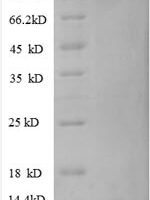
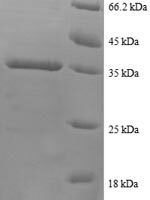
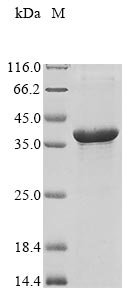
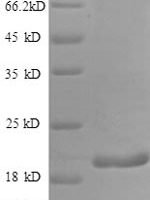
PurityGreater than 85% as determined by SDS-PAGE.
Expression SystemE.coli
Expression Region1-304aa
SpeciesHomo sapiens (Human)
Tag InfoN-terminal 6xHis-tagged
Molecular weight38.4kDa
ActivityPlease contact us to obtain bioactivity data.
BufferIf the delivery form is liquid, the default storage buffer is Tris/PBS-based buffer, 5%-50% glycerol. If the delivery form is lyophilized powder, the buffer before lyophilization is Tris/PBS-based buffer, 6% Trehalose.
StorageStore at -20°C/-80°C upon receipt, aliquoting is necessary for mutiple use. Avoid repeated freeze-thaw cycles.
Research AreasOthers

Function

Component of the SMC5-SMC6 complex, a complex involved in repair of DNA double-strand breaks by homologous recombination. The complex may promote sister chromatid homologous recombination by recruiting the SMC1-SMC3 cohesin complex to double-strand breaks.

Product Specifications

Recombinant Human Non-structural maintenance of chromosomes element 3 homolog (NSMCE3) — Component of the SMC5-SMC6 complex, a complex involved in repair of DNA double-strand breaks by homologous recombination. Purity >85%. Suitable for ELISA and Western Blot applications.

Recommended applications depend on the target, product format, and product-specific validation data. Refer to the product datasheet or Certificate of Analysis (CoA), or contact BioCrest Sci for application guidance.

Biological Activity: Please contact us to obtain bioactivity data.

Storage: Store at -20°C/-80°C upon receipt, aliquoting is necessary for mutiple use. Avoid repeated freeze-thaw cycles.

Shipping & Lead Time: Availability, shipping conditions, and estimated lead time are confirmed in the formal quotation or order confirmation based on the product format, destination, and order requirements.

Protein Biology

Function

Component of the SMC5-SMC6 complex, a complex involved in repair of DNA double-strand breaks by homologous recombination (PubMed:20864041, PubMed:27427983). The complex may promote sister chromatid homologous recombination by recruiting the SMC1-SMC3 cohesin complex to double-strand breaks. The complex is required for telomere maintenance via recombination in ALT (alternative lengthening of telomeres) cell lines and mediates sumoylation of shelterin complex (telosome) components which is proposed to lead to shelterin complex disassembly in ALT-associated PML bodies (APBs). In vitro enhances ubiquitin ligase activity of NSMCE1. Proposed to act through recruitment and/or stabilization of the Ubl-conjugating enzyme (E2) at the E3:substrate complex (PubMed:20864041). May be a growth suppressor that facilitates the entry of the cell into cell cycle arrest (By similarity)

Subcellular Location

Cytoplasm; Nucleus; Chromosome, telomere

Disease Association

Lung disease, immunodeficiency, and chromosome breakage syndrome (LICS) : An autosomal recessive chromosome breakage syndrome associated with severe, fatal lung disease in early childhood, following viral pneumonia. LICS is characterized by combined T and B-cell immunodeficiency. Some patients may have mild dysmorphic features. [The disease is caused by variants affecting the gene represented in this entry]

Tissue Specificity

Ubiquitous

Subunit

Component of the SMC5-SMC6 complex which consists at least of SMC5, SMC6, NSMCE2, NSMCE1, NSMCE4A or EID3 and NSMCE3. NSMCE1, NSMCE4A or EID3 and NSMCE3 probably form a subcomplex that bridges the head domains of the SMC5:SMC6 heterodimer (PubMed:18086888). Interacts with PJA1 (PubMed:20864041). Interacts with E2F1 (via C-terminus) (By similarity). Interacts with NGFR (via C-terminus) (By similarity). Interacts with NSMCE1 (PubMed:18086888, PubMed:20864041, PubMed:21364888, PubMed:27427983). Interacts with NSMCE4 (PubMed:20864041, PubMed:27427983). Interacts with SMC6 (PubMed:18086888). Interacts with EID3 (PubMed:21364888)

Gene: NSMCE3  |  Organism: Homo sapiens  |  Synonyms: Hepatocellular carcinoma-associated protein 4; MAGE-G1 antigen; Melanoma-associated antigen G1; Necdin-like protein 2
Key Publications

Frequently Asked Questions

How do I order or inquire about this product?

Submit the Online Inquiry form with your required quantity and specifications, or email sales@biocrestsci.com. Available sizes, pricing, stock status, documentation, and estimated lead time are confirmed in the formal quotation.

What is the shipping and delivery time?

Availability, dispatch timing, shipping conditions, and delivery estimates depend on the product format, destination, and order requirements. These details are confirmed in the formal quotation or order confirmation.
How should this product be stored?

Follow the storage and handling instructions in the product-specific datasheet and Certificate of Analysis (CoA). Requirements may vary by product form and formulation; contact BioCrest Sci if product-specific guidance is needed.

What quality controls are performed on your products?

Quality-control data such as identity, purity, endotoxin level, or biological activity are provided only when specified on this product page, the datasheet, or Certificate of Analysis (CoA). Biological activity is not implied unless explicitly stated.

Shopping Cart
Scroll to Top