Recombinant Human Oxysterols receptor LXR-alpha (NR1H3)

Recombinant Human Oxysterols receptor LXR-alpha (NR1H3) — Nuclear receptor that exhibits a ligand-dependent transcriptional activation activity. Purity >90%.

SKU: BCRECP-001270 Category:

Product Specifications

Product SkuBCRECP-001270
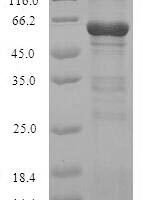
Product DescriptionRecombinant Human Oxysterols receptor LXR-alpha (NR1H3) Protein is expressed from E.coli with N-terminal 10xHis-tagged and C-terminal Myc-tagged. It contains 1-402aa. [Accession | Q13133].
Uniprot No.Q13133
Gene NamesNR1H3
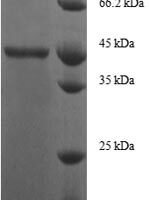
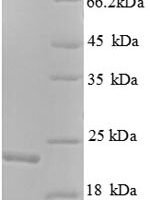
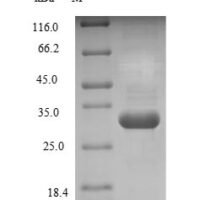
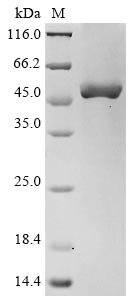
PurityGreater than 90% as determined by SDS-PAGE.
Expression SystemE.coli
Expression Region1-402aa
SpeciesHomo sapiens (Human)
Tag InfoN-terminal 10xHis-tagged and C-terminal Myc-tagged
Molecular weight53.1kDa
ActivityPlease contact us to obtain bioactivity data.
BufferIf the delivery form is liquid, the default storage buffer is Tris/PBS-based buffer, 5%-50% glycerol. If the delivery form is lyophilized powder, the buffer before lyophilization is Tris/PBS-based buffer, 6% Trehalose.
StorageStore at -20°C/-80°C upon receipt, aliquoting is necessary for mutiple use. Avoid repeated freeze-thaw cycles.
Research AreasTranscription

Function

Nuclear receptor that exhibits a ligand-dependent transcriptional activation activity. Interaction with retinoic acid receptor (RXR) shifts RXR from its role as a silent DNA-binding partner to an active ligand-binding subunit in mediating retinoid responses through target genes defined by LXRES.

Product Specifications

Recombinant Human Oxysterols receptor LXR-alpha (NR1H3) — Nuclear receptor that exhibits a ligand-dependent transcriptional activation activity. Purity >90%. Suitable for ELISA and Western Blot applications.

Catalog number: BCRECP-001270.

Recommended applications depend on the target, product format, and product-specific validation data. Refer to the product datasheet or Certificate of Analysis (CoA), or contact BioCrest Sci for application guidance.

Biological Activity: Please contact us to obtain bioactivity data.

Storage: Store at -20°C/-80°C upon receipt, aliquoting is necessary for mutiple use. Avoid repeated freeze-thaw cycles.

Shipping & Lead Time: Availability, shipping conditions, and estimated lead time are confirmed in the formal quotation or order confirmation based on the product format, destination, and order requirements.

Protein Biology

Function

Nuclear receptor that exhibits a ligand-dependent transcriptional activation activity (PubMed:19481530, PubMed:25661920, PubMed:37478846). Interaction with retinoic acid receptor (RXR) shifts RXR from its role as a silent DNA-binding partner to an active ligand-binding subunit in mediating retinoid responses through target genes defined by LXRES (PubMed:37478846). LXRES are DR4-type response elements characterized by direct repeats of two similar hexanuclotide half-sites spaced by four nucleotides (By similarity). Plays an important role in the regulation of cholesterol homeostasis, regulating cholesterol uptake through MYLIP-dependent ubiquitination of LDLR, VLDLR and LRP8 (PubMed:19481530). Interplays functionally with RORA for the regulation of genes involved in liver metabolism (By similarity). Induces LPCAT3-dependent phospholipid remodeling in endoplasmic reticulum (ER) membranes of hepatocytes, driving SREBF1 processing and lipogenesis (By similarity). Via LPCAT3, triggers the incorporation of arachidonate into phosphatidylcholines of ER membranes, increasing membrane dynamics and enabling triacylglycerols transfer to nascent very low-density lipoprotein (VLDL) particles. Via LPCAT3 also counteracts lipid-induced ER stress response and inflammation, likely by modulating SRC kinase membrane compartmentalization and limiting the synthesis of lipid inflammatory mediators (By similarity)

Subcellular Location

Nucleus; Cytoplasm

Tissue Specificity

Visceral organs specific expression. Strong expression was found in liver, kidney and intestine followed by spleen and to a lesser extent the adrenals

Subunit

Heterodimer of NR1H3 and RXR (retinoic acid receptor). Interacts with CCAR2 (via N-terminus) in a ligand-independent manner. Interacts with SIRT1 and this interaction is inhibited by CCAR2 (PubMed:25661920). Interacts with GPS2 (PubMed:19481530)

Gene: NR1H3  |  Organism: Homo sapiens  |  Synonyms: Liver X receptor alpha; Nuclear receptor subfamily 1 group H member 3
Key Publications

Frequently Asked Questions

How do I order or inquire about this product?

Submit the Online Inquiry form with your required quantity and specifications, or email sales@biocrestsci.com. Available sizes, pricing, stock status, documentation, and estimated lead time are confirmed in the formal quotation.

What is the shipping and delivery time?

Availability, dispatch timing, shipping conditions, and delivery estimates depend on the product format, destination, and order requirements. These details are confirmed in the formal quotation or order confirmation.
How should this product be stored?

Follow the storage and handling instructions in the product-specific datasheet and Certificate of Analysis (CoA). Requirements may vary by product form and formulation; contact BioCrest Sci if product-specific guidance is needed.

What quality controls are performed on your products?

Quality-control data such as identity, purity, endotoxin level, or biological activity are provided only when specified on this product page, the datasheet, or Certificate of Analysis (CoA). Biological activity is not implied unless explicitly stated.

Shopping Cart
Scroll to Top