Function
Regulatory subunit of phosphoinositide-3-kinase (PI3K), a kinase that phosphorylates PtdIns(4,5)P2 (Phosphatidylinositol 4,5-bisphosphate) to generate phosphatidylinositol 3,4,5-trisphosphate (PIP3). PIP3 plays a key role by recruiting PH domain-containing proteins to the membrane, including AKT1 and PDPK1, activating signaling cascades involved in cell growth, survival, proliferation, motility and morphology. Binds to activated (phosphorylated) protein-tyrosine kinases, through its SH2 domain, and acts as an adapter, mediating the association of the p110 catalytic unit to the plasma membrane.
Biological Context
Disease Association: Megalencephaly-polymicrogyria-polydactyly-hydrocephalus syndrome 1 (MPPH1) : A syndrome characterized by megalencephaly, hydrocephalus, and polymicrogyria; polydactyly may also be seen. There is considerable phenotypic similarity between this disorder and the megalencephaly-capillary malformation syndrome. [The disease is caused by variants affecting the gene represented in this entry]
Product Specifications
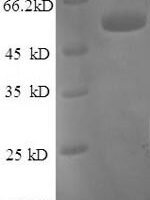
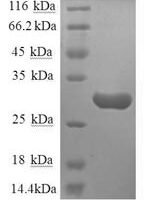
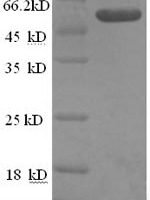
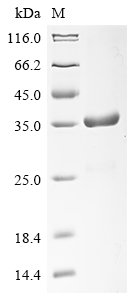
Recombinant Human Phosphatidylinositol 3-kinase regulatory subunit beta (PIK3R2), partial is a recombinant protein from Homo sapiens (Human), expressed in E.coli, covering amino acids 75-125aa, with N-terminal 6xHis-GST-tagged tag, molecular weight 36.9kDa, purity Greater than 90% as determined by SDS-PAGE.. Suitable for ELISA and Western Blot applications. Explore more Kinase proteins →
![Human Succinate dehydrogenase [ubiquinone] flavoprotein subunit, mitochondrial (SDHA), partial Recombinant Protein, N-GST - BioCrest Sci](https://www.biocrestsci.com/wp-content/uploads/protein/1/BCACP-838381-SDS-150x200.jpg)