Recombinant Human Phospholamban (PLN)

Recombinant Human Phospholamban (PLN) — Reversibly inhibits the activity of ATP2A2/SERCA2 in cardiac sarcoplasmic reticulum by decreasing the apparent affinity of the ATPase for Ca(2+). Purity >90%.

SKU: BCRECP-001402 Category:

Product Specifications

Product SkuBCRECP-001402
Product DescriptionRecombinant Human Phospholamban (PLN) Protein is expressed from Yeast with N-terminal GST-tagged. It contains 1-52aa. [Accession | P26678].
Uniprot No.P26678
Gene NamesPLN
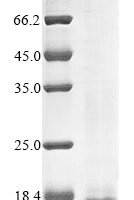
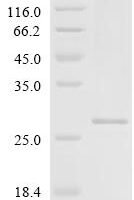
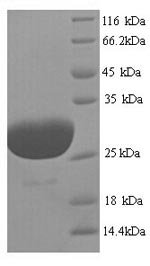
PurityGreater than 90% as determined by SDS-PAGE.
Expression SystemYeast
Expression Region1-52aa
SpeciesHomo sapiens (Human)
Tag InfoN-terminal GST-tagged
Molecular weight33.1kDa
ActivityPlease contact us to obtain bioactivity data.
BufferIf the delivery form is liquid, the default storage buffer is Tris/PBS-based buffer, 5%-50% glycerol. If the delivery form is lyophilized powder, the buffer before lyophilization is Tris/PBS-based buffer, 6% Trehalose.
StorageStore at -20°C/-80°C upon receipt, aliquoting is necessary for mutiple use. Avoid repeated freeze-thaw cycles.
Research AreasCardiovascular

Function

Reversibly inhibits the activity of ATP2A2/SERCA2 in cardiac sarcoplasmic reticulum by decreasing the apparent affinity of the ATPase for Ca(2+). Binds preferentially to the ATP-bound E1 conformational form of ATP2A2 which predominates at low Ca(2+) concentrations during the diastolic phase of the cardiac cycle. Inhibits ATP2A2 Ca(2+) affinity by disrupting its allosteric activation by ATP.

Biological Context

Subcellular Location: Endoplasmic reticulum membrane (Single-pass membrane protein); Sarcoplasmic reticulum membrane (Single-pass membrane protein); Mitochondrion membrane (Single-pass membrane protein); Membrane (Single-pass membrane protein)
Tissue Specificity: Heart muscle (at protein level)
Disease Association: Cardiomyopathy, dilated, 1P (CMD1P) : A disorder characterized by ventricular dilation and impaired systolic function, resulting in congestive heart failure and arrhythmia. Patients are at risk of premature death. [The disease is caused by variants affecting the gene represented in this entry] | Cardiomyopathy, familial hypertrophic, 18 (CMH18) : A hereditary heart disorder characterized by ventricular hypertrophy, which is usually asymmetric and often involves the interventricular septum. The symptoms include dyspnea, syncope, collapse, palpitations, and chest pain. They can be readily provoked by exercise. The disorder has inter- and intrafamilial variability ranging from benign to malignant forms with high risk of cardiac failure and sudden cardiac death. [The disease is caused by variants affecting the gene represented in this entry]

Product Specifications

Recombinant Human Phospholamban (PLN) is a recombinant protein from Homo sapiens (Human), expressed in Yeast, covering amino acids 1-52aa, with N-terminal GST-tagged tag, molecular weight 33.1kDa, purity Greater than 90% as determined by SDS-PAGE.. Suitable for ELISA and Western Blot applications.

Recommended applications depend on the target, product format, and product-specific validation data. Refer to the product datasheet or Certificate of Analysis (CoA), or contact BioCrest Sci for application guidance.

Biological Activity: Please contact us to obtain bioactivity data.

Storage: Store at -20°C/-80°C upon receipt, aliquoting is necessary for mutiple use. Avoid repeated freeze-thaw cycles.

Shipping & Lead Time: Availability, shipping conditions, and estimated lead time are confirmed in the formal quotation or order confirmation based on the product format, destination, and order requirements.

Protein Biology

Function

Reversibly inhibits the activity of ATP2A2/SERCA2 in cardiac sarcoplasmic reticulum by decreasing the apparent affinity of the ATPase for Ca(2+) (PubMed:28890335). Binds preferentially to the ATP-bound E1 conformational form of ATP2A2 which predominates at low Ca(2+) concentrations during the diastolic phase of the cardiac cycle (By similarity). Inhibits ATP2A2 Ca(2+) affinity by disrupting its allosteric activation by ATP (By similarity). Modulates the contractility of the heart muscle in response to physiological stimuli via its effects on ATP2A2. Modulates calcium re-uptake during muscle relaxation and plays an important role in calcium homeostasis in the heart muscle. The degree of ATP2A2 inhibition depends on the oligomeric state of PLN. ATP2A2 inhibition is alleviated by PLN phosphorylation (By similarity). Also inhibits the activity of ATP2A3/SERCA3 (By similarity). Controls intracellular Ca(2+) levels in elongated spermatids and may play a role in germ cell differentiation (By similarity). In the thalamic reticular nucleus of the brain, plays a role in the regulation of sleep patterns and executive functioning (By similarity)

Subcellular Location

Endoplasmic reticulum membrane (Single-pass membrane protein); Sarcoplasmic reticulum membrane (Single-pass membrane protein); Mitochondrion membrane (Single-pass membrane protein); Membrane (Single-pass membrane protein)

Disease Association

Cardiomyopathy, dilated, 1P (CMD1P) : A disorder characterized by ventricular dilation and impaired systolic function, resulting in congestive heart failure and arrhythmia. Patients are at risk of premature death. [The disease is caused by variants affecting the gene represented in this entry] | Cardiomyopathy, familial hypertrophic, 18 (CMH18) : A hereditary heart disorder characterized by ventricular hypertrophy, which is usually asymmetric and often involves the interventricular septum. The symptoms include dyspnea, syncope, collapse, palpitations, and chest pain. They can be readily provoked by exercise. The disorder has inter- and intrafamilial variability ranging from benign to malignant forms with high risk of cardiac failure and sudden cardiac death. [The disease is caused by variants affecting the gene represented in this entry]

Tissue Specificity

Heart muscle (at protein level)

Subunit

Homopentamer (PubMed:16043693, PubMed:16897780). Can also form heterooligomers with other sarcoplasmic/endoplasmic reticulum calcium ATPase (SERCA) regulators ARLN, ERLN, SLN and STRIT1/DWORF (PubMed:36523160). Monomer (By similarity). Interacts with HAX1 (PubMed:17241641). Interacts as a monomer with ATP2A2; the interaction decreases ATP2A2 Ca(2+) affinity (PubMed:28890335, PubMed:36523160). Interacts with VMP1; VMP1 competes with PLN and SLN to prevent them from forming an inhibitory complex with ATP2A2 (PubMed:28890335). Interacts with S100A1 in a Ca(2+)-dependent manner (PubMed:12804600)

Gene: PLN  |  Organism: Homo sapiens
Key Publications

Frequently Asked Questions

How do I order or inquire about this product?

Submit the Online Inquiry form with your required quantity and specifications, or email sales@biocrestsci.com. Available sizes, pricing, stock status, documentation, and estimated lead time are confirmed in the formal quotation.

What is the shipping and delivery time?

Availability, dispatch timing, shipping conditions, and delivery estimates depend on the product format, destination, and order requirements. These details are confirmed in the formal quotation or order confirmation.

How should this product be stored?

Follow the storage and handling instructions in the product-specific datasheet and Certificate of Analysis (CoA). Requirements may vary by product form and formulation; contact BioCrest Sci if product-specific guidance is needed.

What quality controls are performed on your products?

Quality-control data such as identity, purity, endotoxin level, or biological activity are provided only when specified on this product page, the datasheet, or Certificate of Analysis (CoA). Biological activity is not implied unless explicitly stated.

Shopping Cart
Scroll to Top