Recombinant Human Plasminogen protein (PLG), partial (Active)

Recombinant Human Plasminogen protein (PLG), partial (Active) — (Microbial infection) Interacts with dengue virus type 2 particles. Purity >95%.

SKU: BCACP-000883 Category:
Product SKUBCACP-000883
Product DescriptionRecombinant Human Plasminogen protein (PLG) protein is expressed from E.Coli with Tag-Free. It contains 98-356aa. [Accession | P00747].
Uniprot No.P00747
Gene NamesPLG
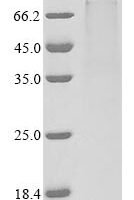
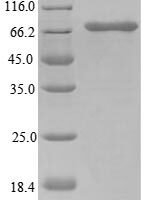
Purity>95% as determined by SDS-PAGE.
Expression SystemE.Coli
Expression Region98-356aa
SpeciesHomo sapiens (Human)
Tag InfoTag-Free
Molecular weight29.7 kDa
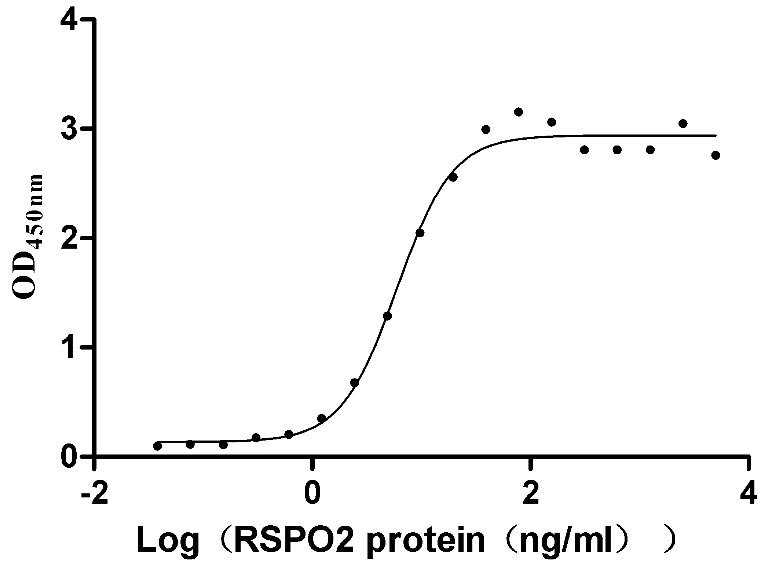
ActivityFully biologically active when compared to standard. The biological activity determined by a chemotaxis bioassay using human neutrophils is in a concentration range of 0.1-10 ng/ml.
BufferLyophilized from a 0.2 μm filtered 20 mM Tris-HCl, 0.5 M NaCl, 6% Trehalose, pH 8.0
StorageStore at -20°C/-80°C upon receipt, aliquoting is necessary for mutiple use. Avoid repeated freeze-thaw cycles.
Alternative NamesPlasmin; Plasmin heavy chain A; Plasmin light chain B; Plasminogen; PLG; PLMN_HUMAN

Function

(Microbial infection) Interacts with dengue virus type 2 particles. Enhances dengue virus type 2 infection in Aedes aegypti mosquito midgut by increasing midgut internalization, resulting in higher infection rates and viral dissemination in mosquitoes.

Biological Context

Subcellular Location: Secreted
Tissue Specificity: Present in plasma and many other extracellular fluids. It is synthesized in the liver
Disease Association: Plasminogen deficiency (PLGD) : A disorder characterized by decreased serum plasminogen activity. Two forms of the disorder are distinguished: type 1 deficiency is additionally characterized by decreased plasminogen antigen levels and clinical symptoms, whereas type 2 deficiency, also known as dysplasminogenemia, is characterized by normal, or slightly reduced antigen levels, and absence of clinical manifestations. Plasminogen deficiency type 1 results in markedly impaired extracellular fibrinolysis and chronic mucosal pseudomembranous lesions due to subepithelial fibrin deposition and inflammation. The most common clinical manifestation of type 1 deficiency is ligneous conjunctivitis in which pseudomembranes formation on the palpebral surfaces of the eye progresses to white, yellow-white, or red thick masses with a wood-like consistency that replace the normal mucosa. [The disease is caused by variants affecting the gene represented in this entry] | Angioedema, hereditary, 4 (HAE4) : A form of angioedema, a disorder characterized by episodic local swelling involving subcutaneous or submucous tissue of the upper respiratory and gastrointestinal tracts, face, extremities, and genitalia. HAE4 is an autosomal dominant form with incomplete penetrance, variable expressivity, and female predominance. [The disease is caused by variants affecting the gene represented in this entry]

Product Specifications

Recombinant Human Plasminogen protein (PLG), partial (Active) is a recombinant protein from Homo sapiens (Human), expressed in E.Coli, covering amino acids 98-356aa, with Tag-Free tag, molecular weight 29.7 kDa, purity >95% as determined by SDS-PAGE.. Suitable for ELISA and Western Blot applications.
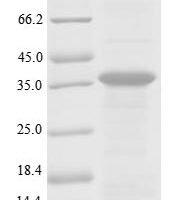
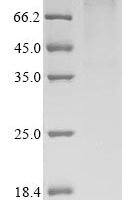
SDS-PAGE: Single band at expected molecular weight confirming purity.

ELISA: Suitable as coating antigen or detection standard.

Western Blot: Compatible with standard Western Blot protocols.

Protein Interaction: Validated for SPR (Surface Plasmon Resonance) and BLI (Bio-Layer Interferometry) studies.

Shipping: Shipped at ambient temperature. Lyophilized protein is stable during transit.

Storage: Store lyophilized protein at -20°C to -80°C. Reconstituted protein should be aliquoted and stored at -80°C. Avoid repeated freeze-thaw cycles.

Shelf Life: 12 months from date of receipt when stored as recommended.

Shipping Time: Orders placed before 2 PM EST ship same day. International orders typically deliver within 5-10 business days.

Protein Biology

Function

(Microbial infection) Interacts with dengue virus type 2 particles (PubMed:31726374). Enhances dengue virus type 2 infection in Aedes aegypti mosquito midgut by increasing midgut internalization, resulting in higher infection rates and viral dissemination in mosquitoes (PubMed:31726374)

Subcellular Location

Secreted

Disease Association

Plasminogen deficiency (PLGD) : A disorder characterized by decreased serum plasminogen activity. Two forms of the disorder are distinguished: type 1 deficiency is additionally characterized by decreased plasminogen antigen levels and clinical symptoms, whereas type 2 deficiency, also known as dysplasminogenemia, is characterized by normal, or slightly reduced antigen levels, and absence of clinical manifestations. Plasminogen deficiency type 1 results in markedly impaired extracellular fibrinolysis and chronic mucosal pseudomembranous lesions due to subepithelial fibrin deposition and inflammation. The most common clinical manifestation of type 1 deficiency is ligneous conjunctivitis in which pseudomembranes formation on the palpebral surfaces of the eye progresses to white, yellow-white, or red thick masses with a wood-like consistency that replace the normal mucosa. [The disease is caused by variants affecting the gene represented in this entry] | Angioedema, hereditary, 4 (HAE4) : A form of angioedema, a disorder characterized by episodic local swelling involving subcutaneous or submucous tissue of the upper respiratory and gastrointestinal tracts, face, extremities, and genitalia. HAE4 is an autosomal dominant form with incomplete penetrance, variable expressivity, and female predominance. [The disease is caused by variants affecting the gene represented in this entry]

Tissue Specificity

Present in plasma and many other extracellular fluids. It is synthesized in the liver

Subunit

(Microbial infection) Interacts with B.burgdorferi OspC

Gene: PLG  |  Organism: Homo sapiens
Key Publications

Frequently Asked Questions

How do I order or inquire about this product?

Fill out the Online Inquiry form with your required quantity and specifications. You can also email sales@biocrestsci.com. Our team typically responds within 4 business hours with a quote and availability confirmation.

What is the shipping and delivery time?

Orders placed before 2 PM EST ship the same day. Domestic (US) delivery typically takes 2-3 business days. International orders deliver within 5-10 business days. All products are shipped at ambient temperature with appropriate packaging to ensure stability.

How should I store this recombinant protein?

Lyophilized proteins should be stored at -20°C to -80°C upon receipt. After reconstitution, aliquot and store at -80°C. Avoid repeated freeze-thaw cycles. Shelf life is 12 months from date of receipt when stored as recommended.

What quality controls are performed on your products?

Each product undergoes SDS-PAGE purity analysis (typically >85-95%), endotoxin testing, and bioactivity validation. Products are validated for ELISA, Western Blot, and SPR/BLI applications as specified on this product page. A Certificate of Analysis (CoA) is available upon request.

Shopping Cart
Scroll to Top