Function
K(+) channel that conducts voltage-dependent outward rectifying currents upon membrane depolarization. Voltage sensing is coupled to K(+) electrochemical gradient in an 'ion flux gating' mode where outward but not inward ion flow opens the gate. Changes ion selectivity and becomes permeable to Na(+) ions in response to extracellular acidification.
Biological Context
Subcellular Location: Cell membrane (Multi-pass membrane protein)
Tissue Specificity: Widespread expression in adult. Strongest expression in pancreas and placenta. Lower expression in brain, lung, prostate, heart, kidney, uterus, small intestine and colon
Disease Association: Pulmonary hypertension, primary, 4 (PPH4) : A rare disorder characterized by plexiform lesions of proliferating endothelial cells in pulmonary arterioles. The lesions lead to elevated pulmonary arterial pression, right ventricular failure, and death. The disease can occur from infancy throughout life and it has a mean age at onset of 36 years. Penetrance is reduced. Although familial pulmonary hypertension is rare, cases secondary to known etiologies are more common and include those associated with the appetite-suppressant drugs. [The disease is caused by variants affecting the gene represented in this entry] | Developmental delay with sleep apnea (DDSA) : An autosomal dominant disorder characterized by global developmental delay, hypotonia, gastrointestinal findings, and central and/or obstructive sleep apnea. [The disease is caused by variants affecting the gene represented in this entry]
Product Specifications
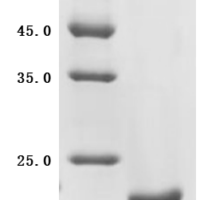
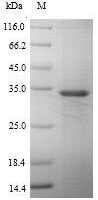
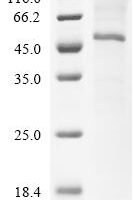
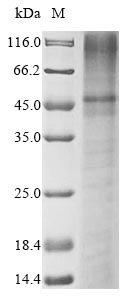
Recombinant Human Potassium channel subfamily K member 3 (KCNK3) Protein is a recombinant protein from Homo sapiens (Human), expressed in in vitro E.coli expression system, covering amino acids 1-394aa, with N-terminal 10xHis-tagged and C-terminal Myc-tagged tag, molecular weight 50.5kDa, purity Greater than 85% as determined by SDS-PAGE.. Suitable for ELISA and Western Blot applications.